

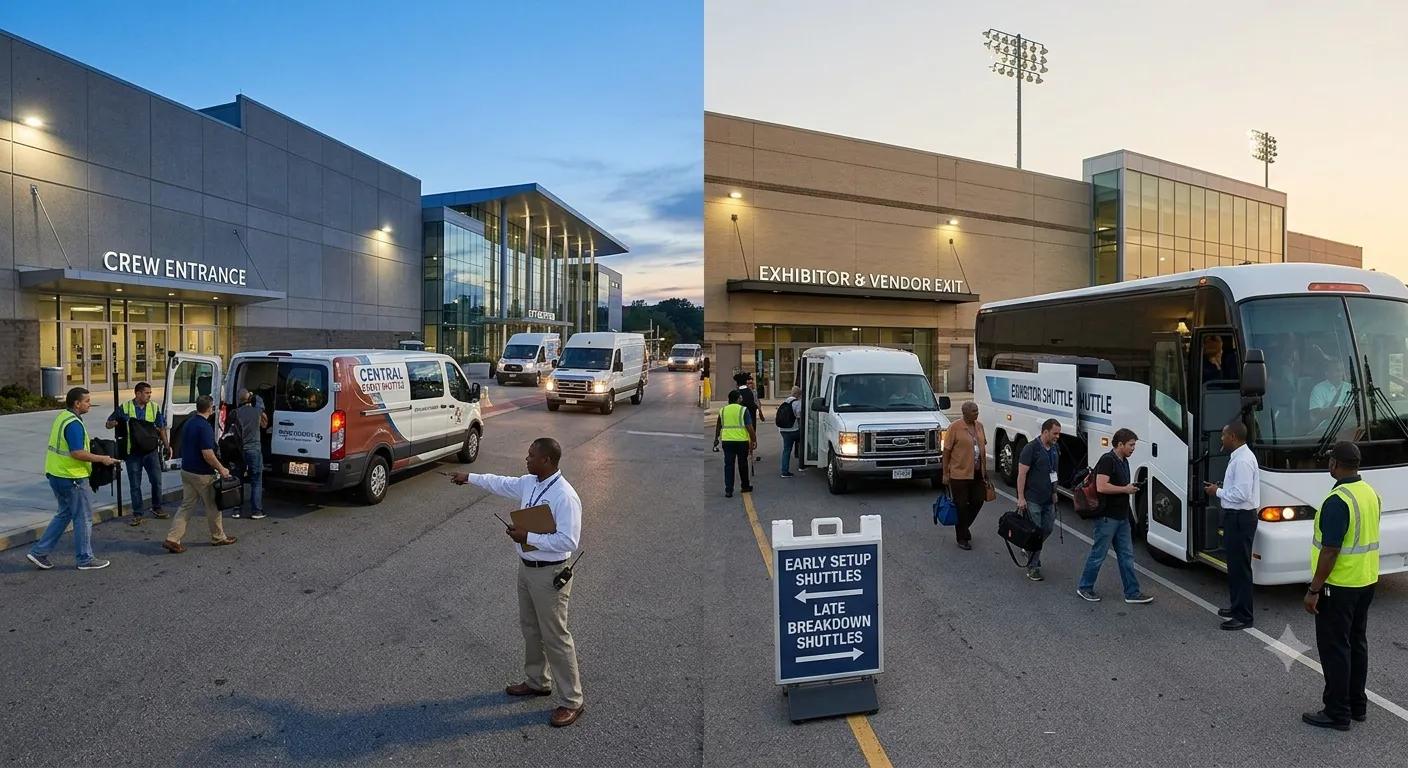
Why Flexible Staff Shuttle Services Matter for Successful
Successful event management requires careful coordination of people, schedules, venues, and resources. Behind every conference, festival, corporate gathering, or large celebration, staff members and volunteers work together to keep operations running smoothly. However, getting these teams to the right place at the right time can be challenging, particularly when working hours change or different departments follow separate schedules. Implementing flexible event crew transportation solutions helps organizers accommodate changing requirements while maintaining reliable transportation throughout the event.

Flexible staff shuttle services provide a practical way to coordinate early arrivals, shift changes, and late departures. Rather than relying on a rigid timetable that may not match real operating conditions, event planners can develop transportation arrangements that respond to staff needs and the demands of the occasion.
Understanding the Importance of Flexible Staff Transportation
Event schedules rarely remain completely predictable. Setup activities may begin earlier than expected, presentations may run longer, and cleanup teams may need additional time to complete their responsibilities. These changes can affect employees, volunteers, security personnel, catering teams, and technical staff differently.
A flexible shuttle arrangement allows organizers to coordinate transportation around these varying schedules. Vehicles can be assigned to different arrival windows, and return trips can be planned according to the expected completion times of individual departments.
For example, a trade show may require exhibition installers to arrive several hours before registration staff. After closing, the installation team may need to remain at the venue while other employees finish their shifts. Planning transportation around these differences helps reduce unnecessary waiting and keeps operations organized.
Adapting to Changing Event Schedules
One of the main advantages of flexible shuttle services is their ability to accommodate schedule changes. Outdoor festivals may experience weather delays, corporate conferences can run behind schedule, and concerts may require additional time for equipment removal.
When transportation arrangements include clearly defined procedures for schedule adjustments, organizers can respond more efficiently. They can communicate revised departure times, coordinate additional trips when available, and adjust vehicle assignments according to changing passenger demand.
Planning these arrangements in advance is essential. Event organizers should discuss operating-hour extensions, vehicle availability, dispatch procedures, and additional charges with their transportation provider before the event begins.
A clear agreement helps everyone understand which changes can be accommodated and how those changes should be communicated. Although flexibility cannot eliminate every delay, it gives organizers a more practical way to manage unexpected situations.
Supporting Different Staff Shifts and Responsibilities
Large events often involve several teams working at different times. Security personnel may need to arrive before vendors begin unloading, while registration staff may report closer to the opening time. Catering teams, production crews, and cleaning personnel can have entirely different schedules.
A single shuttle departure may not serve these groups effectively. Employees who arrive too early may spend unnecessary time waiting, while those with later reporting times may struggle to find convenient transportation.
Flexible scheduling allows organizers to arrange separate shuttle waves for teams with similar call times. Groups can be combined when their schedules and pickup locations are compatible, helping reduce unnecessary vehicle trips without compromising punctuality.
Return transportation should receive the same attention. Staff members who finish early should not always have to wait for the last team to complete its work. Coordinating suitable departure windows creates a more convenient experience for employees and volunteers.
Improving Staff Productivity and Time Management
Reliable transportation contributes to better time management throughout an event. When employees know how and when they will reach the venue, they can prepare for their responsibilities with fewer transportation-related concerns.
Late arrivals can affect more than one person. If a technical team cannot access the venue on time, equipment installation may fall behind schedule. Delayed catering staff can affect meal preparation, while missing volunteers may leave registration desks or information stations understaffed.
Flexible shuttle services help reduce these risks by aligning departure times with operational priorities. Organizers can schedule earlier arrivals for departments with time-sensitive tasks and arrange additional transportation during periods of increased demand.
Comfortable transportation can also help staff members begin their shifts in a better frame of mind. After completing demanding work, employees benefit from having a clear and dependable return journey rather than waiting without knowing when their next ride will arrive.
Managing Transportation for Large Events
Large conferences, sporting events, festivals, and exhibitions may involve hundreds or thousands of people working across different locations. Coordinating transportation for these groups requires careful planning and an understanding of passenger demand throughout the day.
Organizers should estimate how many staff members need transportation during each departure window rather than relying only on total attendance. This information helps determine the appropriate number of buses, vehicle sizes, and departure intervals.
For instance, a festival may need several vehicles during early setup, fewer trips during quieter afternoon hours, and increased transportation after the final performance. Adjusting service levels to match these patterns can improve efficiency while helping control costs.
Pickup locations also matter. Designated staff parking areas, nearby hotels, and approved transportation hubs can simplify boarding and reduce congestion around venue entrances. Clear signage and advance instructions help employees identify the correct vehicle without disrupting event operations.
For events involving multiple venues, planners should consider travel times between locations and coordinate shuttle schedules accordingly. A well-organized route reduces confusion and helps teams move between responsibilities more efficiently.
Prioritizing Staff Safety During Early and Late Hours
Many event employees work outside conventional business hours. Setup crews may report before sunrise, while breakdown teams can finish well after midnight. During these periods, public transportation may be limited, and employees may have fewer convenient travel options.
Dedicated staff shuttles can provide a more coordinated transportation arrangement for these shifts. Organizers should select safe pickup and drop-off locations, confirm vehicle access, and communicate departure details clearly before the event.
Late-night plans should account for possible overtime and unexpected delays. If breakdown activities continue beyond the scheduled finish, staff should know whom to contact and whether an extension to shuttle service can be arranged.
Transportation providers should also plan driver assignments and rest periods in accordance with applicable requirements. Organizers should confirm that the operating schedule is realistic and that appropriate driver coverage is available for the entire service period.
Accessibility is another important consideration. Discussing passenger requirements in advance helps organizers arrange suitable vehicles and make transportation more inclusive for staff members and volunteers.
Controlling Costs Through Smarter Shuttle Planning
Flexible transportation does not necessarily mean operating more buses throughout the entire event. In fact, thoughtful scheduling can help organizers use available vehicles more efficiently.
The first step is to gather accurate passenger estimates and identify when demand is highest. Staff members with similar schedules may be grouped into the same shuttle wave, while teams with significantly different reporting times can receive separate arrangements.
Choosing suitable vehicle sizes also matters. A smaller vehicle may be appropriate for a limited group arriving early in the morning, while a full-size charter bus may be more efficient when larger teams travel together.
Organizers should compare transportation quotes carefully, paying attention to operating hours, mileage, waiting time, overtime charges, and additional-trip costs. Establishing these details in advance makes it easier to budget for both planned service and possible schedule extensions.
It is also helpful to evaluate transportation performance after the event. Reviewing passenger counts, waiting times, and vehicle utilization can reveal opportunities to improve future shuttle arrangements.
Strengthening Communication Between Organizers and Drivers
Flexible shuttle services work best when everyone involved receives accurate information. Event organizers, department supervisors, transportation coordinators, and drivers should understand their responsibilities and know how schedule changes will be handled.
Assigning a central transportation coordinator helps prevent conflicting instructions. This person can communicate passenger counts, revised departure times, pickup changes, and requests for additional service to the appropriate people.
Staff members should receive clear instructions before the event, including pickup addresses, boarding times, route details, and contact information. When schedules change, updates should be distributed promptly through an agreed communication channel.
For larger events, organizers can maintain a shared transportation schedule and use designated staff members to coordinate boarding at busy locations. These measures reduce confusion and make it easier to respond to changing conditions without disrupting other event activities.
Conclusion
Flexible staff shuttle services play an important role in successful event management by supporting changing schedules, different staff shifts, and unexpected operational demands. With careful planning, organizers can improve punctuality, support employee safety, reduce unnecessary waiting, and manage transportation costs more effectively.
The most effective approach combines realistic scheduling, appropriate vehicle selection, clear communication, and an agreed process for handling delays. By working with an experienced transportation provider and reviewing requirements before the event, organizers can create a dependable shuttle plan that supports every stage of the operation, from early setup to final breakdown.