

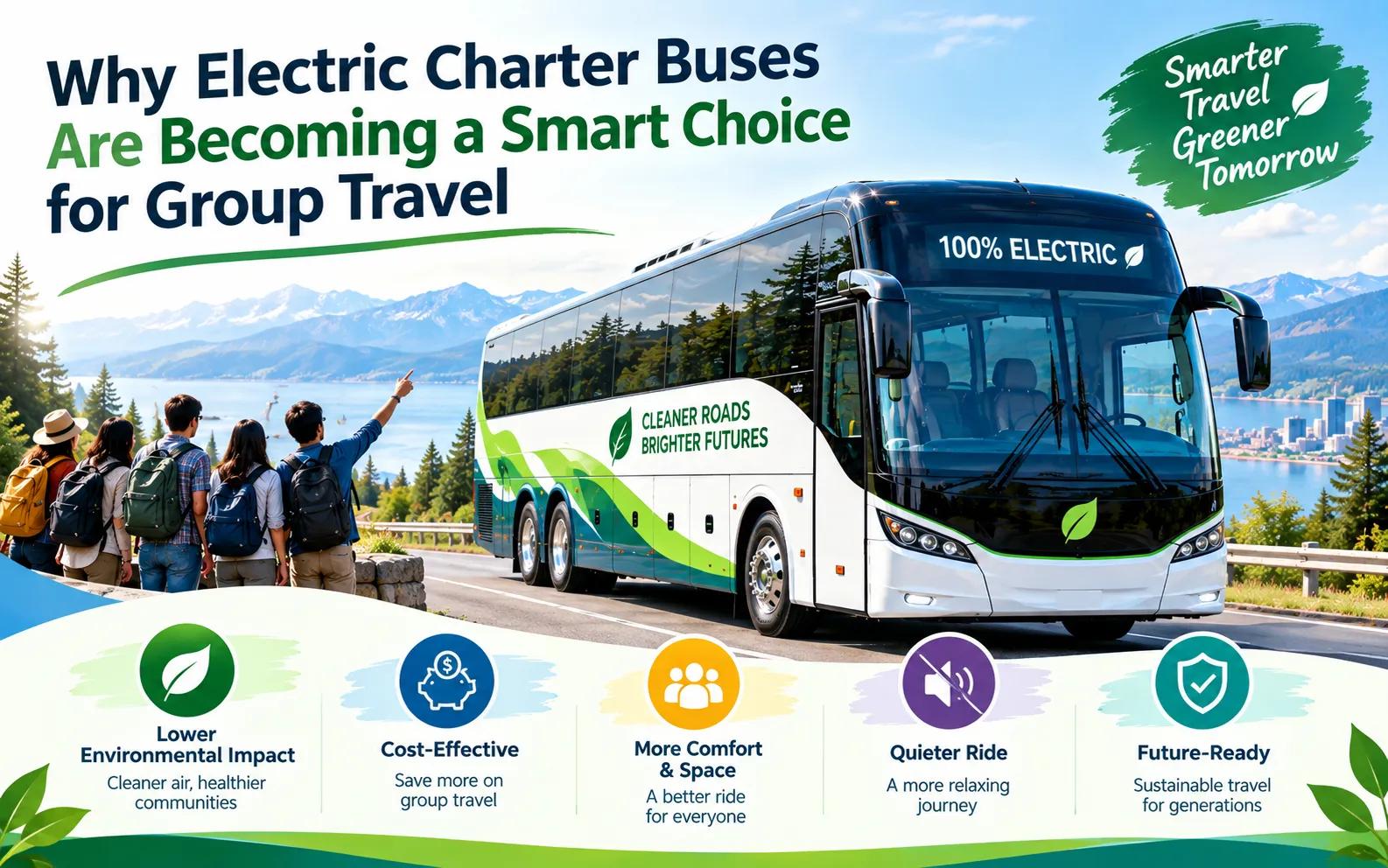
Why Electric Charter Buses Are Becoming a Smart Choice
Group transportation is changing as travelers and organizations place greater emphasis on comfort, efficiency, and sustainability. Businesses arranging employee transportation, universities planning trips, families organizing celebrations, and event planners coordinating large groups are all looking for practical ways to move passengers together. Electric charter buses are emerging as an increasingly interesting option, particularly for regional and same-day itineraries. For groups considering a greener approach to transportation, electric group travel solutions can provide a modern alternative where electric coaches are available.

Electric charter buses combine many of the features travelers already expect from modern motorcoaches with battery-powered propulsion. Although availability remains concentrated in certain U.S. markets, current deployments show that electric coaches can handle real-world group transportation when routes and charging schedules are planned appropriately.
What Makes an Electric Charter Bus a Smart Choice?
The idea behind an electric charter bus is straightforward. Instead of relying on a conventional diesel engine, the vehicle uses batteries and an electric drivetrain to transport passengers. The passenger experience, however, can remain very familiar.
Depending on the coach, travelers can enjoy comfortable seating, climate control, WiFi, power outlets, luggage storage, restrooms, and accessibility features. The major difference is the way the vehicle is powered.
Electric motors also operate much more quietly than diesel engines. This can create a calmer cabin where passengers can talk, work, make calls, or relax without as much engine noise and vibration.
A More Comfortable Travel Experience
Comfort is one of the strongest reasons electric coaches are attracting attention. A group trip can involve several hours on the road, making the interior environment an important part of the overall experience.
Electric drivetrains provide smooth acceleration and eliminate much of the mechanical noise associated with diesel engines. For passengers, this can make the ride feel quieter and more refined.
Corporate travelers may appreciate the quieter environment for working during the journey. Families can have conversations more easily, while wedding parties and event groups can enjoy a relaxed atmosphere between destinations.
The result is that sustainability does not have to come at the expense of comfort. In many cases, the technology can improve both aspects of the travel experience.
Supporting More Sustainable Transportation
Environmental responsibility is another major factor behind interest in electric buses. Moving a large group in one coach already reduces the number of individual vehicles required for a trip. An electric coach can take that concept further by eliminating direct tailpipe emissions during operation.
The total environmental impact of an electric bus depends on factors such as the electricity source, battery manufacturing, vehicle efficiency, and operating conditions. Nevertheless, electric transportation can provide meaningful emissions advantages, particularly in regions where electricity generation is relatively clean.
For companies and organizations with sustainability targets, choosing an electric coach when practical can become one part of a broader transportation strategy.
Electric Coaches Can Be Practical for Regional Trips
Electric charter buses are not yet suitable for every type of itinerary. Their practicality depends on the vehicle's range, charging infrastructure, route distance, operating schedule, and local availability.
Same-day regional transportation is currently one of the strongest applications. An electric coach can complete a planned route and return to its depot for charging between assignments. Current U.S. electric charter deployments are concentrated in markets where operators have the infrastructure needed to support this operating model.
Corporate outings, university transportation, airport transfers, wedding shuttles, sightseeing trips, and regional events can therefore be strong candidates when an electric coach is available.
For long-distance, multi-state journeys, diesel coaches may still be more practical because conventional fueling infrastructure is much more widespread.
Charging Infrastructure Is an Important Consideration
One of the biggest differences between electric and diesel charter transportation is the need for charging infrastructure. An operator must consider not only whether an electric coach is available but also where and when it can recharge.
Many current electric charter operations rely on depot charging. The coach completes its scheduled work, returns to its base, and charges before the next operating period. This makes careful scheduling particularly important.
Research into electric bus operations continues to emphasize the importance of coordinated charging infrastructure, route planning, and vehicle scheduling.
As charging networks expand and charging technology improves, electric coaches should become practical for a broader range of journeys.
Electric vs. Diesel: Choosing the Right Technology
Diesel motorcoaches remain an essential part of group transportation. Their long operating range, rapid refueling, and widespread fueling infrastructure make them especially useful for interstate trips, multi-day tours, and complex itineraries.
Electric coaches provide different advantages. They offer quiet operation, smooth acceleration, and the potential for lower direct emissions. For a suitable regional itinerary, these benefits can make an electric coach an attractive alternative.
The smart decision is therefore not necessarily about replacing one technology with another. It is about matching the vehicle to the journey.
A short regional trip with access to charging may be an excellent application for an electric coach, while a multi-state trip involving long driving days may still be better suited to a diesel motorcoach.
Electric Charter Buses and Corporate Transportation
Businesses are among the groups that may benefit from electric charter transportation. Corporate meetings, employee shuttles, conferences, retreats, and off-site events often involve transporting large numbers of people on predictable schedules.
An electric coach can help a company support its sustainability objectives while providing a comfortable transportation environment. The quieter cabin can also be useful when employees want to prepare for meetings, answer emails, or communicate with colleagues during travel.
For organizations that operate recurring routes, the potential value of electric buses may become even greater as fleet availability and charging infrastructure expand.
A Strong Option for Events and Special Occasions
Event transportation is another area where electric coaches can make sense. Weddings, conferences, festivals, sports events, and private celebrations often require passengers to move between hotels, venues, airports, and other locations.
Keeping everyone together in one charter bus simplifies coordination and can reduce the number of individual cars on the road. If an electric coach is available and the itinerary fits its operating requirements, it can add a sustainability-focused element to the event.
Because electric fleets are still smaller than traditional diesel fleets in many locations, event planners should inquire about availability early.
How to Decide If an Electric Coach Is Right for Your Trip
Groups interested in electric transportation should start by discussing the complete itinerary with their charter provider. The transportation company can evaluate the route, passenger count, travel schedule, charging requirements, and vehicle availability.
Trip distance is particularly important. A regional day trip may fit comfortably within the capabilities of an electric coach, while a multi-day itinerary may require a conventional motorcoach.
Travelers should also confirm accessibility requirements, onboard amenities, luggage needs, and seating capacity. Electric and diesel coaches can both offer modern passenger features, but individual vehicles differ, so confirming specifications before booking is important.
The Future of Electric Group Travel
Electric charter bus adoption is growing gradually rather than appearing nationwide all at once. Current U.S. deployments are concentrated in markets with supportive infrastructure and operators willing to invest in electric fleets.
The future will depend on improvements in battery technology, charging infrastructure, vehicle costs, fleet investment, and customer demand. As these factors develop, electric coaches could become available for more routes and travel markets.
The most likely future is not one where diesel coaches disappear immediately. Instead, group transportation will increasingly include multiple powertrain options, allowing operators to select the vehicle that best matches each itinerary.
Conclusion
Electric charter buses are becoming a smart choice for certain types of group travel because they combine modern passenger comfort with quieter operation and the potential for reduced direct transportation emissions. They can be especially appealing for regional trips, corporate transportation, events, weddings, university travel, and other planned journeys where charging can be incorporated into the schedule.
Electric coaches are not yet the universal answer for every group trip. Availability and charging infrastructure remain important considerations, particularly for long-distance travel. However, current deployments demonstrate that electric charter transportation is becoming a practical part of the evolving group travel industry.
As technology and infrastructure continue to improve, more travelers may have the opportunity to choose electric transportation. For groups looking for a modern travel experience while considering sustainability, an electric charter bus can be a smart option when the vehicle and itinerary are a good match.