

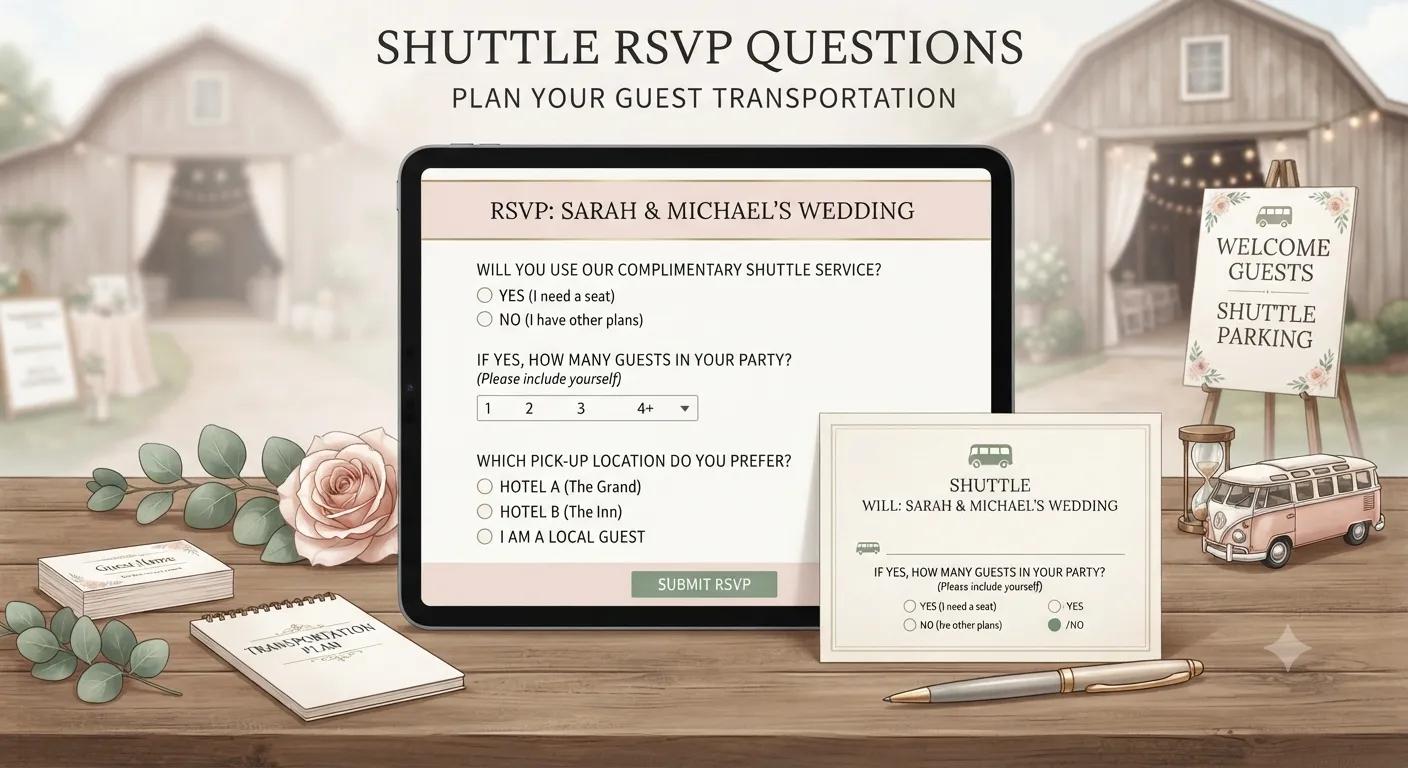
Wedding Transportation RSVP: Key Questions
Planning wedding transportation becomes much easier when couples know which guests actually need a ride. A wedding RSVP can do more than confirm attendance and meal choices; it can also collect the information needed to build an accurate transportation plan. Including wedding shuttle transportation details in the RSVP helps couples understand how many guests need transportation, where they are staying, and what type of shuttle schedule will work best. Asking these questions early can make it easier to choose an appropriate vehicle and avoid transportation problems closer to the wedding date.

Why Transportation Questions Matter on a Wedding RSVP
The number of confirmed wedding guests does not always equal the number of people who need shuttle transportation. Some guests may live nearby and drive themselves, while others may be staying at a hotel and rely completely on the shuttle.
There can also be guests who need transportation in only one direction. For example, someone may drive to the venue but prefer a shuttle ride back to their hotel after the reception. Without asking specific transportation questions, couples may have difficulty determining how many seats they actually need.
Adding a transportation section to the RSVP provides more accurate information before the shuttle is booked.
Ask Guests If They Need Shuttle Transportation
The first question should establish whether guests intend to use the wedding shuttle. A simple yes-or-no question is usually enough to begin building the transportation headcount.
Couples can make the question more useful by offering options such as shuttle transportation both ways, shuttle transportation for the return trip only, or no shuttle transportation.
This approach prevents couples from assuming that every wedding guest will use the shuttle. It also makes the final passenger count more realistic when discussing transportation with a charter bus provider.
Ask How Many People Need Seats
After determining whether a guest needs transportation, couples should ask how many people in their party will ride the shuttle.
This is important because the number of attendees and the number of transportation passengers can be different. A family may have four people attending the wedding but only two may need shuttle seats because the others have access to another vehicle.
Recording the transportation passenger count separately gives couples a better idea of the vehicle capacity they need. It can also prevent unnecessary overbooking when the final transportation arrangements are made.
Find Out Where Guests Will Stay
Pickup locations are just as important as passenger numbers. Couples should ask guests where they plan to stay before the wedding and reception.
If most guests are staying at one hotel, arranging a centralized pickup may be relatively simple. However, if guests are staying at several hotels, the shuttle route may need multiple stops.
Hotel information can also reveal whether some guests are staying with family, using vacation rentals, or returning to their own homes. Knowing these details early helps couples determine which pickup locations make the most practical sense.
Ask Which Wedding Events Require Transportation
Wedding transportation may involve more than one destination. If the ceremony and reception are held at different venues, guests may have different transportation needs throughout the day.
The RSVP can ask whether guests need transportation to the ceremony, transportation from the ceremony to the reception, transportation back to their hotel, or transportation for the entire wedding itinerary.
This information helps couples avoid creating a transportation schedule based on assumptions. It also gives the transportation provider a clearer picture of the routes that need to be covered.
Ask About Return Transportation Preferences
Return transportation should be addressed separately because guests may leave the reception at different times.
Some guests may want to leave shortly after dinner, while others may stay through the final part of the reception. Families with young children or older relatives may prefer an earlier shuttle, while other guests may want to remain until the wedding send-off.
The RSVP can ask guests whether they prefer an early return, a late return, or plan to arrange their own transportation.
Once the responses are collected, couples can determine whether one return trip is sufficient or whether multiple departures may be more practical.
Include Accessibility Questions
Wedding transportation should accommodate guests with different mobility needs. An RSVP provides an appropriate opportunity to ask whether anyone in the party requires accessible transportation.
Couples can include a short question asking whether a guest uses a wheelchair, mobility device, or requires additional assistance when boarding. This information should be collected before booking because accessible vehicle availability may need to be confirmed in advance.
Asking early also gives couples time to communicate specific requirements to their transportation provider and make sure the selected vehicle is suitable.
Ask About Children and Additional Guests
Children and additional guests should also be included when calculating shuttle requirements. A family may confirm attendance but fail to specify how many members actually need transportation.
The RSVP can ask guests to provide the number of adults and children who will use the shuttle. Couples should also make sure that plus-ones are included in the transportation count.
Having this information in one place makes the final passenger calculation more accurate and reduces the chance of overlooking a guest who needs a seat.
Keep Transportation Questions Simple
An RSVP should not become so complicated that guests rush through it or skip important fields. Transportation questions should be short, clear, and easy to answer.
Multiple-choice options can work particularly well for questions about shuttle usage and return preferences. Digital RSVP forms can also use conditional questions, allowing additional transportation fields to appear only when a guest indicates that they need a shuttle.
Keeping the process simple increases the likelihood of receiving complete and useful responses.
Organize RSVP Answers Before Booking
Once the RSVP deadline passes, couples should organize all transportation responses into a single list. This list should show the number of shuttle riders, pickup locations, transportation direction, return preferences, and accessibility requirements.
If paper and digital RSVPs are both being used, the information should be combined rather than kept in separate records. A single transportation list makes it easier to calculate the total number of passengers and identify guests who still need to provide information.
The list can then be shared with a charter bus provider when discussing vehicle capacity and scheduling.
Review the Transportation Count Before the Wedding
Guest plans can change after the RSVP deadline. Someone may switch hotels, decide to drive, add a guest, or suddenly need a return shuttle.
For this reason, couples should review their transportation list closer to the wedding date. A short follow-up message can confirm that the original transportation choice is still accurate.
This final review can help identify changes before the vehicle schedule is finalized and reduce the likelihood of unexpected transportation issues on the wedding day.
Turn Guest Responses Into a Better Transportation Plan
A well-designed wedding transportation RSVP gives couples valuable information before they commit to a shuttle plan. By asking about shuttle use, passenger numbers, hotel locations, event transportation, return preferences, accessibility requirements, and additional guests, couples can create a transportation plan based on actual needs.
The information collected through the RSVP can then help determine the appropriate vehicle capacity, pickup schedule, and number of shuttle runs. Instead of estimating transportation demand from the overall wedding guest count, couples can use direct responses from their guests to make more informed decisions.
When transportation planning starts with the right questions, the final shuttle arrangement becomes easier to organize and easier for guests to understand. A clear RSVP process can ultimately help create a smoother travel experience from the first pickup to the final return trip.