

University Intercampus Transportation Made Easier
Modern universities often operate across several campuses, academic buildings, research facilities, residence halls, athletic centers, and administrative locations. When these destinations are separated by busy roads or several miles, getting students, faculty, and staff from one location to another can become a daily logistical challenge. A well-designed campus shuttle transportation solution can make these connections more convenient while helping universities create a more organized transportation network.

The Growing Need for Intercampus Transportation
Students today may not spend their entire academic day in one building or even on one campus. A university student might attend a morning lecture at the main campus, travel to a specialized laboratory in the afternoon, and participate in an activity at another facility later in the day. Faculty and staff can have similar travel requirements when their responsibilities are spread across different locations.
Without a coordinated shuttle service, people may rely on personal vehicles, rideshare services, or lengthy walks. These alternatives can create additional parking demand and make it harder for riders to arrive on time.
An organized shuttle network gives the university a centralized way to connect important destinations. Instead of every individual planning transportation independently, passengers can use scheduled service that is built around the institution's daily operations.
Planning Routes Around Campus Activity
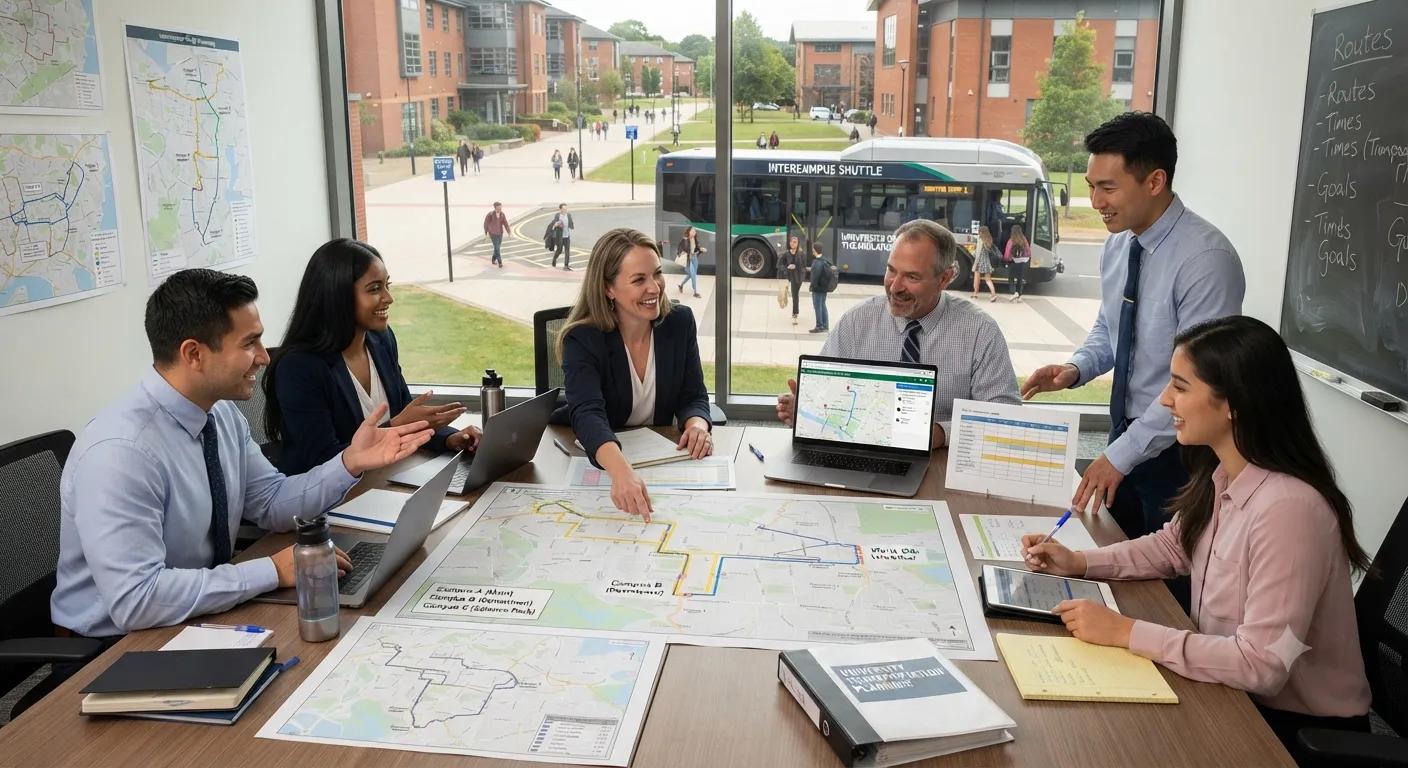
The most effective intercampus transportation plans begin with an understanding of actual travel patterns. Transportation managers can examine class schedules, employee movements, parking demand, enrollment patterns, and existing ridership information to identify the most important campus connections.
For example, if hundreds of students regularly travel between a main campus and a medical or science facility, that connection may require frequent direct service. If several smaller facilities generate moderate demand, a circulating route may provide broader coverage.
Route planning should also consider the physical characteristics of each campus. A vehicle may need to navigate narrow internal roads, restricted access areas, pedestrian zones, or specific loading locations. Stops should be positioned where passengers can safely board and reach their final destination without unnecessary walking.
Coordinating Shuttle Schedules With Classes
A transportation system can only be truly useful when its schedule matches the university's timetable. Students with only a short break between classes cannot afford to wait twenty or thirty minutes for the next shuttle.
Transportation planners should review when major classes begin and end and identify periods when large groups are likely to travel simultaneously. Additional vehicles or more frequent departures can be scheduled during these high-demand windows.
During quieter periods, universities can reduce frequency while maintaining enough service to keep essential connections available. This demand-based approach can make transportation more efficient without sacrificing convenience.
The academic calendar should also be considered. Orientation, registration periods, examinations, graduation, summer programs, athletic events, and conferences can all change transportation requirements.
Choosing Suitable Shuttle Vehicles
The right vehicle depends on passenger volume, route distance, road conditions, accessibility requirements, and the frequency of service. Smaller shuttle buses can be useful for routes that require frequent stops or operate on roads where larger vehicles may be difficult to maneuver.
For heavily traveled connections, larger buses can provide additional capacity and reduce the number of individual vehicle trips. Universities may also use different vehicle sizes at different times of day depending on demand.
Passenger comfort should be considered as well. For longer intercampus trips, comfortable seating and climate control can make travel more pleasant. Depending on the vehicle and route, amenities such as Wi-Fi and power outlets can also be useful for students and faculty who want to study or work while traveling.
Making Intercampus Travel Accessible
Accessibility is an essential part of university transportation planning. Students, employees, and visitors with mobility needs should be able to use the shuttle system without unnecessary barriers.
Accessible vehicles can provide ramps or lifts and appropriate space for mobility devices. Shuttle stops should also offer safe and practical boarding areas with accessible pedestrian connections to nearby buildings.
Universities should communicate accessibility requirements clearly when arranging transportation. When an outside provider is involved, discussing these needs during the planning stage helps ensure that the appropriate vehicles and operating procedures are available.
Using Technology to Make Shuttle Travel Easier
Technology can significantly improve the passenger experience. Real-time vehicle tracking allows riders to see where a shuttle is located and estimate when it will arrive. This can reduce uncertainty and make it easier for students and staff to plan their movements.
Universities can provide route maps, schedules, stop information, and live updates through transportation websites or mobile applications. QR codes at shuttle stops can also give passengers quick access to current route information.
Behind the scenes, transportation managers can use GPS and ridership data to evaluate the performance of each route. If a particular shuttle consistently becomes overcrowded, the university can increase capacity or frequency. If another route has very low demand, its schedule can be reviewed.
Improving Safety and Reliability
Safety should be central to every intercampus transportation program. Professional drivers, properly maintained vehicles, suitable loading areas, and clear communication procedures all contribute to dependable service.
Universities should establish expectations for driver qualifications, vehicle inspections, insurance, emergency communication, and service reliability when working with an external transportation provider.
Evening transportation deserves additional attention. Students traveling after dark can benefit from well-lit shuttle stops, predictable schedules, and clear information about final departures. These details can make riders feel more comfortable while improving the overall reliability of the program.
Reducing Parking Pressure
An effective intercampus shuttle can also help universities manage parking challenges. When students and employees have a convenient alternative to driving between locations, fewer vehicles need to move across campus throughout the day.
Reducing unnecessary vehicle trips can make parking facilities easier to manage and may decrease congestion around busy academic buildings. It can also create a more pedestrian-friendly campus environment by reducing traffic in areas with heavy foot activity.
For growing universities, transportation planning can therefore become an important part of broader campus development rather than simply an operational service.
Adapting Service to Changing Demand
University transportation needs are rarely static. Enrollment can increase, new buildings can open, departments can relocate, and class schedules can change. A shuttle route that worked well several years ago may not be appropriate for today's campus.
Regular performance reviews allow transportation managers to identify these changes. Ridership data, passenger surveys, wait times, vehicle capacity, and on-time performance can all provide useful information.
Small adjustments can sometimes produce significant improvements. Moving a stop closer to a high-demand building, changing departure times, or adding a vehicle during peak class changes may be enough to resolve recurring problems.
Supporting a Better Campus Experience
Transportation affects more than simply getting from one destination to another. When students know that they can depend on a shuttle, they have greater flexibility when planning classes and activities. Faculty and staff can move between facilities without repeatedly searching for parking or arranging individual transportation.
A reliable transportation network can also make a university feel more connected. Separate campuses become easier to access, allowing students and employees to participate in programs and activities across the institution.
Conclusion
University intercampus transportation can become much easier when routes, schedules, vehicles, and technology are planned around the real needs of the campus community. By analyzing travel patterns, coordinating service with class schedules, providing accessible vehicles, improving real-time communication, and reviewing performance regularly, universities can create transportation systems that are dependable and convenient.
A successful shuttle program does more than move passengers between campuses. It supports academic schedules, reduces unnecessary driving, eases parking pressure, improves accessibility, and helps create a more connected university environment. With thoughtful planning and ongoing adjustments, intercampus transportation can become a valuable part of everyday campus life.