

Understanding Charter Bus Fuel Consumption and Travel Costs
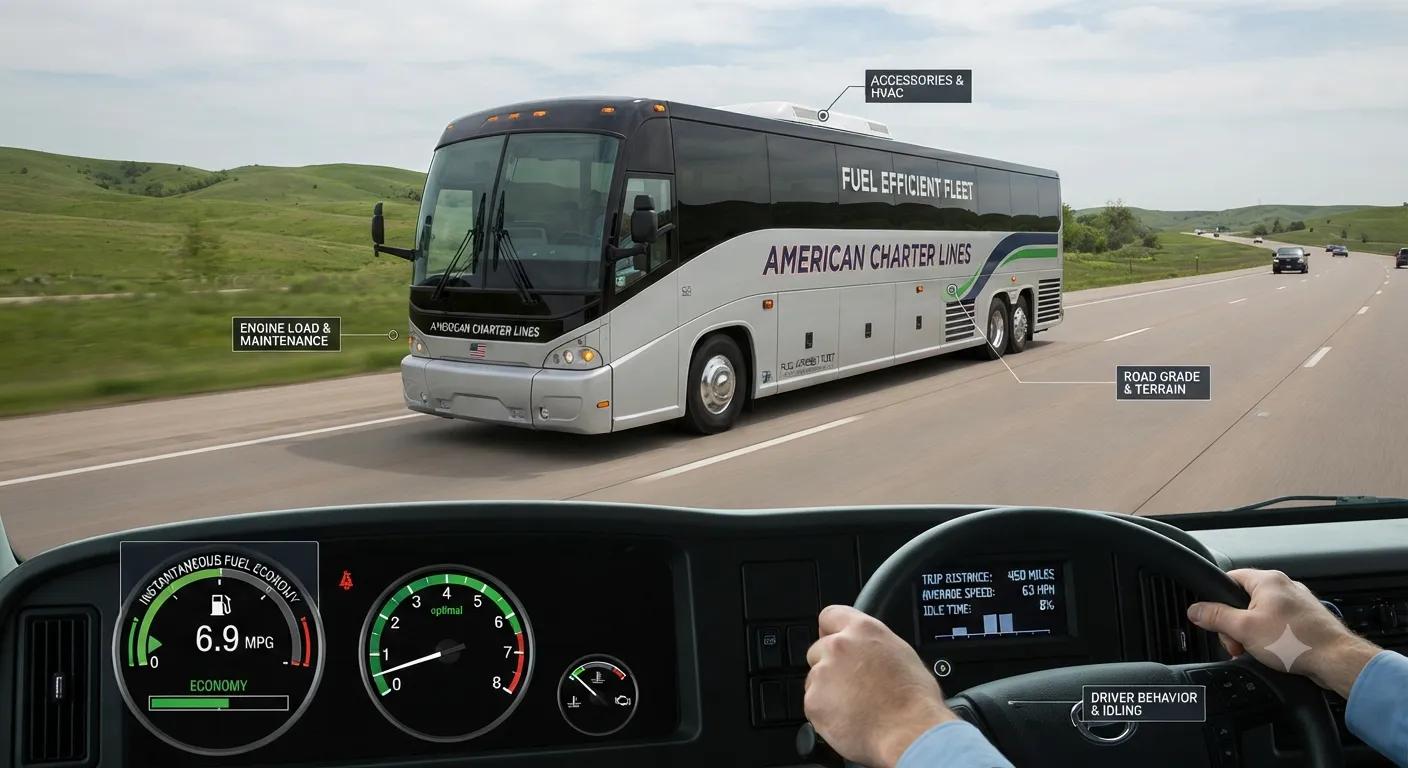
Fuel consumption is an important part of operating a charter bus, particularly when a group is traveling long distances or following a detailed multi-stop itinerary. Travelers often see the final rental price without knowing how factors such as mileage, vehicle size, passenger load, traffic, and fuel prices contribute to the overall cost. Understanding charter bus fuel consumption planning can help groups better understand transportation expenses and prepare a more realistic travel budget.

Charter bus costs are not determined by fuel consumption alone. Driver services, vehicle type, travel time, route requirements, tolls, parking, and other operating expenses can also affect the final price. However, fuel remains an important consideration, especially when the itinerary involves hundreds of miles or several days of travel.
What Is Charter Bus Fuel Consumption?
Fuel consumption refers to the amount of fuel a vehicle uses while traveling a particular distance. For charter buses, fuel use depends on the vehicle's design, weight, engine, route, driving conditions, and overall passenger load.
A motorcoach is considerably larger than a personal vehicle, so comparing its fuel economy directly with that of a sedan is not especially useful. A charter bus is designed to transport a large number of passengers simultaneously.
When evaluating fuel consumption for group transportation, it is more helpful to consider how efficiently one vehicle can move the entire group rather than comparing the bus with one individual car.
Vehicle Size Affects Fuel Requirements
Charter buses are available in different sizes and configurations. A full-size motorcoach generally has greater seating capacity and luggage space than a smaller minibus, but its size and weight can also affect fuel consumption.
Selecting the appropriate vehicle is therefore an important part of transportation planning. A bus that is too small may require multiple vehicles, while a much larger coach may provide more capacity than the group actually needs.
Travelers should provide an accurate passenger count when requesting a quote. The transportation provider can then consider the group's size, luggage requirements, itinerary, and other needs when determining the appropriate vehicle.
Distance Is a Key Cost Factor
The total distance traveled naturally influences fuel consumption. A short local transfer requires less fuel than a multi-state journey covering several hundred miles.
However, the actual mileage of a charter bus trip can be greater than the simple distance between two destinations. Pickup locations, hotel transfers, scheduled stops, sightseeing locations, restaurants, event venues, and return travel can all add miles.
For this reason, travelers should provide the complete itinerary whenever possible. An accurate route gives the transportation provider a better understanding of the total driving requirements.
Passenger and Luggage Weight Matter
The weight carried by the bus can influence how much energy is needed to move it. Passengers, suitcases, sports equipment, event materials, and other belongings all contribute to the total load.
This does not mean travelers should avoid bringing necessary items. Instead, the transportation provider should receive accurate information about unusual or substantial luggage requirements.
For example, a sports team may have equipment bags in addition to personal luggage, while a wedding group may need to transport decorations or garment bags. These requirements can affect the practical storage and vehicle considerations for the trip.
Traffic Can Increase Fuel Consumption
Traffic conditions can significantly affect how a charter bus operates. Steady highway travel is different from stop-and-go city traffic.
Repeated acceleration and braking can increase fuel consumption, while long periods of congestion may keep the vehicle operating for more time without covering as much distance.
This can be especially relevant for city tours, convention transportation, wedding shuttles, and corporate trips involving several pickup locations.
While traffic cannot always be avoided, realistic scheduling and thoughtful route planning can help groups account for potential delays and unnecessary driving.
Terrain Influences Fuel Use
Road conditions and terrain can also affect fuel consumption. A bus traveling across flat highways may experience different operating demands from one traveling through mountainous areas or routes with frequent elevation changes.
Uphill driving requires additional engine power, particularly when the bus is carrying a full passenger load. A long-distance trip through hilly or mountainous terrain may therefore have different fuel requirements from a similar-distance trip across relatively flat roads.
Route planning should take these conditions into account when appropriate.
Driving Habits Can Affect Efficiency
The way a large vehicle is driven can influence its fuel consumption. Smooth acceleration, controlled braking, and consistent driving can help reduce unnecessary fuel use.
Frequent aggressive acceleration, hard braking, and extended idling can increase fuel consumption. This is particularly relevant in busy urban areas where traffic conditions can require frequent stops.
Professional charter bus drivers are trained to operate large passenger vehicles safely, and responsible driving practices can also contribute to consistent vehicle performance.
Vehicle Maintenance Plays a Role
Maintenance is another factor connected to fuel consumption. Tires, engine components, filters, fuel systems, and other mechanical parts all need to function properly for a bus to operate efficiently.
Tire condition and pressure, for example, can influence rolling resistance. Engine-related maintenance issues can also affect how effectively fuel is converted into power.
Transportation providers manage fleet maintenance, but travelers can benefit from working with a company that maintains its vehicles properly. Reliable maintenance becomes particularly important for long-distance trips where the bus may operate for extended periods.
Fuel Prices Can Change Travel Costs
Even when a bus's fuel consumption remains relatively consistent, the price paid for fuel can change. Diesel prices vary by region and fluctuate over time due to market conditions, taxes, supply, and demand.
A long-distance charter bus may also purchase fuel in multiple locations during a journey, meaning the price paid at one stop may differ from another.
Because of these changes, some charter companies may include fuel expenses in their quoted rental rate, while others may have provisions for fuel surcharges. Travelers should ask how fuel costs are handled before finalizing their agreement.
Multiple Stops Can Increase Overall Mileage
A trip with multiple stops may require more fuel than a direct point-to-point journey. Every additional hotel, venue, restaurant, attraction, or pickup location can add mileage or increase operating time.
This is particularly important for groups planning multi-day itineraries. The bus may transport passengers between several locations rather than simply traveling to one destination and returning home.
Organizers can help manage this by creating a logical itinerary and avoiding unnecessary detours when possible.
How Fuel Consumption Relates to Rental Pricing
Fuel is only one component of the total charter bus rental cost. Depending on the company and trip, pricing may also reflect mileage, rental duration, vehicle type, driver services, tolls, parking, and other expenses.
Fuel consumption may be incorporated into the overall rate rather than appearing as a separate charge. Some companies may also use fuel surcharge provisions under certain circumstances.
When reviewing a quote, travelers should ask what is included in the price and whether additional fuel-related charges could apply. This makes it easier to understand the actual transportation budget before booking.
Planning a Cost-Conscious Charter Bus Trip
Travelers can make transportation planning more predictable by providing complete trip information from the beginning. Passenger count, luggage volume, pickup points, destinations, travel dates, expected stops, and overnight requirements can all help the transportation provider evaluate the journey.
Choosing an appropriately sized vehicle and organizing the itinerary efficiently can also help avoid unnecessary driving. While fuel prices and traffic conditions cannot be controlled, accurate planning can reduce uncertainty.
Why Charter Buses Can Make Sense for Group Travel
Fuel consumption should also be considered in the context of the entire group. A single charter bus can transport many passengers who would otherwise need multiple cars.
This can simplify scheduling, reduce the number of vehicles traveling to the same destination, and provide centralized transportation for the group.
For weddings, corporate events, school trips, sports teams, family vacations, and other group journeys, the value of charter transportation involves much more than fuel consumption alone.
Final Thoughts
Charter bus fuel consumption is influenced by several factors, including vehicle size, distance, passenger and luggage weight, traffic, terrain, driving behavior, maintenance, route design, and fuel prices. These factors can affect the cost of operating a journey and may ultimately influence the rental price.
Travelers can better understand their transportation budget by providing accurate itinerary details, asking how fuel expenses are handled, and choosing a vehicle that matches the group's actual needs.
Fuel is only one part of charter bus pricing, but understanding how it fits into the overall cost can make planning a long-distance group trip more straightforward and predictable.