

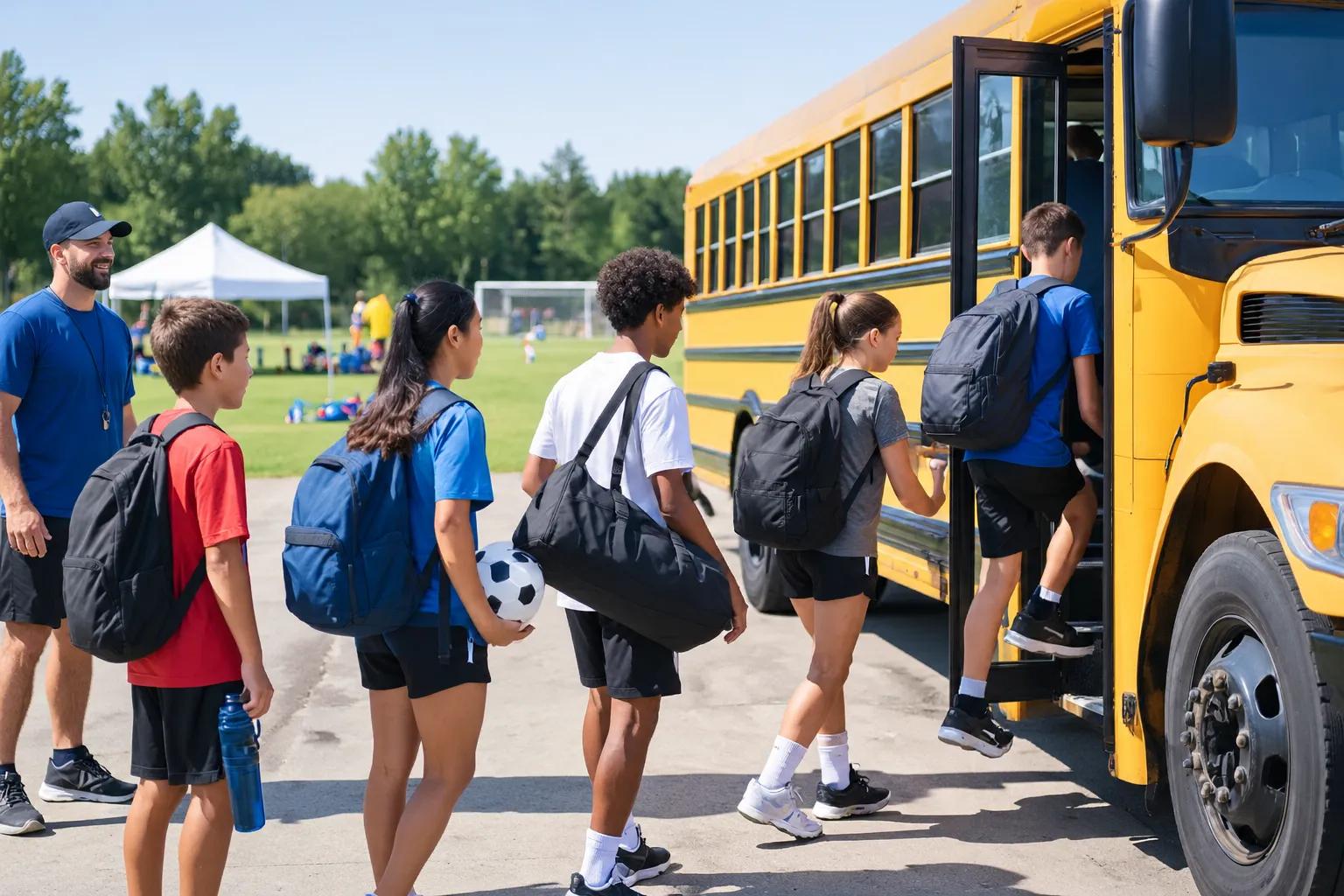
The Complete Guide to Youth Sports Camp Transportation
Organizing a youth sports camp involves much more than creating practice schedules and reserving athletic facilities. Camp directors also need to coordinate accommodations, meals, equipment, staff supervision, airport arrivals, daily transfers, excursions, and departure arrangements. Reliable transportation connects all of these elements and helps campers move safely between locations. For organizers preparing an extended athletic program, this youth sports camp travel planning resource provides additional guidance for managing transportation throughout a multi-day camp.

Understanding Youth Sports Camp Transportation Needs
Every sports camp has different transportation requirements. A local day camp may only need morning and afternoon pickup services, while an overnight camp could require airport transfers, hotel transportation, daily trips to multiple athletic facilities, evening excursions, and final departure transportation.
The first step is understanding how campers will travel throughout the entire program. Organizers should identify where participants will sleep, where training sessions will take place, which facilities require transportation, and whether campers will participate in off-site activities.
A complete overview makes it easier to determine the number and type of vehicles required.
Plan Transportation Around the Camp Schedule
Transportation should be built around the camp's daily schedule rather than added after the itinerary has been finalized. If a basketball group needs to arrive at a gym at 8:30 a.m., the transportation schedule should account for boarding, traffic, parking, unloading, and enough time for athletes to prepare before practice.
The same approach should be used throughout the day. Organizers can map out transportation between accommodations, dining facilities, training locations, competition venues, and recreational activities.
Choose the Right Vehicle
Vehicle selection depends on passenger numbers, trip length, equipment requirements, luggage, and the number of daily stops. A large overnight camp may benefit from a full-size charter bus, while a smaller group may be better suited to a minibus or shuttle.
Comfort is also valuable during a multi-day camp. Young athletes may spend several hours practicing every day, so comfortable transportation can provide a useful opportunity to rest between activities.
If campers have accessibility requirements, organizers should communicate those needs during the planning stage so appropriate transportation can be arranged.
Make Arrival Day Organized
Arrival day can create significant logistical challenges because campers may come from different cities and states. Some families may drive directly to the camp, while others may use regional transportation or flights.
For campers arriving by air, organizers should collect accurate flight information before the program begins. Staff can arrange designated airport meeting locations and coordinate transportation around expected arrival windows.
Regional pickup services can also help families who live farther away. Centralized stops at appropriate locations can allow several campers to travel together rather than requiring individual families to make long drives.
Luggage should be organized as carefully as passengers. Sports bags, personal luggage, and other belongings can be labeled with camper names and group information to make loading and unloading easier.
Keep Daily Transportation Consistent
Once camp begins, transportation becomes part of the daily routine. Campers may travel between dormitories or hotels, athletic facilities, dining locations, and other program venues several times each day.
Consistency can make this process much easier. Campers should know where they need to board, what time they need to arrive, and which staff members are responsible for their group.
Staff can also maintain passenger manifests for each scheduled trip. Head counts before departure and after arrival help organizers maintain accountability throughout the program.
When practical, having the same driver and vehicle throughout the camp can also improve familiarity. The driver can become familiar with the camp's routes and pickup points, while campers and staff know who to expect each day.
Coordinate Sports Equipment and Luggage
Youth athletes often travel with more equipment than ordinary group travelers. Depending on the sport, a camp may need to transport team bags, protective equipment, uniforms, balls, coolers, medical supplies, and other training materials.
Organizers should estimate the amount of storage space required before booking transportation. Overlooking equipment can create problems when passengers have enough seats but there is insufficient space for their belongings.
A simple loading system can make daily transportation more efficient. Equipment can be grouped by team or activity, while staff can check that important items have been loaded before the vehicle leaves.
This approach becomes particularly useful when campers move between multiple facilities during the same day.
Plan Excursions and Evening Activities
Many sports camps include activities outside regular training. Campers may attend a professional game, visit a sports museum, participate in a team-building activity, or enjoy a group dinner.
These excursions require additional transportation planning because venues may be crowded and unfamiliar. Before leaving camp, staff should communicate the departure time, meeting location, and expected return arrangements.
The transportation provider should also receive accurate venue information. Bus access, parking, loading areas, and traffic patterns can vary significantly from one location to another.
Staff should complete head counts before departure, upon arrival, and before the return trip. A clear transportation procedure helps everyone remain organized during busy excursions.
Prepare for Weather-Related Changes
Outdoor sports camps can be affected by rain, thunderstorms, extreme heat, or other weather conditions. A canceled practice can create a chain reaction that affects transportation for the rest of the day.
Camp directors can reduce disruption by creating an alternate transportation plan before the camp begins. Indoor athletic facilities can be identified as backup locations, and transportation requirements can be discussed with the provider in advance.
If a practice moves to another venue, the transportation coordinator can communicate the revised address, pickup time, and route to staff and drivers.
A flexible transportation plan gives organizers more options when conditions change unexpectedly.
Focus on Safety and Supervision
Transportation for young athletes requires careful supervision. Camp staff should understand their responsibilities before the first trip and know how campers will be assigned to vehicles.
Clear boarding procedures can help prevent confusion. Campers should travel with their assigned groups and understand who they should contact if they need assistance.
Staff should also maintain relevant emergency and medical information according to the camp's established procedures. Necessary medications and important medical information should remain accessible during transportation rather than being placed where staff cannot quickly retrieve them.
When selecting a transportation company, organizers can ask about driver qualifications, vehicle maintenance, insurance, safety procedures, and experience with youth groups.
Coordinate Airport and Departure Transportation
Departure day deserves as much planning as arrival day. Campers may leave at different times, with some traveling home with parents and others heading to airports or regional pickup locations.
Airport transportation should be scheduled around flight times while allowing sufficient time for traffic, airport procedures, and unexpected delays. Staff responsible for younger travelers should understand the appropriate airline handoff procedures when applicable.
Before vehicles leave, staff should also check storage areas and seating areas for forgotten belongings.
Communicate Transportation Details With Parents
Parents should receive transportation information before their children arrive at camp. Clear communication can explain airport arrangements, regional pickup locations, daily transportation, excursion schedules, and departure procedures.
If weather, traffic, or facility changes affect the schedule, organizers should communicate updates as promptly as possible.
Good communication helps parents understand where their children are traveling and gives them greater confidence in the camp's organization.
Manage Transportation Costs Effectively
Transportation can represent a significant portion of a multi-day camp budget. Careful scheduling can help organizers avoid paying for unnecessary vehicles or duplicate trips.
One useful strategy is to coordinate activities so groups do not all require transportation at the same time. A vehicle may be able to complete multiple scheduled runs when sufficient time exists between activities.
For larger groups, keeping campers together can also reduce the number of individual vehicles required. Current sports transportation guidance emphasizes matching vehicle selection to passenger count, trip distance, luggage, equipment, and the structure of the itinerary.
Review the Plan After Camp
Transportation planning should continue after the final camper has gone home. A short review can reveal which parts of the system worked well and which areas should be improved for the next camp.
Organizers can consider whether vehicles arrived on schedule, whether equipment storage was sufficient, whether airport transfers worked smoothly, and whether parents had enough information.
Conclusion
Youth sports camp transportation connects nearly every part of a multi-day athletic program. From airport arrivals and daily training transfers to equipment movement, evening excursions, weather changes, and final departures, dependable transportation helps create an organized camp experience.
By planning around the complete itinerary, selecting suitable vehicles, preparing for schedule changes, maintaining effective supervision, and communicating clearly with families, camp directors can make transportation safer and more efficient. A thoughtful transportation strategy allows young athletes to focus on training, teamwork, and enjoying their time at camp while staff remain confident that every trip is properly coordinated.