

The Complete Guide to Pickleball Club Tournament Travel
Pickleball tournaments are becoming an exciting way for clubs to combine competition, teamwork, and social travel. However, organizing transportation for an entire club can be challenging when players have different match schedules, equipment needs, and return times. A well-planned pickleball tournament group travel plan can simplify the journey by bringing players and supporters together while reducing the stress associated with multiple cars, parking, and unfamiliar roads.

Why Transportation Is Important for Tournament Travel
A tournament trip involves much more than simply reaching the venue. Players may need to arrive early for registration and warmups, while others may compete later in the day. Some participants may also stay overnight, requiring transportation between hotels and tournament facilities.
When everyone drives separately, organizers have to coordinate several vehicles, parking locations, arrival times, and return arrangements. Shared transportation creates a centralized travel plan that makes it easier to keep the group together.
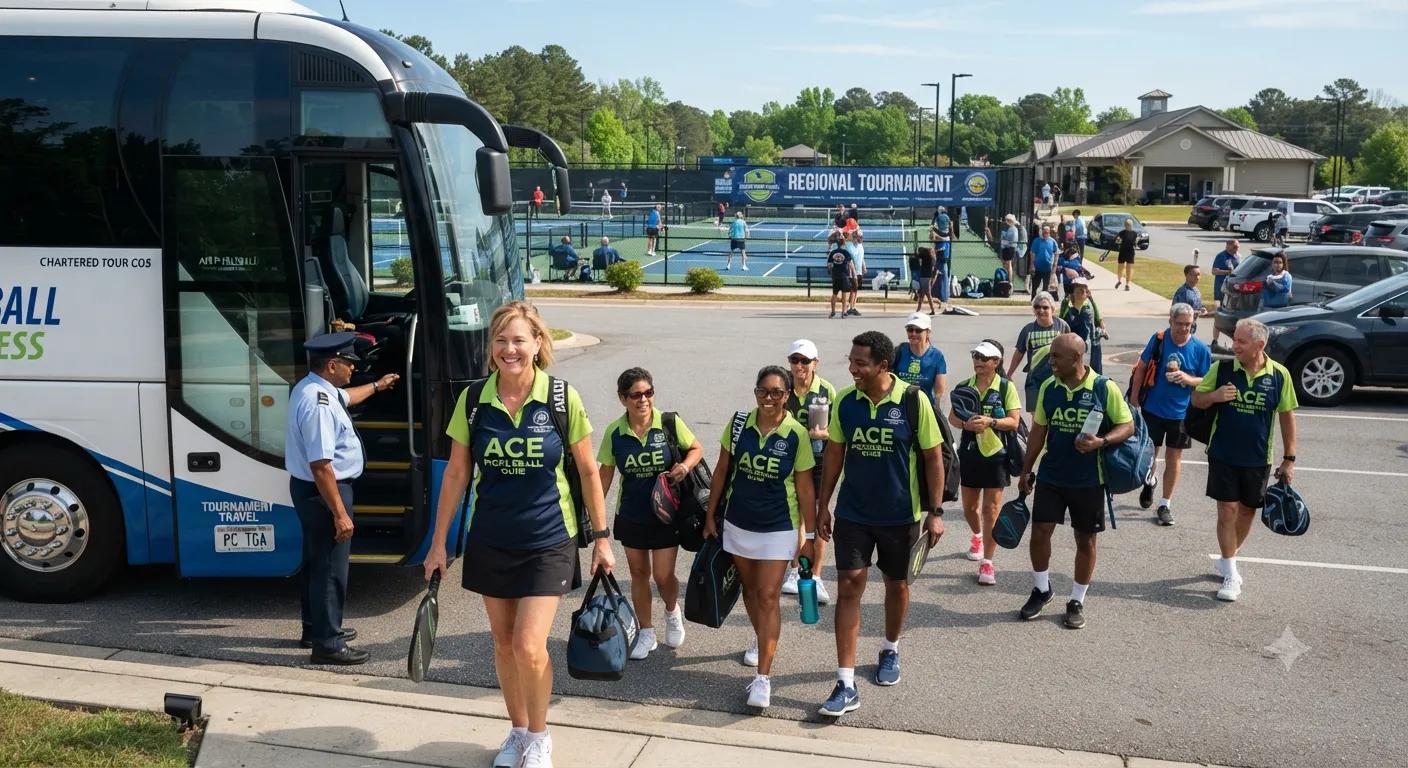
Traveling by charter bus can also enhance the social aspect of a tournament. Players have time to talk, prepare mentally for competition, support teammates, and relax after matches without having to concentrate on driving.
Start Planning Early
Successful tournament transportation begins well before the event. Clubs should determine the expected passenger count as soon as tournament dates and registration information become available.
The passenger total should include players, coaches, club representatives, spouses, friends, or other companions who plan to attend. Organizers should also determine which members are participating on each day because tournament schedules can vary considerably.
Early planning gives clubs more time to compare vehicle options, review transportation quotes, communicate costs to members, and address accessibility requirements.
Choose the Right Transportation Option
The size of the group is an important factor when selecting a vehicle. A smaller club may find a minibus suitable for a local tournament, while a larger group may require a full-size charter bus.
Travel distance should also influence the decision. A vehicle that works well for a short regional trip may not provide the same level of comfort for a multi-hour journey.
Equipment and luggage are additional considerations. Pickleball players may carry paddle bags, backpacks, folding chairs, coolers, carts, and overnight luggage. Clubs should discuss these requirements with the transportation provider before selecting a vehicle so there is adequate storage space.
Build the Schedule Around Matches
The tournament schedule should determine when the group leaves and returns. Organizers should identify the earliest match and allow enough time for traffic, venue access, registration, changing, and warmups.
Arriving too close to the start of a match can create unnecessary pressure. A reasonable arrival buffer allows players to settle in and prepare for competition.
Return transportation is often more complicated because players can finish at very different times. A participant eliminated during an early round may be ready to leave hours before someone competing in a semifinal or championship match.
Clubs can consider multiple return runs, a smaller secondary vehicle, or one final departure after the last matches. The selected approach should be communicated before the tournament so everyone understands the schedule.
Plan for Multi-Day Tournaments
Weekend and destination tournaments require a broader transportation strategy. Instead of arranging only the trip from the club to the tournament venue, organizers may need transportation between hotels, courts, restaurants, airports, and other scheduled locations.
Keeping a charter bus with the group throughout a multi-day event can make these transfers easier. Daily hotel-to-venue transportation can prevent players from having to coordinate separate rides each morning.
A complete itinerary should be provided to the transportation company before booking. This gives the provider a better understanding of the group's daily requirements and helps identify potential scheduling conflicts.
Consider Player Comfort
Pickleball can be physically demanding, especially when players participate in several matches during one day. After spending hours competing, players will appreciate comfortable transportation on the journey back to their hotel or home.
Depending on the vehicle, amenities may include reclining seats, climate control, power outlets, Wi-Fi, overhead storage, and additional luggage space. These features can make longer trips more relaxing.
Rest stops should also be considered for extended journeys. Giving passengers an opportunity to stretch, use restrooms, and purchase refreshments can improve the overall travel experience.
Comfort is particularly important when the group includes older players or passengers with mobility requirements. Any accessibility needs should be discussed with the provider before the vehicle is selected.
Organize Pickleball Equipment
Although pickleball equipment is relatively easy to transport, a large club can still have substantial storage requirements. Paddle bags, chairs, carts, coolers, and luggage can quickly add up.
Organizers should communicate equipment expectations to club members before departure. Larger items should be stored in designated luggage areas whenever possible, leaving the passenger cabin clear.
For overnight events, clubs should estimate how many suitcases will be traveling with the group. Sharing this information in advance helps ensure that the selected vehicle can accommodate both people and belongings comfortably.
Create a Communication System
Communication is essential when managing a large tournament group. Every passenger should receive the pickup address, boarding time, departure schedule, venue information, and expected return arrangements before the trip.
A group messaging channel can be useful for sharing changes. Match delays, weather conditions, or tournament schedule adjustments can affect transportation plans.
Clubs should also designate one transportation coordinator who communicates directly with the transportation provider or driver. This creates a clear chain of communication and prevents multiple passengers from giving conflicting instructions.
A passenger roster can help with headcounts, particularly when players are spread across multiple courts or facilities.
Prepare for Weather and Delays
Outdoor pickleball tournaments can be affected by rain, wind, storms, or extreme temperatures. Even indoor tournaments can experience delays when matches run longer than expected.
Transportation plans should allow some flexibility for these situations. Organizers should discuss potential schedule changes with the transportation provider before the event.
If a tournament is delayed, the transportation coordinator can communicate the updated departure time to the group. Having a designated meeting point also helps prevent confusion when players are moving between courts and venue areas.
Budget for the Complete Trip
Transportation costs should be evaluated based on the entire itinerary rather than simply the initial vehicle price. Clubs should ask about potential charges for tolls, parking, additional stops, extended waiting, and overnight driver accommodations.
Once the full cost is known, organizers can calculate a per-person transportation fee. Setting a payment deadline helps determine how many passengers are actually committed to the trip.
It is also helpful to establish a cancellation policy before collecting payments. Clear expectations can prevent disagreements if a player withdraws because of an injury or scheduling conflict.
Make the Trip Social
One of the biggest advantages of group transportation is the opportunity to turn tournament travel into a club experience. Players can spend time together away from the courts, discuss their matches, encourage teammates, and get to know newer members.
For destination tournaments, clubs can also incorporate group dinners, sightseeing, practice sessions, or other activities into the transportation schedule. These experiences can make the tournament feel like a complete club getaway rather than simply a sporting event.
Group travel can also help members who do not want to drive long distances participate in tournaments they might otherwise skip.
Select a Reliable Transportation Provider
The transportation provider is an important part of the overall tournament experience. Clubs should consider vehicle availability, experience with group sports travel, scheduling flexibility, communication, safety practices, and accessibility options.
When requesting a quote, provide detailed information about the passenger count, dates, pickup locations, tournament venues, hotels, equipment, and anticipated return times.
Comparing providers based on overall value rather than the lowest initial price can help clubs choose an option that better matches their itinerary and passenger needs.
Review the Trip Afterward
Once the tournament is over, organizers should take a few minutes to evaluate the transportation experience. Ask passengers whether the pickup times worked, whether the vehicle was comfortable, and whether the return schedule was practical.
Keeping notes about the final passenger count, transportation cost, venue access, parking arrangements, and successful pickup locations can make future tournament planning much easier.
A club that regularly participates in tournaments can develop a reusable transportation template based on what worked during previous trips.
Conclusion
The complete pickleball club tournament travel plan should address much more than getting players from one location to another. Passenger numbers, vehicle size, match schedules, equipment, hotel transportation, accessibility, comfort, communication, and return arrangements all influence the success of the trip.
By beginning the planning process early and creating a detailed itinerary, clubs can reduce transportation-related stress and give players a more comfortable experience. Shared transportation also provides an opportunity for members to socialize and support one another throughout the tournament.
Whether the event is a nearby one-day competition or a multi-day destination tournament, reliable group transportation can help players arrive prepared, travel comfortably, and focus on what makes pickleball tournaments worthwhile: competition, teamwork, and club camaraderie.