

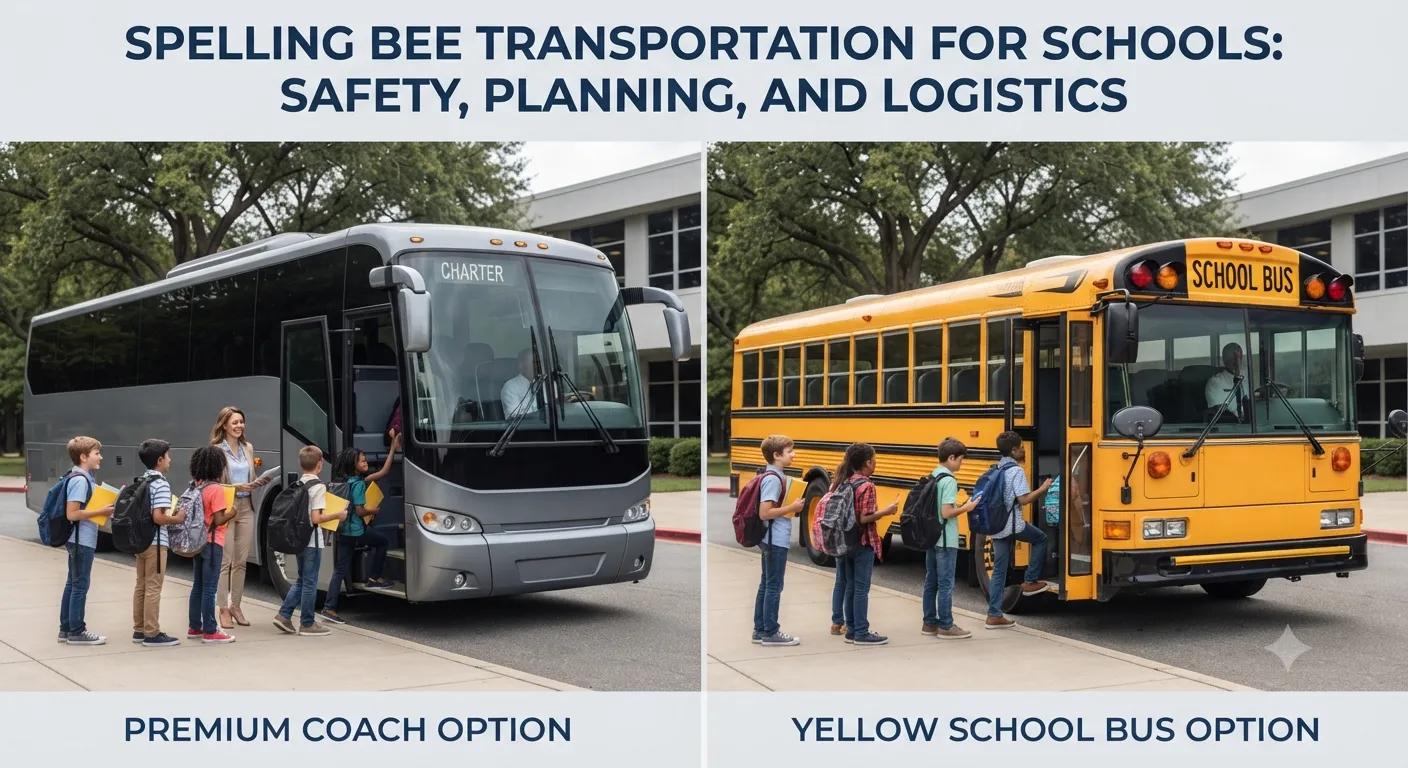
Spelling Bee Transportation for Schools: Safety, Planning
A school spelling bee is more than an academic competition. For participating students, it can be an exciting opportunity to represent their school, demonstrate months of preparation, and compete with other talented students. However, when the competition takes place away from campus, transportation becomes an important part of the event plan. Schools need to consider student safety, timing, chaperone responsibilities, vehicle selection, communication, and return arrangements.
For schools organizing an off-campus competition, dependable spelling bee transportation for schools can simplify group travel and help coordinators keep students and chaperones organized. A thoughtful transportation plan also allows students to arrive at the competition focused and prepared rather than worried about travel logistics.

Why Transportation Planning Matters for a Spelling Bee
Spelling bees often involve relatively small groups compared with athletic tournaments or school field trips. A school may send one champion, several finalists, teachers, and chaperones. At the district or regional level, however, transportation requirements can quickly become more complicated.
Students may need to travel to another school, convention center, university, auditorium, or regional competition venue. Families may also want to attend and support the participants. Without a clear transportation plan, separate cars can create parking problems, inconsistent arrival times, and additional responsibilities for teachers.
Planning transportation in advance gives schools greater control over the schedule while creating a predictable travel experience for students and families.
Start With the Student and Passenger List
The first step is determining exactly who will travel. Begin with the spelling bee participants and then identify teachers, school staff, approved chaperones, and parents or supporters who may need transportation.
The passenger list should be finalized before selecting a vehicle. A small group may need only a minibus or shuttle, while a larger group of students, teachers, and supporters may require a full-size motorcoach.
Schools should also identify accessibility requirements early. If a student uses a mobility device or needs another transportation accommodation, communicate those requirements before booking the vehicle.
Keeping an accurate passenger roster is particularly important on the return trip. A final headcount should be completed before leaving the competition venue and again as students are dropped off.
Prioritize Safe Pickup and Drop-Off Locations
Pickup locations should be convenient but, more importantly, safe. Students should not have to cross busy roads unnecessarily or wait in areas with poor visibility.
The National Highway Traffic Safety Administration recommends considering student access to bus stops, waiting-area conditions, pedestrian paths, roadway characteristics, and route hazards when planning school transportation.
For a spelling bee, schools can often simplify transportation by selecting a central school as the meeting point. When multiple pickup locations are necessary, the route should be planned carefully so that students are not left waiting in unsafe areas.
The same principle applies to the return journey. The bus should have a clearly identified location where parents or authorized adults can meet students safely.
Choose the Right Vehicle for the Group
Vehicle selection should reflect the size and needs of the traveling group. A small group of students and chaperones may be comfortable in a smaller shuttle, while a larger school delegation may benefit from a motorcoach.
Schools should consider more than seating capacity. Storage space, accessibility, travel distance, onboard amenities, and the expected duration of the trip can all affect the appropriate vehicle.
It is also useful to avoid choosing a vehicle based solely on the maximum number of seats. Leaving reasonable space can make the journey more comfortable, especially when students are traveling with coats, backpacks, snacks, or other personal items.
Establish Clear Chaperone Responsibilities
Transportation supervision works best when every adult understands their role before departure. One person should serve as the primary trip coordinator and communicate with the driver and competition organizers.
Other chaperones can be responsible for student supervision, headcounts, boarding, and communication with parents. For larger groups, assigning specific students to individual chaperones can make it easier to confirm that everyone is accounted for.
Schools should always follow their district's requirements concerning adult-to-student ratios, permission forms, volunteer approvals, and supervision. Requirements can vary between school systems, so transportation planning should be coordinated with existing school policies.
Build Extra Time Into the Schedule
A spelling bee may begin at a scheduled time, but the travel schedule should include a reasonable buffer. Traffic, weather, parking, security procedures, and venue check-in can all affect arrival time.
Arriving too close to the start of the competition can create unnecessary stress for students. An earlier arrival allows the group to find the registration area, use the restroom, settle in, and become familiar with the venue.
The return schedule requires even more flexibility because spelling bees do not always have a predictable ending time. Multiple rounds can cause the event to continue longer than expected. Schools should discuss waiting arrangements and potential schedule extensions with the transportation provider before the trip.
Keep the Ride Comfortable for Spellers
The transportation environment can influence how students feel before competing. Some students may enjoy talking with classmates, while others may prefer quiet time before taking the stage.
Schools can create a calmer environment by giving participating spellers a quieter seating area when possible. Supporters can sit farther away so students have the option to review notes, listen to music, or simply relax.
Teachers and chaperones should also avoid creating unnecessary pressure. Classmates may want to quiz the speller with difficult words, but not every student finds last-minute practice helpful. The student should be able to decide whether they want to review or take a break.
Prepare for Weather and Unexpected Delays
Weather can affect transportation plans, especially for competitions scheduled during winter months. Schools should monitor forecasts and maintain communication with the transportation provider and competition organizers.
The transportation plan should also account for unexpected traffic, road closures, vehicle delays, or changes to the competition schedule. Families should have a designated contact person who can provide updates if the itinerary changes.
Having a contingency plan does not mean expecting problems. It simply gives coordinators a clear response if something unexpected happens.
Communicate With Parents Before Departure
Parents should receive transportation information well before competition day. The communication should explain where students will meet, what time they need to arrive, where the competition will take place, and when they can approximately expect the group to return.
Parents should also know who to contact during the trip. A single coordinator or school representative can help prevent confusion caused by multiple people providing different information.
The return process deserves special attention. Parents should understand whether students will be released directly to them, whether an authorized adult must be present, and what happens if the bus arrives earlier or later than expected.
Consider Accessibility From the Beginning
Every student should have a practical way to participate in the competition. Accessibility should therefore be part of transportation planning from the beginning rather than something addressed immediately before departure.
Schools should communicate mobility, sensory, or other relevant accommodation requirements through the appropriate school procedures. If an accessible vehicle is required, confirming availability early can provide more flexibility when selecting transportation.
A thoughtful plan can also consider seating preferences, quieter areas, boarding requirements, and the amount of time students may need at pickup and drop-off points.
Plan the Return Trip Carefully
The trip home can be just as important as the journey to the competition. Some students may return excited after advancing or winning, while others may be disappointed after elimination.
Chaperones can help maintain a positive atmosphere by recognizing the effort of all participants. Students should have a comfortable environment where they can talk, relax, or simply enjoy the ride home.
Before departing, the trip coordinator should complete a full headcount and confirm the return itinerary. Each student should have a clearly documented drop-off or pickup arrangement.
Conclusion
Spelling bee transportation requires more than simply arranging a bus. Schools need to coordinate student rosters, chaperones, pickup locations, vehicle requirements, accessibility needs, schedules, parent communication, and contingency plans.
Starting early gives coordinators time to address transportation requirements without placing unnecessary pressure on students during the final stages of competition preparation. A well-organized transportation plan can help students arrive safely, stay focused, and enjoy the experience of representing their school.
By treating transportation as an essential part of spelling bee logistics rather than an afterthought, schools can create a smoother experience for competitors, teachers, families, and chaperones from the first pickup to the final drop-off.