

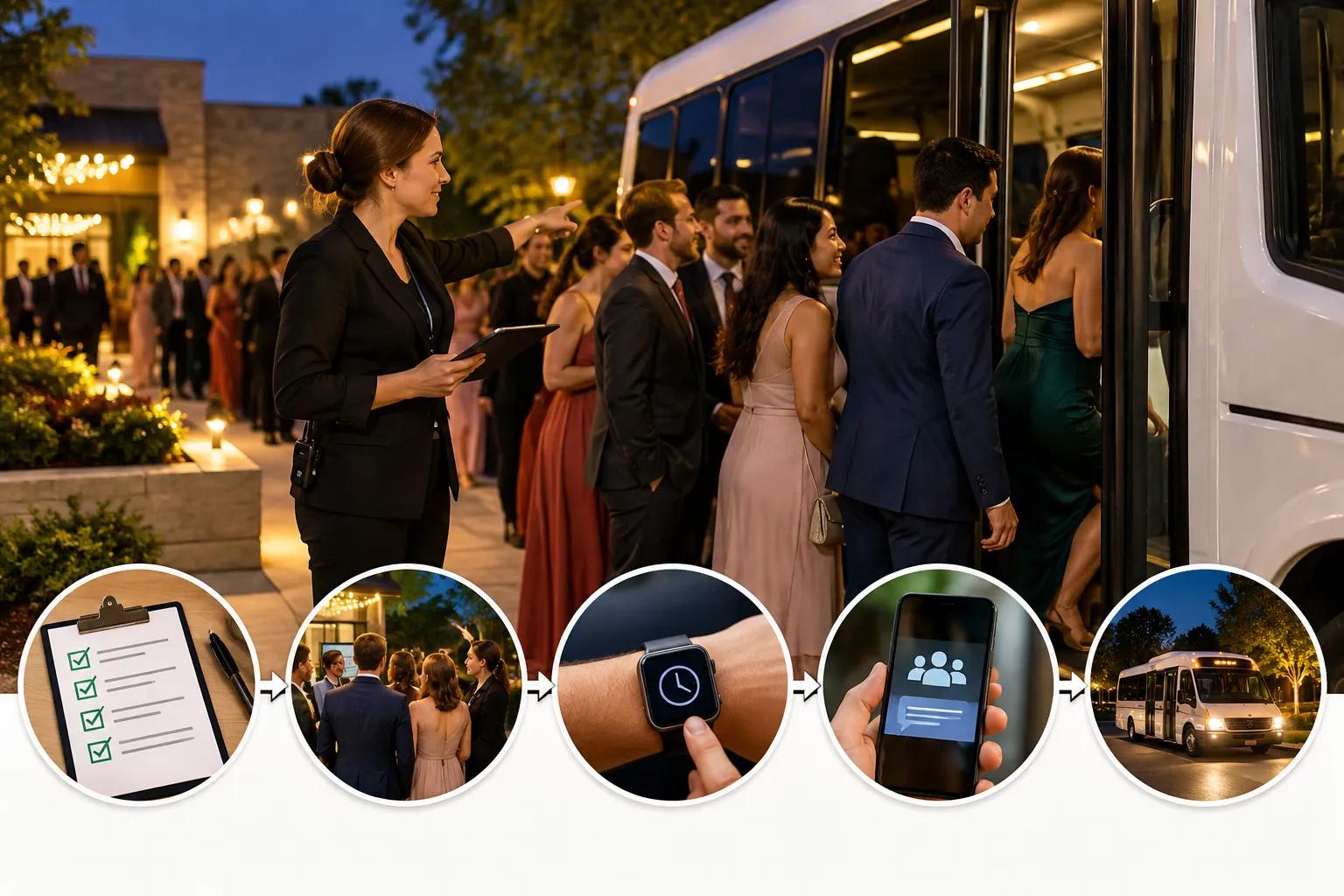
Smart Event Shuttle Scheduling for the Final Guest Departure
A successful event does not truly end when the final speech, performance, or reception activity finishes. Guests still need a comfortable and dependable way to return to their hotels, parking areas, or homes. This is why event shuttle scheduling should account for the final departure just as carefully as the initial arrival. A smart final-shuttle strategy can reduce confusion, prevent missed transportation, and create a more organized ending for both guests and event staff.

The last departure can be more complicated than earlier shuttle runs because there is usually no later vehicle. Guests may be talking with friends, taking photographs, collecting personal belongings, attending a final activity, or simply losing track of time. Event planners need to anticipate these situations and create a transportation schedule that provides enough flexibility while still maintaining clear departure boundaries.
Why the Final Guest Departure Requires Careful Planning
Earlier in an event, missing a shuttle may only mean waiting for the next scheduled vehicle. The final departure is different because transportation service may end once that vehicle leaves.
This makes the final shuttle particularly important for weddings, conferences, corporate events, concerts, festivals, sporting events, and private gatherings. A guest who misses the last scheduled ride may suddenly need to find an alternative transportation option, creating stress at the very moment the event is supposed to conclude.
Smart scheduling begins by recognizing that the last departure needs its own strategy rather than being treated as an ordinary shuttle run.
Start With the Event's Actual Ending Time
The final shuttle should be planned around the realistic end of the event rather than simply copying the advertised program time. Guests rarely leave the moment an event officially ends.
After a conference session, for example, attendees may remain behind to speak with colleagues. Wedding guests may spend additional time taking photographs or saying goodbye. At a concert or sporting event, the actual ending may change because of encores, overtime, or other unexpected delays.
Event planners should compare the program with the venue's closing requirements and the transportation provider's scheduled service window. A reasonable buffer can give guests enough time to reach the loading zone without requiring vehicles to wait unnecessarily long.
Determine the Final Passenger Demand
Smart shuttle scheduling also depends on knowing approximately how many guests will still need transportation at the end of the event.
The original attendance figure is not always useful for this calculation because some guests may leave early, drive themselves, stay overnight, or arrange private transportation. The number of people remaining at the end can therefore be significantly different.
Event staff can track passengers throughout the evening as they board earlier return shuttles. This creates a running estimate of how many people may still need the final transportation wave.
The estimate does not need to be perfect. It should simply be accurate enough to help planners determine whether one vehicle is sufficient or whether several vehicles should be prepared.
Plan a Final Transportation Wave
For larger events, a single final shuttle may not provide enough capacity. Instead, planners can organize several vehicles as a final transportation wave.
Multiple vehicles can be positioned near the venue and prepared to board passengers within the same general departure period. This approach is particularly useful when a large group is expected to leave immediately after the event concludes.
A final wave also provides flexibility when destinations vary. Vehicles can be assigned to different hotels, parking areas, or residential drop-off zones so guests can board according to their destination.
The objective is to create enough capacity for the expected demand while keeping the departure process organized and easy to understand.
Communicate the Final Departure Before the Event
Guests should know the final shuttle schedule before they arrive. Transportation details can be included in event invitations, registration emails, websites, mobile applications, hotel information, and confirmation messages.
Early communication allows attendees to plan their evening around the transportation schedule. If someone knows that the last shuttle leaves at a specific time, they can decide when to leave the event rather than discovering the cutoff unexpectedly.
Clear communication also reduces the number of transportation questions event staff need to answer during the final hour.
Use a Series of Departure Reminders
One announcement at the end of the event is rarely sufficient. Guests may be in another room, talking with other attendees, using the restroom, or unable to hear the announcement because of music or crowd noise.
A series of reminders can help keep the final departure visible throughout the evening. An earlier reminder can give guests time to prepare, while another announcement closer to departure can encourage them to begin walking toward the loading area.
The final reminder should clearly state that the vehicles are preparing to leave. Language such as “Final shuttle departs at 11:45 p.m.” is much more effective than vague wording such as “shuttles available until 11:45 p.m.”
Make the Pickup Location Easy to Find
Even guests who know the final departure time can miss a shuttle if they cannot find the loading area quickly.
Clear signs should direct guests from the primary event space toward the pickup location. If several vehicles are operating, each should have visible destination information so passengers can identify the correct shuttle.
For evening events, lighting should also be considered. Guests should be able to see signs, vehicles, staff, and boarding areas without difficulty.
Event staff can be positioned near major exits during the final departure period to guide guests toward transportation.
Assign a Final-Departure Coordinator
A designated transportation coordinator can make the last shuttle operation much easier to manage. This person can communicate with drivers, transportation dispatchers, venue staff, security personnel, and guests.
The coordinator should know the planned departure time, expected passenger count, vehicle assignments, and procedures for handling delays. Having one person responsible for final-departure decisions prevents different members of the event team from giving drivers conflicting instructions.
The coordinator can also monitor the loading area and determine whether the final wave is ready to leave.
Establish a Clear Hold Policy
There may be moments when guests are still approaching the shuttle after boarding has begun. Event planners should decide beforehand whether vehicles can wait and for how long.
A written hold policy can establish a reasonable waiting period and identify who has authority to approve additional time. The transportation provider should participate in this discussion because driver schedules and service requirements may affect how long vehicles can remain available.
This approach avoids making complicated decisions during the final minutes of the event. Everyone knows the procedure before the first passenger boards.
Conduct a Final Venue Sweep
A final venue sweep provides an additional safeguard against missed departures. Staff members can check restrooms, lounges, hallways, outdoor areas, parking sections, and other places where guests may still be located.
The sweep can be performed shortly before the final transportation leaves. Staff can remind remaining guests about the departure while moving through the venue.
At larger properties, the sweep should be coordinated with venue management or security so that all relevant areas are covered.
Consider a Sweep Vehicle
For events with large attendance, a separate sweep vehicle can provide an additional layer of protection. The main transportation wave can leave at the scheduled time while a smaller vehicle remains available for guests who are still making their way toward the pickup area.
The sweep vehicle can depart after staff complete the final venue check. Its route should be planned in advance, particularly if guests are being returned to multiple hotels or locations.
This strategy should not replace clear communication of the published final departure. Instead, it should function as a backup measure for unexpected delays and stragglers.
Prepare for Guests With Additional Needs
Some guests may require additional time to reach or board a shuttle. Older attendees, families with children, and passengers with mobility requirements should be considered when creating the final departure schedule.
Event planners should communicate accessibility requirements to the transportation provider before the event. Appropriate vehicles and boarding arrangements can then be included in the final transportation plan.
Allowing sufficient boarding time helps create a more comfortable experience without disrupting the overall departure schedule.
Have a Backup Plan for Missed Transportation
Even a carefully managed final shuttle can occasionally be missed. Event planners should know in advance how they will assist a guest who arrives after the final scheduled vehicle.
Depending on the event, a backup plan might involve coordinating with a hotel front desk, arranging rideshare assistance, or having an authorized staff member help with alternative transportation.
For school groups, youth organizations, and other supervised events, additional safeguards should be established. Staff should maintain accurate headcounts and ensure that every participant has a safe transportation arrangement.
Review the Final Departure After the Event
Smart scheduling improves when planners review what happened after each event. Passenger counts, actual departure times, delays, guest questions, and missed rides can all provide useful information.
If guests repeatedly arrived late, organizers may need to begin reminders earlier. If the final vehicles had too much unused capacity, the transportation plan may be adjusted. If the loading zone became congested, vehicle positioning may need to change.
For recurring events, these observations can become valuable planning data that improves future transportation operations.
Conclusion
Smart event shuttle scheduling is about more than choosing a final departure time. It requires organizers to understand guest behavior, estimate passenger demand, communicate clearly, coordinate with transportation providers, and prepare for unexpected situations.
By creating a realistic final schedule, organizing an appropriate transportation wave, providing repeated reminders, assigning a dedicated coordinator, conducting a venue sweep, and maintaining a backup transportation solution, event planners can significantly reduce the risk of guests missing their ride home.
A well-planned final departure gives guests confidence and allows organizers to close the event in an organized manner. When transportation is managed carefully through the final boarding call, the journey home becomes a seamless part of the overall event experience.