

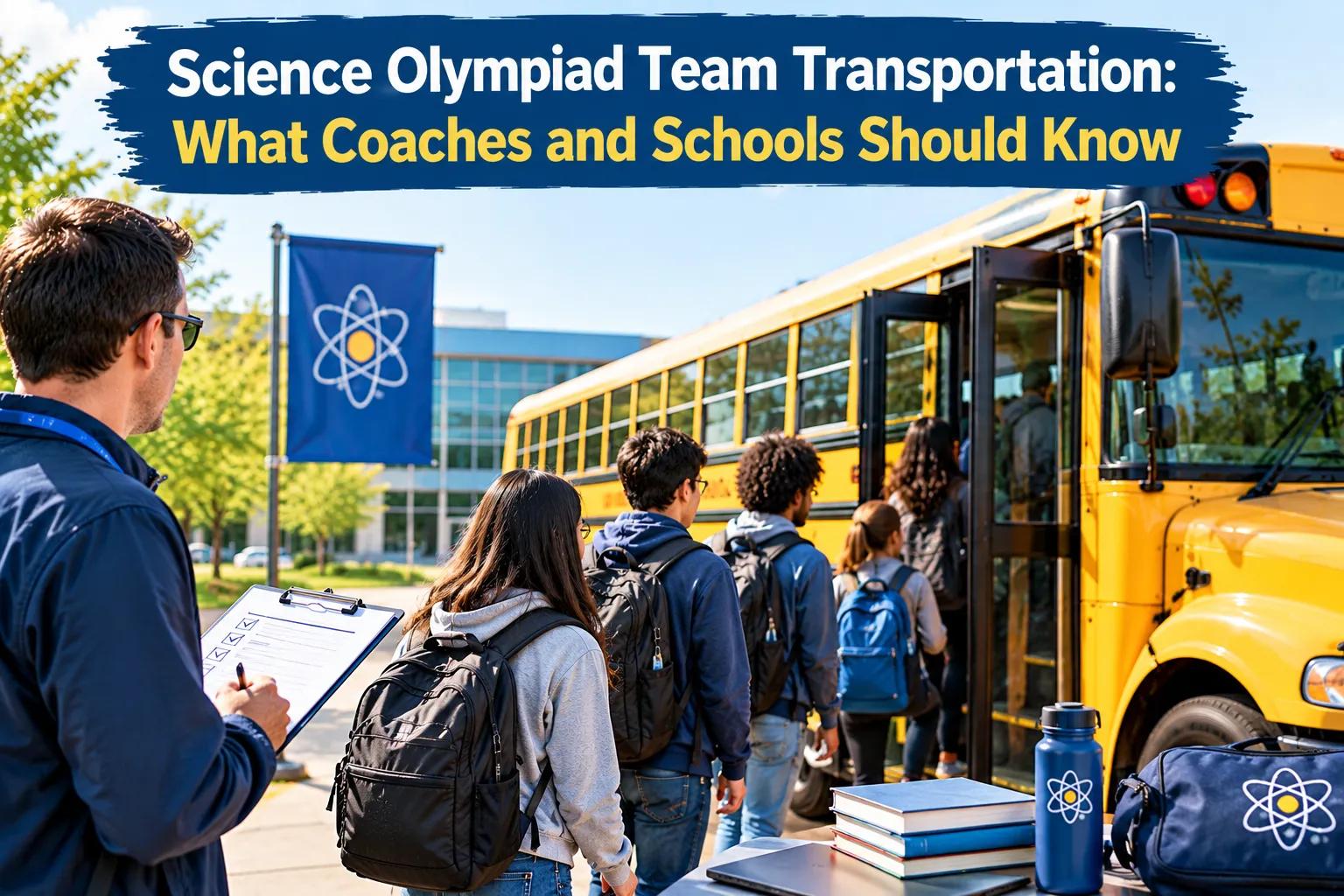
Science Olympiad Team Transportation: What Coaches
Science Olympiad competitions require students to combine scientific knowledge, teamwork, preparation, and problem-solving skills. For coaches and schools, however, getting the team to the competition can involve its own set of challenges. Students may be traveling with fragile projects, event supplies, study materials, and personal belongings while following a strict tournament schedule. Careful school Science Olympiad travel planning can make the journey more organized and reduce unnecessary transportation stress. Schools preparing for an upcoming tournament can also use Science Olympiad group travel to coordinate students, coaches, and competition equipment as part of one organized transportation plan.

Understand the Transportation Requirements
Before arranging transportation, coaches should understand exactly what the trip involves. The passenger group may include Science Olympiad competitors, alternate students, coaches, teachers, and parent chaperones. The total number of passengers will influence the type of bus needed, but passenger capacity should not be the only consideration.
Science Olympiad teams may also have several projects and devices that require careful transportation. Depending on the events, students could travel with engineering structures, vehicles, flight devices, laboratory supplies, binders, tools, and other materials. A transportation plan should account for these items before a vehicle is selected.
The distance to the tournament also matters. A local invitational may require only a few hours of transportation, while a regional, state, or national competition can involve a full day of travel or an overnight stay.
Start Planning Transportation Early
Coaches should begin transportation planning as soon as the competition date and venue are confirmed. Waiting until shortly before the tournament can make it more difficult to find a vehicle that matches the team's passenger and equipment requirements.
Early planning also gives schools enough time to follow district approval procedures, collect transportation documentation, communicate with parents, and make adjustments if the tournament schedule changes.
Spring competitions can also coincide with busy periods for school trips, sports tournaments, academic events, and other group travel. Starting the booking process early gives schools more time to discuss vehicle availability and scheduling with transportation providers.
Choose a Bus Based on Students and Equipment
Selecting a vehicle based solely on the number of passengers may not provide enough space for a Science Olympiad team. A group of students might technically fit inside a smaller vehicle while their competition projects do not.
Coaches should estimate the amount of storage space required before choosing a bus. Smaller teams with limited equipment may find a minibus appropriate, while larger groups or teams carrying several bulky projects may need a full-size charter bus with substantial storage capacity.
Fragile projects may also need to travel inside the passenger cabin instead of underneath the bus. Having additional seating can provide space for delicate items that need to remain upright and secured during the journey.
Protect Competition Projects During Transportation
Science Olympiad projects can represent weeks or months of student work, making their protection an important part of travel planning. A fragile structure can be damaged by pressure, vibration, sudden stops, or improper loading.
Coaches should determine how each important project will be transported before departure. Lightweight structures may benefit from protective containers and padded interiors, while sturdy equipment can often be secured appropriately in storage areas.
Students who designed a particular project may be the best people to supervise its handling. Assigning responsibility to specific team members can help ensure that important equipment is loaded correctly and accounted for when the team reaches the competition venue.
The same process should be followed after the competition. A final equipment check before the bus leaves can reduce the possibility of accidentally leaving an important project or supply behind.
Build the Transportation Schedule Around the Tournament
The tournament's official schedule should guide the transportation plan. Coaches should identify the earliest time students need to be at the venue rather than planning arrival around the opening ceremony alone.
Some events may require students to complete check-in, equipment inspection, or other preparation before competition sessions begin. The bus should therefore arrive with enough time for unloading, walking to the appropriate building, organizing materials, and completing any required procedures.
Traffic and parking should also be considered. A tournament held at a large school or university campus may require additional time to locate the correct entrance or bus drop-off area.
Adding a reasonable time buffer can help prevent students from arriving rushed or missing important competition activities.
Keep Students Organized and Comfortable
Student comfort is another consideration for coaches. Science Olympiad competitions can involve long days of testing, building, problem-solving, and teamwork. A difficult journey can add unnecessary fatigue before the competition even begins.
During longer bus rides, students may use the time to review material, discuss event strategies, or rest. Coaches can create expectations that allow students to study without disturbing teammates who need quiet time.
Food and hydration should also be considered for early departures and long journeys. Schools should check transportation policies before bringing food and drinks onto the vehicle. Students should also know whether the trip will include planned rest stops.
If students are prone to motion sickness, coaches can plan seating arrangements accordingly. Those students may benefit from sitting in areas where movement is reduced and using audio review instead of reading while the bus is moving.
Prepare for Overnight Competitions
State and national Science Olympiad competitions may require teams to stay overnight. These trips involve more than transportation between the school and competition venue.
Coaches may need transportation between the hotel, tournament location, restaurants, and other scheduled destinations. Creating a complete itinerary before departure can help ensure that the transportation provider understands the team's requirements.
Competition projects should also be considered during overnight stays. Coaches should determine where fragile equipment will be stored and avoid leaving valuable or sensitive materials on a parked bus unless appropriate arrangements have been confirmed.
If the bus will remain with the group during the trip, the school should also discuss parking arrangements and scheduling requirements with the transportation provider.
Review School Safety and Documentation Requirements
Schools and districts may have specific requirements for charter transportation. Coaches should review these requirements before selecting a provider and determine what documents need to be submitted for approval.
Depending on the school or district, documentation may include insurance information, carrier details, driver information, and other transportation records. Coaches should also review the provider's safety procedures and confirm that the vehicle and driver arrangements meet applicable requirements.
Taking care of these details before competition day can help prevent last-minute administrative problems.
Communicate Clearly With Parents and Students
Transportation planning works best when everyone knows what to expect. Parents should receive information about the departure location, pickup time, expected return time, luggage requirements, and emergency communication procedures.
Students should also understand the transportation schedule and meeting points. A short pre-trip briefing can give coaches an opportunity to explain expectations and answer questions.
If the tournament schedule, pickup location, or return time changes, updated information should be communicated promptly. Keeping families informed can reduce confusion and make the entire trip easier to manage.
Plan the Return Journey
The transportation plan should include the return journey from the beginning. Coaches should know when the team is expected to finish competing and where the bus will collect students.
Awards ceremonies, final event sessions, equipment collection, and delays should all be considered when estimating the return schedule. Students should have a clearly communicated meeting location after the competition.
Before leaving the venue, coaches should complete a final headcount and equipment inspection. This simple step can help confirm that every student and important project is ready to return.
Conclusion
Science Olympiad team transportation requires careful planning because schools are transporting more than students. Coaches may also need to manage fragile projects, specialized equipment, strict competition schedules, overnight arrangements, and school transportation requirements.
By starting early, selecting an appropriately sized vehicle, protecting competition materials, building the schedule around tournament requirements, and maintaining clear communication, coaches can create a more organized travel experience for everyone involved.
Professional group transportation can bring students, coaches, and equipment together while reducing the complications associated with multiple family vehicles. With thoughtful preparation, schools can keep transportation running smoothly and allow students to focus on what matters most during the Science Olympiad competition: preparation, teamwork, and participation.