

School Event Transportation: How to Plan a Smooth
The final weeks of the school year are often filled with exciting activities, including class outings, award ceremonies, field trips, graduation celebrations, senior events, and school-wide parties. While these occasions give students and staff an opportunity to celebrate, moving a large group between locations requires careful coordination. A well-organized end-of-year school event transportation plan can help schools manage schedules, student supervision, vehicle arrangements, and return procedures more efficiently.

Start Planning Transportation Early
Transportation should be considered as soon as the school event is confirmed. End-of-year calendars can become crowded, with multiple schools and organizations arranging trips and celebrations during the same period. Starting early gives administrators more time to determine the number of passengers, compare suitable transportation options, and coordinate with the destination.
The planning process should begin with basic information such as the event date, destination, expected attendance, departure location, and estimated return time. Once these details are established, the school can develop a transportation schedule that fits the overall event itinerary.
Early planning is also useful when details change. Student attendance may increase or decrease, the venue may modify its arrival instructions, or the event schedule may be adjusted. Having transportation arrangements organized in advance provides more flexibility.
Determine the Group Size
An accurate passenger count is essential when planning school event transportation. Schools should include students, teachers, administrators, chaperones, and any other authorized participants in the estimated total.
The group size can influence the type and number of vehicles required. A small class attending a nearby activity may have different transportation needs from several grades traveling to a large attraction.
Schools should update their passenger count as registration and permission forms are finalized. The transportation provider should receive the most current information before the event so vehicle capacity and assignments can be planned appropriately.
Choose the Right Vehicle
The ideal transportation option depends on the distance, group size, event schedule, and passenger needs. A minibus may work well for a smaller group, while a full-size charter bus can accommodate a larger number of students and staff traveling together.
For longer journeys, schools may want to consider features such as comfortable seating, climate control, storage space, and onboard restrooms when available. If students are bringing backpacks, sports equipment, musical instruments, or other belongings, the amount of available storage should also be considered.
Accessibility should be addressed during the planning stage. If a student or staff member requires an accessible vehicle, communicating those requirements in advance allows the transportation provider to prepare an appropriate option.
Create a Detailed Schedule
A smooth school celebration requires a transportation schedule that goes beyond simply choosing a departure time. Organizers should account for student boarding, attendance checks, traffic, parking, venue access, and the time needed to gather everyone before departure.
The destination should be given enough time to accommodate potential delays. Popular attractions and event venues may experience congestion during end-of-year celebrations, particularly when several groups arrive around the same time.
The return journey should also be included in the schedule. If students will arrive after regular school hours, families should receive a realistic return window and clear instructions about the pickup process.
Plan Safe Pickup and Drop-Off Areas
The location where students board and leave a vehicle is an important part of the transportation plan. Schools should select areas that provide sufficient space for students, staff, and buses while minimizing unnecessary interaction with moving traffic.
The National Highway Traffic Safety Administration recommends considering student waiting areas, pedestrian access, roadway crossings, visibility, and local conditions when planning school transportation routes and stops.
For large events using multiple buses, each vehicle can be assigned a specific loading area or group designation. This can help prevent students from boarding the wrong bus and reduce congestion during departure.
Organize Students and Chaperones
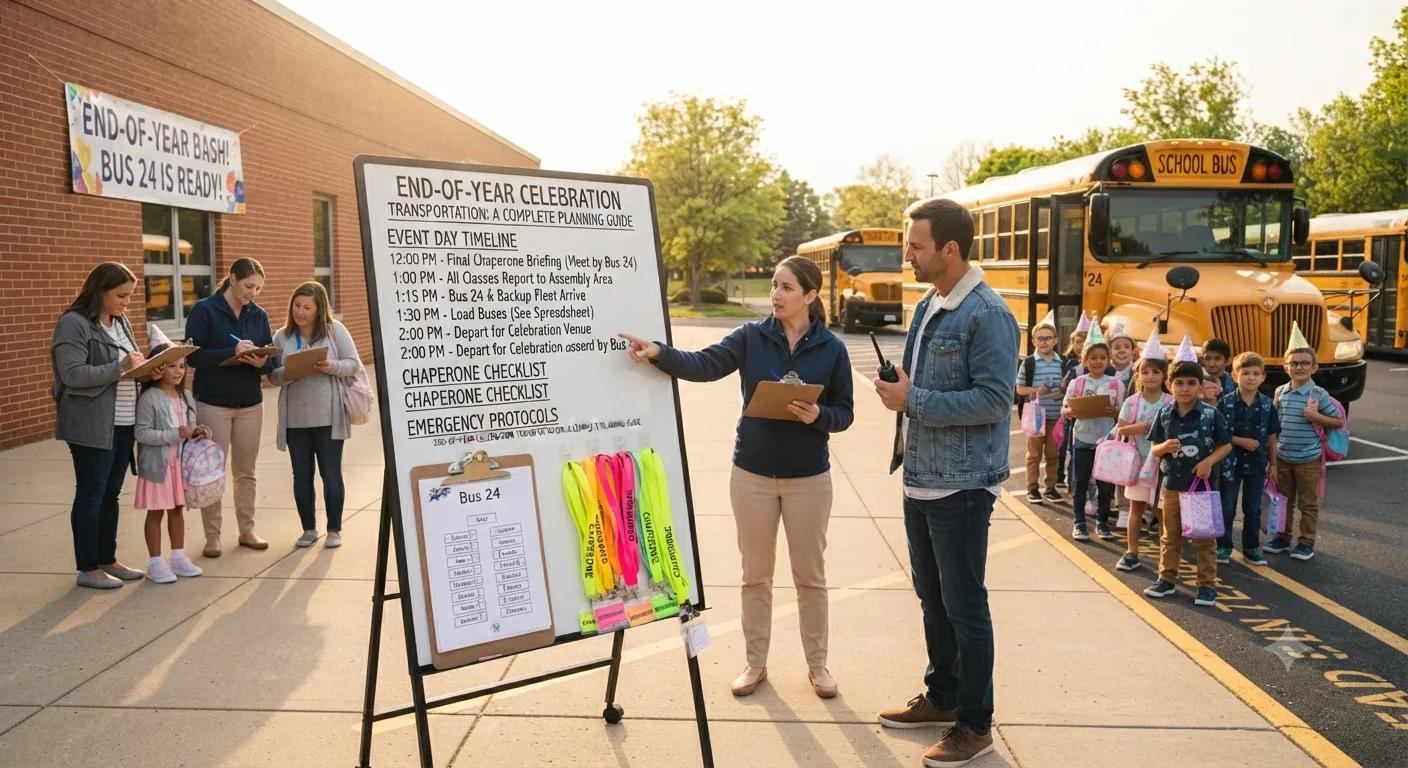
Chaperone assignments should be established before students begin boarding. Each teacher or adult supervisor should know which students they are responsible for and which vehicle they will use.
Passenger rosters can support attendance checks before leaving school, after arriving at the destination, and before beginning the return trip. Schools can also divide a large group into smaller sections to make supervision easier.
Students should receive transportation instructions before departure. Reminders about remaining seated, following driver and teacher directions, keeping aisles clear, and respecting other passengers can help maintain an organized environment throughout the journey.
Coordinate With the Destination
Transportation planning should involve the event venue as well as the school and bus provider. Schools should confirm where buses can enter, park, load, and unload passengers.
Large venues may have designated bus entrances or loading zones that are different from ordinary visitor parking. Confirming these arrangements ahead of time can help prevent unnecessary delays.
The transportation provider should receive the destination address and any relevant parking or access instructions. If the itinerary includes multiple stops, each location should be clearly identified.
Prepare for Traffic and Weather
End-of-year celebrations often occur during a busy travel period. Traffic may be heavier around popular attractions, parks, entertainment centers, and graduation venues.
Schools should consider reasonable time buffers when developing the itinerary. A schedule that allows no flexibility can become difficult to maintain when unexpected traffic occurs.
Weather should also be monitored before the event, particularly when students will participate in outdoor activities. Schools can communicate appropriate preparations to families and adjust the transportation schedule when necessary.
If a significant delay occurs, a designated school contact should communicate with the transportation provider and families. Having one primary point of contact can prevent conflicting information.
Keep Families Informed
Parents and guardians should receive transportation details before the celebration. Information can include the departure location, departure time, destination, expected return window, and student release procedure.
This communication is especially important for evening events. Parents may need to arrange transportation from the school or another designated return location, so advance information can make the process more predictable.
If the return schedule changes during the event, schools should use their established communication method to provide an update. Clear communication can reduce confusion when students return later than originally expected.
Conduct a Final Transportation Review
Before the event begins, school administrators should review the complete transportation plan. The review should confirm the passenger count, vehicle assignments, itinerary, pickup locations, destination access, chaperone responsibilities, and return arrangements.
Any last-minute changes should be communicated to the transportation provider immediately. Teachers and chaperones should have current rosters and the necessary contact information before students board.
A final review can identify small logistical problems before they affect the group. It also ensures that school staff and transportation personnel are working from the same information.
Make the Return Trip Just as Organized
The end of the celebration can be one of the busiest parts of the day. Students may be excited, tired, or distracted after several hours of activities. Schools should establish a specific meeting location and departure procedure before the event begins.
Chaperones can gather their assigned students, conduct a headcount, and direct them toward the appropriate vehicle. For multiple buses, clearly marked assignments can make the process easier.
Once the group arrives back at school, staff should follow the established student release procedure. A structured process can help prevent unnecessary crowding and ensure that students leave with the appropriate parent, guardian, or authorized adult when required by school policy.
Conclusion
Planning transportation for an end-of-year school celebration involves much more than reserving enough seats. Schools need to consider passenger numbers, vehicle requirements, schedules, pickup locations, chaperone assignments, venue access, safety procedures, and communication with families.
Starting early provides more time to coordinate these details and respond to unexpected changes. By creating a realistic itinerary, choosing suitable transportation, organizing student supervision, and confirming the plan before departure, schools can make group travel easier to manage.
A carefully planned transportation strategy allows teachers and administrators to focus on the purpose of the event: giving students an enjoyable opportunity to celebrate the end of another school year while keeping the journey organized from start to finish.