

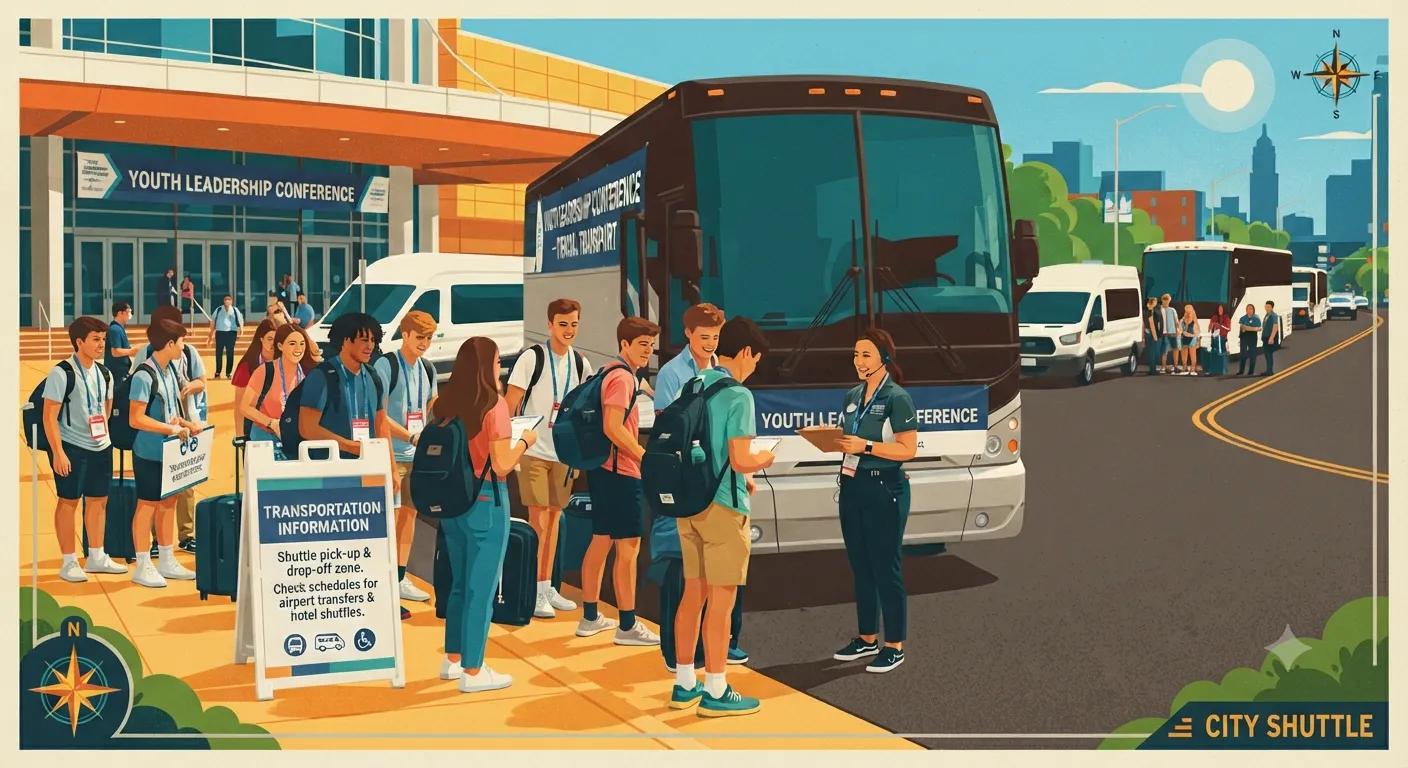
Safe and Reliable Transportation for Youth Leadership
Youth leadership conferences give students an opportunity to build communication skills, participate in educational programs, meet peers, and develop confidence in leadership roles. Because these events often involve groups of students traveling between schools, hotels, conference centers, and off-site activities, transportation should be planned as carefully as the conference schedule itself. Dependable youth conference bus services can help schools, nonprofit organizations, and youth groups coordinate travel while keeping participants comfortable, organized, and together throughout the event.

Why Safe Transportation Matters for Youth Conferences
When adults are responsible for transporting students, safety becomes a central part of the planning process. A transportation plan should account for the size of the group, travel distance, number of stops, supervision needs, and timing of conference activities.
Youth leadership conferences can involve busy schedules and unfamiliar locations. Students may need to travel early in the morning, return to hotels late in the evening, or move between several venues during one day. Having a structured transportation arrangement can help reduce confusion and make it easier for chaperones to keep track of participants.
Group transportation can also simplify the overall travel experience. Rather than coordinating a large number of personal vehicles, organizers can establish shared departure and arrival times that keep the group on the same schedule.
Start Planning Transportation Before the Event
Transportation arrangements should begin once the conference dates and primary locations are confirmed. Early planning provides more time to determine passenger numbers, review the itinerary, communicate with venues, and address special requirements.
Begin by identifying where participants will start their journey and every destination they will visit. A conference may involve a school, hotel, convention center, university campus, restaurant, and several activity locations. Each stop should be included in the transportation plan.
Organizers should also review the conference schedule carefully. Knowing when registration begins, when workshops end, and when evening programs take place can help create realistic departure times.
Planning early can also make it easier to accommodate changes without disrupting the entire transportation schedule.
Choose a Vehicle Based on Group Needs
The right vehicle depends on the number of passengers and the nature of the trip. Smaller youth organizations may need a minibus for local transportation, while larger school groups may require a full-size charter bus.
Passenger capacity is only one factor to consider. Organizers should also think about luggage, backpacks, laptops, presentation materials, and other equipment participants may bring to the conference.
For longer journeys, onboard comfort may also matter. Features such as comfortable seating and climate control can make an extended trip more manageable for students and chaperones.
Providing accurate information about passenger numbers and travel requirements when requesting transportation can help the provider recommend a suitable vehicle.
Verify Transportation Provider Credentials
Schools and youth organizations should carefully evaluate transportation providers before making a reservation. The provider should meet applicable licensing and insurance requirements and maintain vehicles in appropriate operating condition.
Organizers can ask questions about driver qualifications, vehicle maintenance procedures, insurance coverage, emergency protocols, and accessibility options. These conversations can provide useful information before the trip begins.
It is also helpful to confirm the transportation provider’s experience with group travel. Youth conferences can require detailed scheduling and frequent communication, so an organized transportation team can make coordination easier.
Establish Clear Passenger Assignments
Keeping students organized is an important part of safe conference transportation. Chaperones should know how many students are in their group and understand which vehicle each participant is expected to use.
Passenger rosters can support headcounts before departure. A simple process of confirming that everyone is present before leaving each location can reduce the chance of someone being left behind.
When multiple buses are used, students should receive clear instructions about their assigned vehicle. Chaperones should also have access to the transportation schedule so they can anticipate upcoming departures.
A designated transportation coordinator can serve as the central communication point for the school or organization, helping reduce conflicting instructions.
Select Safe Pickup and Drop-Off Locations
A bus may not always be able to stop directly in front of a conference venue. Hotels, convention centers, and campuses may have specific loading zones or traffic restrictions.
Organizers should confirm pickup and drop-off procedures with the venue in advance. The transportation provider should receive accurate addresses and any special instructions concerning bus access.
Students should be told exactly where they need to meet the group. Clear pickup instructions are especially important after crowded conference sessions when multiple groups may be leaving at the same time.
A consistent meeting location can make headcounts and boarding more efficient.
Plan for Evening Conference Activities
Youth leadership conferences often include dinners, networking sessions, ceremonies, and social activities outside the regular daytime program. These events should be included in the transportation plan from the start.
Organizers should confirm the expected ending time of each evening activity and allow some flexibility for programs that run longer than scheduled.
Students may be tired after a full day of workshops and presentations, making an organized return trip particularly important. Chaperones should know where the group will gather, while students should understand the departure procedure before the activity begins.
Planning evening transportation in advance can prevent last-minute uncertainty.
Prepare for Traffic and Schedule Delays
Even the best transportation plan needs some flexibility. Traffic congestion, road construction, severe weather, venue delays, or changes to the conference itinerary can affect arrival and departure times.
Rather than creating a schedule with extremely tight connections, organizers should build reasonable buffers into the itinerary. Extra time can help absorb small delays without causing students to miss important sessions.
Communication is equally important. The transportation coordinator should be able to contact the provider and quickly share updates with chaperones if the schedule changes.
Keeping everyone informed can make unexpected situations much easier to manage.
Consider Accessibility and Individual Requirements
A safe transportation plan should accommodate participants with different mobility needs. Schools and organizations should communicate accessibility requirements before booking a vehicle.
Discussing these needs in advance allows organizers to determine whether an appropriate vehicle is available and whether additional planning is necessary at specific venues.
Accessibility should also be considered at pickup and drop-off points. A transportation plan is most effective when the entire journey, rather than only the vehicle itself, is designed with participant needs in mind.
Keep Important Items Organized
Students attending leadership conferences may carry valuable electronics and important documents. Laptops, tablets, presentation materials, and personal bags should be organized throughout the journey.
Participants should keep important items secure and check their seating area before leaving each bus. Labeling bags can also help identify belongings when multiple students have similar backpacks or luggage.
Chaperones can reinforce these habits before the group departs, particularly when participants are traveling frequently between several locations.
Make Transportation Part of the Learning Experience
The time spent traveling can support the goals of a youth leadership conference. On the way to the event, students can review schedules, discuss conference expectations, or prepare for presentations and workshops.
During the return journey, participants can reflect on what they learned and share ideas with classmates and advisers. Discussions about leadership sessions, speakers, and team activities can help reinforce the lessons from the conference.
This approach can turn travel time into a useful part of the overall educational experience.
Conclusion
Safe and reliable transportation is an important part of planning a successful youth leadership conference. Schools and organizations need to consider vehicle selection, passenger organization, pickup locations, provider credentials, accessibility, evening activities, and possible delays when developing their travel plans.
Starting early allows organizers to coordinate more effectively with transportation providers, conference venues, students, and chaperones. With clear communication and a detailed schedule, group leaders can create a more organized travel experience and help participants stay focused on the educational and leadership opportunities the conference provides.