

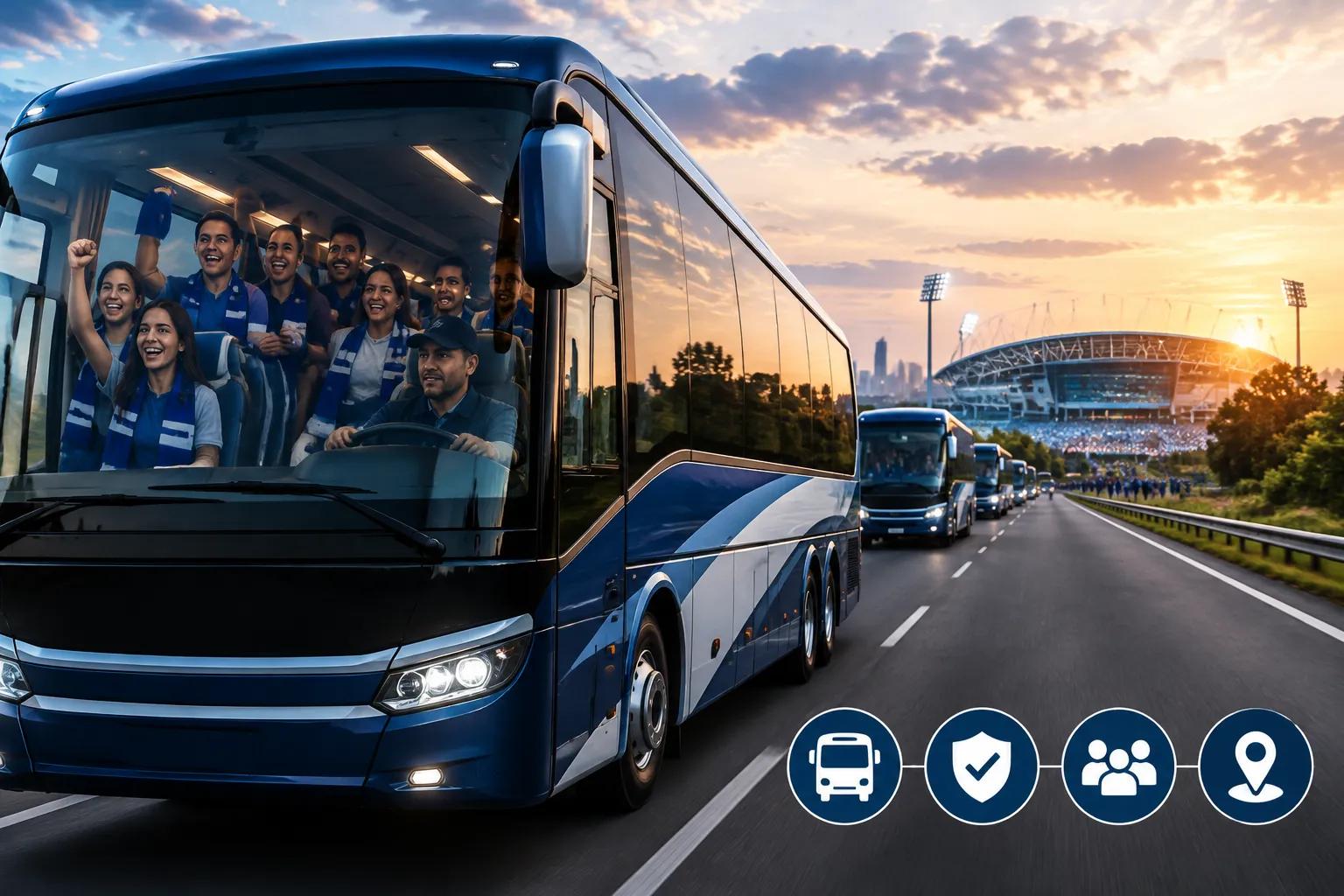
Safe and Comfortable Bus Transportation for Sports Supporter
Following a favorite team to an away game is an exciting experience, but organizing transportation for a large supporter club can quickly become complicated. Fans may be traveling from different neighborhoods, carrying team gear, and trying to arrive at the stadium before kickoff while also planning the journey home. Reliable sports fan group transportation gives supporter clubs a practical way to keep everyone together while making the trip safer, more comfortable, and easier to manage.

Why Supporter Clubs Choose Group Bus Transportation
Sports supporter clubs often include members with different travel preferences and schedules. Some fans may consider driving independently, while others may rely on rideshares or public transportation. When dozens of people use separate transportation methods, however, coordinating arrival and departure times can become difficult.
A dedicated charter bus provides one organized transportation solution for the group. Supporters can travel together from a predetermined pickup location or several convenient stops while a professional driver manages the route. This allows passengers to focus on the upcoming game rather than navigating unfamiliar roads, finding stadium parking, or dealing with heavy traffic.
Group transportation can also strengthen the social aspect of an away game. The trip itself becomes an opportunity for supporters to connect, talk about the team, and build excitement before reaching the stadium.
Prioritizing Safety During Away Game Travel
Safety should be one of the most important considerations when planning transportation for a supporter club. Away games may involve long-distance travel, busy stadium districts, late-night returns, and unfamiliar roads. Having a professional driver responsible for the journey allows supporters to avoid the fatigue and stress associated with driving themselves.
Organizers should communicate expectations before the trip. Passengers should understand that they need to follow the driver's instructions, remain seated while the vehicle is moving, keep aisles clear, and respect the transportation provider's policies.
A simple code of conduct can help establish expectations for the entire group. This becomes particularly valuable when the supporter club includes a large number of passengers or when families and younger fans are traveling together.
Comfortable Travel for Long Road Trips
Some away games require several hours of travel in each direction. Spending that amount of time behind the wheel can be tiring, especially when supporters must deal with traffic before and after the match.
A charter bus gives passengers an opportunity to relax during the journey. Depending on the selected vehicle, amenities may include comfortable reclining seats, climate control, overhead storage, luggage compartments, entertainment systems, and onboard restrooms.
Comfort can make an especially noticeable difference on late-night return trips. Instead of driving home immediately after an emotionally intense match, supporters can sit back and recover during the journey.
For particularly long trips, organizers can discuss planned rest stops with the transportation provider. A properly scheduled stop gives passengers time to stretch, use restroom facilities, and purchase refreshments before continuing.
Organizing Convenient Pickup Locations
A successful away-game trip starts before the bus reaches the highway. Supporter club members may live throughout a city or surrounding region, so selecting convenient pickup locations is essential.
Organizers should choose locations that are easy to reach and provide enough space for a charter bus to safely load passengers. Park-and-ride locations, approved club meeting places, and other suitable gathering points can work well when property permissions and parking arrangements are confirmed.
Too many stops can increase travel time for passengers who board first, so organizers should focus on creating an efficient route. Once the pickup schedule has been established, members should receive clear information about where and when they need to arrive.
The bus should operate according to the published schedule. A single delayed passenger can affect every subsequent pickup and potentially reduce the time available before kickoff.
Handling Supporter Equipment
Away supporters may bring flags, banners, drums, scarves, signs, and other approved materials. Transporting this equipment can be difficult when every member drives separately.
Charter buses generally provide storage areas that can make it easier to keep supporter gear together. Organizers should discuss the quantity and type of equipment with the transportation provider before the trip to ensure there is sufficient storage space.
Stadium policies should also be reviewed in advance. Individual venues may have different rules concerning large banners, drums, flags, poles, or other supporter materials. Confirming these requirements before departure can prevent problems when the group reaches the stadium.
Assigning a member of the supporter club to oversee the equipment can further simplify loading and unloading. The same person can verify that all gear returns to the bus after the match.
Arriving at the Stadium Efficiently
Game-day traffic can make stadium areas particularly challenging for large vehicles. Supporter clubs should determine the appropriate bus parking location before the trip rather than relying on last-minute directions.
Some venues may have designated charter bus lots or require advance arrangements. Organizers should confirm parking access, fees, operating hours, and the best route to the appropriate area.
Sharing this information with the transportation provider gives the driver a clear plan for arrival. It also allows the supporter club to establish a realistic schedule that provides enough time for passengers to get from the bus to the stadium entrance.
Arriving early gives supporters additional time to organize their gear, meet other members, and enter the stadium without rushing.
Making the Return Trip Safe and Organized
The journey home can present some of the biggest logistical challenges of an away game. Once the final whistle sounds, large crowds leave the stadium simultaneously, and surrounding roads can become congested.
Supporter clubs should establish a specific meeting location before the game begins. A designated gate, landmark, or bus parking area is easier for members to identify than a vague instruction to meet somewhere outside the stadium.
The club should also communicate the departure procedure clearly. Members need to know when they are expected to return to the bus and understand that the vehicle cannot wait indefinitely for missing passengers.
A head count before departure provides an additional layer of organization. The trip coordinator or bus captain can compare passengers against the manifest and contact anyone who has not returned.
Clear return procedures help protect the entire group while allowing the driver to maintain the planned schedule.
Supporting Families and Different Age Groups
Many supporter clubs welcome families, making comfortable and responsible transportation particularly important. Parents may appreciate having their children travel with the group rather than navigating an unfamiliar stadium area independently.
Organizers can establish expectations regarding behavior, food, drinks, language, and other onboard policies before departure. Families should also receive information about expected travel times, rest stops, and the likely timing of the return journey.
For longer trips, a vehicle with additional comfort features can help make the experience more enjoyable for passengers of different ages.
Planning for Larger Supporter Groups
Major rivalry games, playoff matches, cup competitions, and championship events may attract significantly more supporters than ordinary fixtures. A single bus may not always provide enough capacity.
When multiple buses are required, supporter clubs can make the process easier by assigning passengers to specific vehicles and maintaining separate manifests. Each bus can have a designated captain responsible for passenger communication and head counts.
Coordinating multiple vehicles through one transportation provider can also simplify scheduling. Pickup locations, stadium arrival, parking, and return procedures can be organized as part of one overall travel plan.
Choosing a Dependable Transportation Provider
Selecting the right transportation provider is an important part of creating a successful away-game experience. Supporter club organizers should provide the company with accurate passenger numbers, pickup locations, destination, travel dates, expected schedule, and information about supporter equipment.
It is also helpful to discuss policies concerning luggage, food, beverages, waiting time, additional stops, and schedule changes before confirming the trip. Clear communication allows both the organizer and provider to establish realistic expectations.
A transportation company experienced in group and sports travel can help supporter clubs develop an itinerary that balances comfort, safety, convenience, and efficient travel.
Conclusion
Away games should be about supporting the team and enjoying time with fellow fans, not worrying about traffic, parking, or who is responsible for driving home. Safe and comfortable bus transportation gives supporter clubs an organized way to keep members together while reducing many of the challenges associated with individual travel.
From convenient pickups and supporter equipment storage to stadium arrival and return coordination, thoughtful transportation planning can make the entire experience more enjoyable. By booking the appropriate vehicle, communicating expectations clearly, and establishing a dependable travel schedule, sports supporter clubs can turn the journey into an important part of the match-day experience while helping everyone get there and return home comfortably.