

Reliable Transportation for University Hackathon Teams
University hackathons bring together students who are passionate about technology, innovation, entrepreneurship, design, and problem-solving. These events often require teams to travel to another campus, convention center, technology hub, or event venue, sometimes carrying laptops and other equipment along the way. Because hackathons can follow demanding schedules, having reliable group travel for hackathon participants can make the entire experience easier to manage. A well-planned transportation solution helps students arrive together, stay organized, and focus their attention on the competition instead of transportation concerns.

Why Reliable Transportation Matters for Hackathons
Hackathons frequently operate according to strict schedules. Registration, opening ceremonies, workshops, team activities, development sessions, mentoring, judging, and final presentations may all take place within a limited period. A transportation delay can therefore create problems for participants who need to be at the venue at a specific time.
When every student arranges transportation independently, organizers have limited control over arrival times. Some participants may encounter traffic, parking problems, navigation difficulties, or unexpected delays. Coordinating multiple cars can also make it harder to know whether everyone has arrived safely.
A charter bus offers a centralized approach. Students can gather at an agreed pickup location and travel together according to a planned schedule. This gives organizers a simpler way to coordinate arrivals and allows participants to avoid many of the complications associated with individual driving.
Keeping Teams Together
Teamwork is one of the defining characteristics of a university hackathon. Students may spend hours developing software, designing interfaces, building prototypes, researching problems, and preparing presentations. Communication between team members is essential throughout the event.
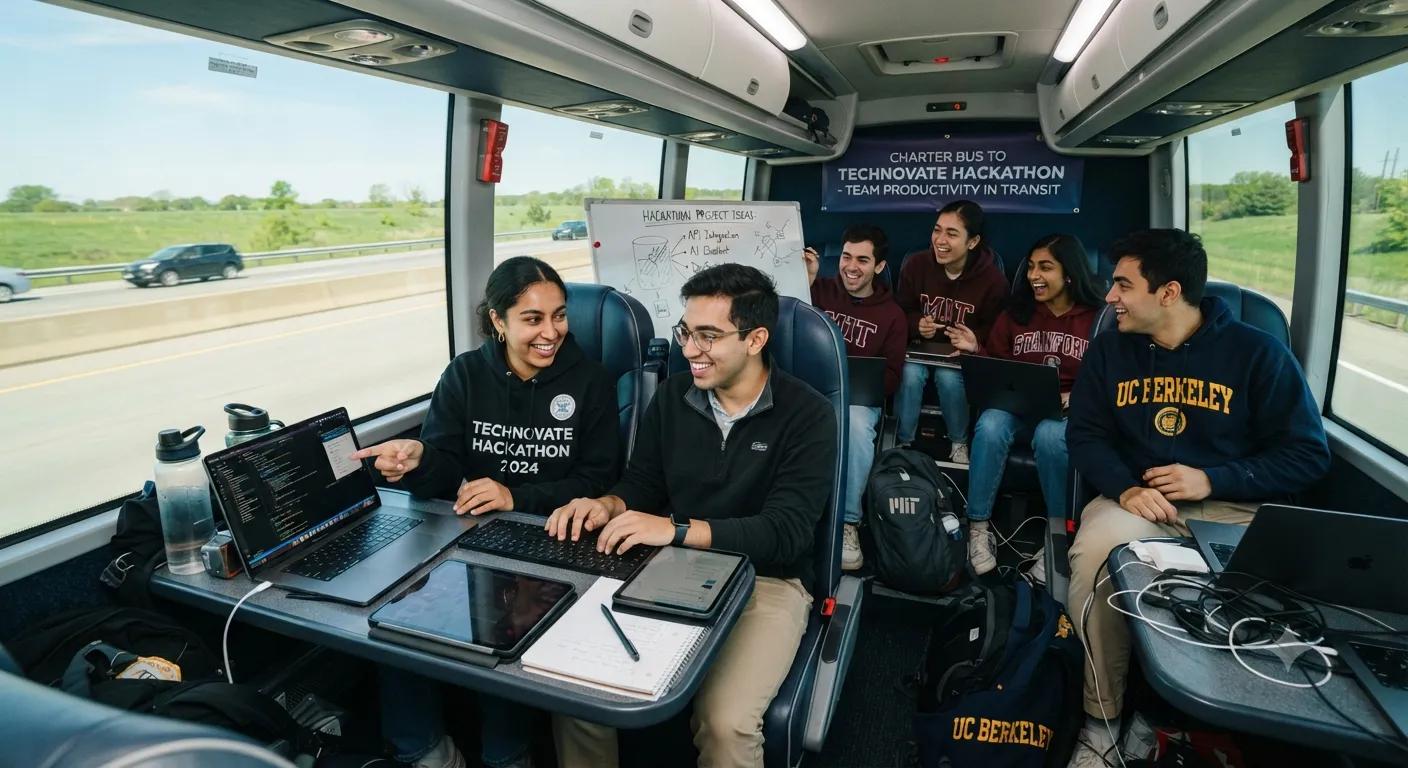
Traveling together can support this collaborative environment before the hackathon even begins. Students can use the journey to discuss their goals, review project ideas, divide responsibilities, or simply become familiar with other participants.
Keeping students together also makes communication easier for organizers. If there is a change to the event schedule or meeting arrangements, information can be shared with the group rather than communicated separately to numerous individuals.
This is especially useful when a university sends multiple teams to a major competition. Students from different academic backgrounds may have an opportunity to connect during the trip and exchange ideas before arriving at the venue.
Creating a More Comfortable Journey
Hackathons can be demanding. Some events run for an entire day or continue overnight, requiring students to maintain their concentration while developing and presenting their projects. For example, the 2026 SHIFT hackathon at IIT (BHU) Varanasi is structured as a 24-hour competition, with teams working through a tightly scheduled development and judging process.
Traveling by charter bus allows participants to avoid the responsibility of driving themselves. Students can use travel time to relax, review their project plans, communicate with teammates, or prepare for the competition.
The return journey can be even more valuable. After spending many hours coding and presenting, students may be tired and ready to rest. Organized group transportation allows them to travel home without worrying about navigation, parking, or driving after an exhausting event.
Accommodating Hackathon Equipment
Technology equipment is another important consideration when organizing transportation for hackathon teams. Participants may bring laptops, chargers, headphones, power banks, cables, presentation materials, development boards, and other accessories.
Using several personal vehicles can make it harder to keep equipment organized. A centralized transportation arrangement can provide a more consistent travel plan for the entire team.
Organizers should communicate the amount and type of equipment being carried when arranging transportation. Students should also use protective cases for valuable electronics and keep essential devices secure throughout the journey.
Planning for equipment in advance can prevent unnecessary complications when the team reaches the hackathon venue.
Simplifying Pickup and Drop-Off
Pickup and drop-off arrangements should be considered early in the planning process. A university may have students traveling from residence halls, academic buildings, different campuses, or nearby communities.
A central meeting location can make boarding easier, particularly when the group is large. Organizers should provide participants with clear instructions about where to meet and when they need to arrive.
For larger groups, multiple pickup locations may be considered if they can be incorporated efficiently into the schedule. The final plan should account for traffic conditions, the distance between stops, the number of participants, and the required arrival time at the event.
Having a designated student coordinator can also help manage attendance and communication during the trip.
Reducing Parking Concerns
Parking can create another challenge for university hackathon participants. Events held at major campuses, convention centers, or technology facilities may attract many visitors, and nearby parking can be limited.
If students drive separately, organizers may have to deal with numerous vehicles arriving at different times. A charter bus reduces the number of vehicles traveling to the destination and provides a more centralized arrival process.
This can be particularly helpful in busy urban areas where parking spaces may be expensive or difficult to find. Students can be dropped off at a suitable location and avoid spending valuable time searching for parking.
Supporting Hackathon Time Management
Time is one of the most valuable resources during a hackathon. Teams may have only a limited number of hours to turn an idea into a working prototype. Missing an important session can reduce the time available for development.
A coordinated transportation schedule helps teams plan their travel around the event timetable. Organizers can establish a departure time that provides sufficient time for traffic and unexpected delays while still allowing participants to arrive before registration or opening activities.
The return schedule should also be planned carefully. Final presentations or judging may take longer than anticipated, so organizers should have a communication process in place for transportation updates.
Transportation Can Become Part of the Experience
A well-organized trip can become part of the overall hackathon experience rather than simply a way to reach the venue. Students can use the journey to connect with teammates, discuss their projects, and build excitement for the competition.
Some hackathons have taken this idea even further. The 2026 Aanavandi Hackathon in Kerala was designed around a moving bus, with student teams developing projects overnight and then continuing their work while traveling by bus with judges toward Munnar.
While most university hackathons will not turn transportation into part of the competition, the example demonstrates how group travel can support collaboration, creativity, and engagement.
Selecting Transportation for the Group
The right vehicle depends on the size and needs of the university delegation. A small group may require a smaller bus, while several hackathon teams traveling together may need a larger vehicle.
Organizers should consider passenger numbers, equipment, luggage, travel distance, pickup locations, and comfort when planning transportation. It is also useful to account for possible changes in participation so that the vehicle remains appropriate if additional students join the trip.
Planning these details early gives organizers more time to coordinate schedules and communicate transportation information to participants.
Conclusion
Reliable transportation can make university hackathon travel significantly easier for students and organizers. A charter bus can keep teams together, simplify pickup and drop-off arrangements, reduce parking concerns, provide space for technology equipment, and create a comfortable environment for travel before and after an intensive competition.
By planning transportation around the hackathon schedule and considering passenger numbers, equipment, travel distance, and meeting locations, universities can reduce logistical challenges and give students a smoother experience. With the transportation details handled in advance, participants can concentrate on what matters most: collaborating with their teams, developing innovative solutions, and making the most of their university hackathon experience.