

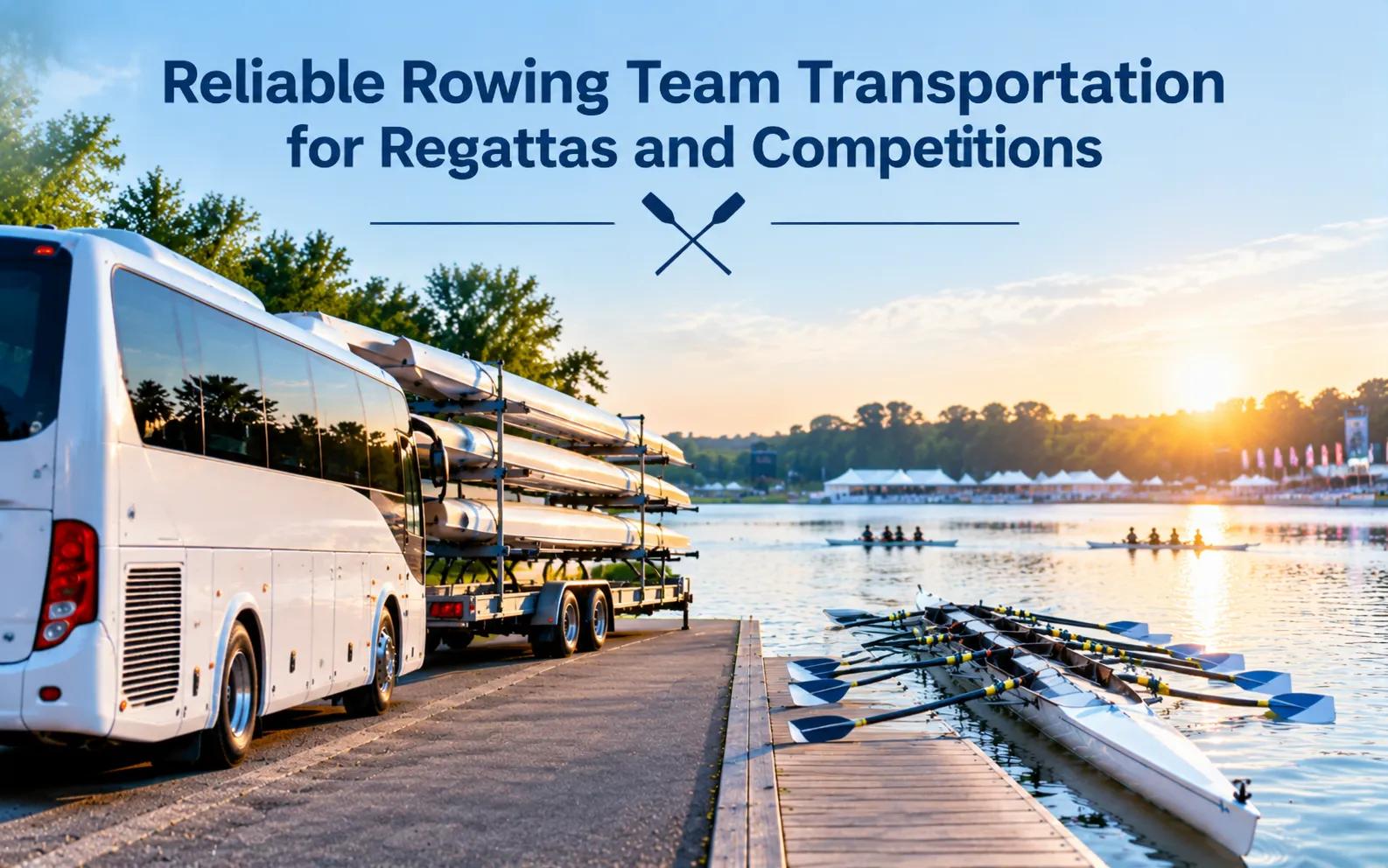
Reliable Rowing Team Transportation for Regattas
Reliable transportation is an important part of preparing a rowing team for a successful regatta. Athletes, coaches, coxswains, and support staff need to arrive at the venue on time, while rowing shells, oars, rigging equipment, and other specialized gear usually travel separately. This makes rowing travel more complex than a typical team road trip. Teams preparing for competition can benefit from regatta transportation planning that coordinates passenger travel with boat logistics from departure through the return journey.

Why Reliable Transportation Matters for Rowing Teams
A rowing competition often begins early in the morning, and athletes may need to arrive well before their scheduled race. Boats must be unloaded and prepared, crews may need to attend meetings, and athletes need time for warmups and final preparations.
When athletes travel in separate cars, coordinating everyone can become difficult. Some members may arrive late, while others may have trouble finding the correct parking area. A charter bus provides one central transportation solution that keeps the majority of the team together.
For coaches, this arrangement can make attendance easier to manage and reduce the amount of time spent coordinating directions between multiple vehicles. Athletes can also use the journey to rest, communicate with teammates, or prepare mentally for competition.
Coordinate Passenger and Boat Transportation
The unique challenge of rowing transportation is that the people and the boats generally travel in different vehicles. Rowing shells are long and delicate, so they typically require a dedicated boat trailer and appropriate tow vehicle.
The passenger bus transports the athletes, coaches, coxswains, personal bags, team supplies, and other passengers. The boat trailer carries the shells, oars, rigging equipment, tools, and spare parts.
Although the vehicles have separate responsibilities, they should operate according to one coordinated itinerary. The trailer may leave earlier because it travels more slowly and requires additional time for parking and unloading. The passenger bus can then arrive closer to the athletes' required preparation time.
This coordination helps prevent two common problems: athletes arriving long before their boats or boats arriving without enough people available to prepare them.
Build the Schedule Around the First Race
The first launch or race time should be the starting point for transportation planning. Coaches can work backward to determine when the boats need to arrive, when athletes need to begin preparation, and when each vehicle should leave.
A team may need substantially more time at the venue than the actual driving time suggests. After arrival, athletes may need to unload shells, assist with rigging, attend coxswain meetings, stretch, warm up, and organize their equipment.
A reasonable time cushion can protect the schedule from traffic or unexpected delays. If the bus encounters a short delay, having extra preparation time can prevent that delay from affecting the first race.
Select the Right Charter Bus
The appropriate bus depends on the number of athletes, coaches, and staff traveling to the event. Smaller teams may be comfortable in a minibus, while larger high school, college, or club programs may need a full-size charter bus.
Passenger capacity is only one consideration. Teams should also account for personal luggage, uniforms, coolers, food, team tents, first-aid supplies, and other race-day items.
A vehicle with adequate storage can help keep the passenger area comfortable and prevent personal belongings from becoming an obstacle during the journey. For particularly large programs, multiple buses may be useful when different crews have substantially different race schedules.
Research the Regatta Venue in Advance
Many rowing competitions take place at waterfront parks, reservoirs, university facilities, and boathouses. These locations may have narrow access roads, restricted entrances, limited parking, or separate areas for buses and boat trailers.
Transportation coordinators should review the venue information before race day. The charter bus driver should know exactly where passengers are expected to be dropped off and whether the vehicle can remain at the venue.
The bus may also need to use a different entrance from the boat trailer. Sharing venue maps, parking instructions, and event-specific transportation information with the provider ahead of time can help prevent confusion on race morning.
Give Athletes a Comfortable Travel Environment
Rowing competitions can require several hours of highway travel. Comfortable transportation can help athletes arrive feeling more prepared rather than exhausted from the journey.
Depending on the vehicle selected, charter buses may offer amenities such as reclining seats, climate control, Wi-Fi, power outlets, and onboard restrooms. These features can be especially helpful when traveling to regional or national competitions.
Coaches can also use travel time to communicate important information, review schedules, or allow athletes to rest before arriving at the venue.
Prepare for Weather and Race Delays
Weather can have a significant effect on rowing events because races take place on open water. High winds, lightning, heavy rain, or other unsafe conditions can cause delays or temporary suspensions.
Transportation plans should therefore include flexibility. A sprint regatta may have heats, semifinals, and finals, meaning the team's return time can change depending on which crews advance.
Rather than setting an inflexible return time, coaches can discuss a reasonable departure window with the transportation provider. This gives the team additional flexibility if races are delayed or extended.
If the charter bus remains near the venue, it may also provide a convenient place for athletes to wait during certain weather holds, subject to venue instructions and safety requirements.
Consider Long Competition Days
A rowing event can create a much longer transportation day than the driving distance alone suggests. An early departure followed by several hours of waiting and an evening return can produce a lengthy driver schedule.
Teams should provide the transportation company with the complete itinerary when requesting a quote. This gives the provider an opportunity to plan appropriately around the expected service period and applicable driver scheduling requirements.
For long-distance competitions, driver rest and scheduling arrangements should be discussed before the trip. Advance planning is much easier than trying to solve a driver scheduling issue after the team is already at the regatta.
Plan for Overnight Competitions
Major championships and out-of-state regattas may require teams to stay at a hotel for one or more nights. Transportation planning should cover the entire competition rather than only the trip to the venue.
A charter bus can transport athletes from the departure location to the hotel and provide scheduled transportation between the hotel and rowing venue. Depending on the team's itinerary, the bus may also support approved transportation for meals, practices, meetings, and other group activities.
When the bus remains with the team overnight, driver lodging and scheduling should be discussed in advance. Including these details in the transportation plan can help the team avoid unexpected arrangements during the competition.
Organize the Return Journey
Getting home efficiently requires preparation too. After the final race, athletes may need to help derig shells, load the trailer, collect their belongings, and clean the team area.
Coaches can assign responsibilities before the final race so that everyone knows what needs to happen afterward. This can prevent a small number of athletes from being responsible for most of the loading work.
The passenger bus and boat trailer should also have a clear departure strategy. Since the trailer may travel at a different speed, both vehicles do not necessarily need to leave or arrive at exactly the same time. Clear communication between the two groups can keep the return journey organized.
Keep Communication Centralized
A designated team representative should communicate directly with the charter bus driver. This creates one reliable source for pickup instructions, schedule changes, and venue information.
The team leader and driver should have the same itinerary, including the pickup address, bus drop-off area, expected departure window, and emergency contact information. A separate responsible adult can coordinate with the boat trailer crew.
For venues where cellular service may be unreliable, keeping printed directions and contact information provides a useful backup.
Create a Repeatable Transportation Process
Teams that attend multiple regattas can benefit from developing a standard transportation process. The basic framework can remain consistent while details such as race times, passenger counts, venue instructions, and hotel arrangements change from one competition to another.
A repeatable process can help coaches remember important planning details and make it easier for athletes and families to understand departure and return expectations.
Over time, this approach can make transportation less stressful because everyone becomes familiar with the team's standard procedures for boarding, equipment loading, venue arrival, and departure.
Conclusion
Reliable rowing team transportation requires careful coordination between passenger travel and boat logistics. By building the schedule around launch times, selecting an appropriate charter bus, researching venue access, preparing for weather delays, and coordinating the passenger bus with the boat trailer, teams can create a smoother competition-day experience.
Whether a team is traveling to a nearby regatta or an out-of-state championship, organized group transportation can keep athletes and coaches together while reducing unnecessary travel complications. With a clear itinerary, centralized communication, and enough flexibility for changing race schedules, rowing teams can arrive prepared and focus their attention on performing their best on the water.