

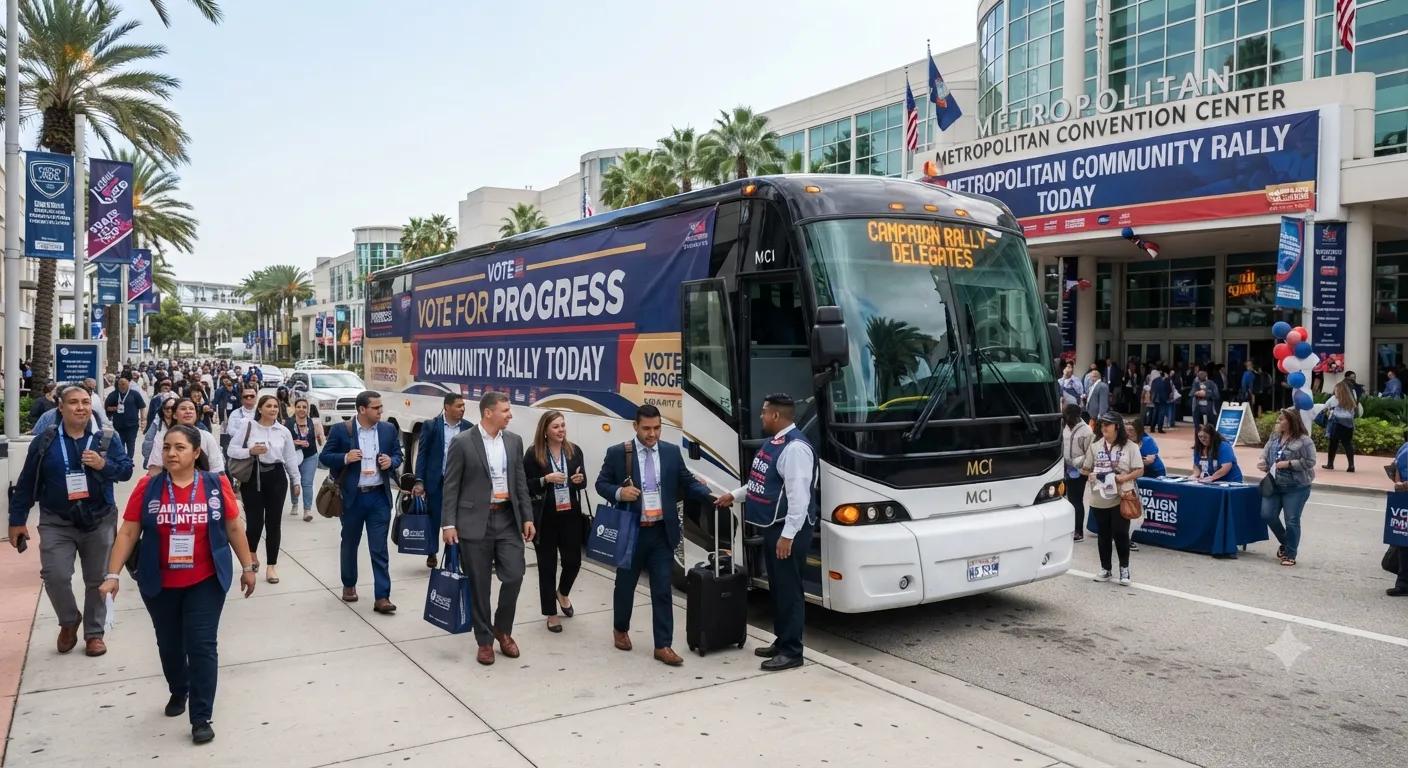
Reliable Charter Bus Rentals for Political Rallies
Organizing transportation for political rallies and campaign tours requires careful planning, dependable vehicles, and effective coordination. Campaign teams often need to travel between meeting venues, public gatherings, campaign offices, hotels, and regional event locations while following demanding schedules. Managing multiple vehicles and individual travel arrangements can create unnecessary complications, making professional group transportation a practical option for campaign organizers.
Choosing reliable charter bus rentals for political rallies and campaign tours helps organizers coordinate passenger arrivals, establish convenient pickup locations, and plan travel between scheduled destinations. Teams preparing for upcoming events can also consult this political campaign transportation planning guide for additional information about vehicle selection, scheduling, budgeting, and group travel logistics.

Why Charter Buses Are Useful for Political Rallies
Political rallies can involve large crowds, busy venues, restricted parking areas, and strict arrival schedules. When campaign staff members, volunteers, and other authorized participants travel separately, organizers may face difficulties coordinating arrival times and managing parking arrangements.
Charter bus transportation allows groups to travel together according to a planned itinerary. Organizers can establish common departure points, communicate boarding instructions in advance, and coordinate arrival times around the event schedule.
Group transportation may also reduce the number of individual vehicles arriving at a venue. Although parking availability and loading restrictions still need to be considered, arranging shared transportation can simplify certain aspects of event logistics.
For campaign teams attending several events during the same day, a planned bus service can provide a consistent transportation arrangement between designated locations.
Select the Right Bus for Your Campaign Tour
Choosing an appropriate vehicle is one of the most important decisions when organizing transportation. The ideal option depends on passenger numbers, travel distance, luggage requirements, accessibility needs, and the overall itinerary.
A minibus may be suitable for smaller campaign teams traveling between local meetings, hotels, offices, and event venues. Its smaller capacity can be useful when the group does not require a full-size coach.
A full-size charter bus may be more appropriate for larger groups traveling to rallies, conferences, or regional campaign events. Depending on the vehicle, available amenities may include climate control, reclining seats, overhead storage, and an onboard restroom.
Before making a reservation, confirm the vehicle's passenger capacity, available facilities, and accessibility features. If the itinerary includes several destinations or extended travel periods, discuss the requirements with the transportation provider to identify a suitable arrangement.
Plan Routes and Pickup Locations Carefully
A reliable transportation plan begins with a clear itinerary. Campaign organizers should identify each destination, pickup point, scheduled departure, expected arrival time, and planned return journey before confirming a reservation.
Pickup locations should be easy for passengers to identify and accessible to the selected vehicle. For larger groups, convenient meeting points can help simplify boarding and reduce the time needed to collect passengers.
Route planning should account for traffic congestion, road construction, weather conditions, and potential restrictions around event venues. Adding reasonable time buffers can help the group arrive according to the planned schedule.
For campaign tours involving several cities or multiple daily stops, arrange destinations in a practical sequence and confirm the estimated travel time between locations. Share the finalized itinerary with both passengers and the transportation provider so everyone understands the arrangements.
Coordinate Transportation for Staff and Volunteers
Campaign transportation may involve people with different responsibilities and arrival requirements. Staff members preparing the venue may need to arrive earlier than volunteers or other attendees. Organizers should identify these differences and determine whether separate vehicles or departure times are necessary.
Assign a transportation coordinator to communicate with the bus company and share confirmed travel information with passengers. Provide clear pickup instructions, departure deadlines, and contact details before the travel date.
For larger groups, maintain an updated passenger roster and confirm headcounts before departure. When several buses are operating, identify each vehicle clearly and communicate the assigned pickup arrangements to the relevant passengers.
A consistent communication process helps reduce confusion and makes it easier to respond to unexpected schedule changes.
Understand Rental Costs and Booking Terms
The cost of charter bus transportation depends on several factors, including vehicle capacity, mileage, rental duration, travel dates, and the number of stops. Some providers charge by the hour, while others use daily or mileage-based pricing.
Request detailed quotes based on the complete itinerary and expected passenger count. Confirm whether driver costs, fuel, tolls, parking, and additional service hours are included. Reviewing these details before booking helps organizers understand the expected total expense.
It is also important to examine cancellation policies, deposit requirements, overtime charges, and procedures for modifying a reservation. Keeping a written record of the agreed services and pricing can help prevent misunderstandings.
Advance reservations provide more time to compare vehicle options and coordinate schedules, particularly when a campaign tour requires multiple buses or several days of service.
Prioritize Safety and Venue Compliance
Before confirming a reservation, verify that the transportation provider has the appropriate operating authority, insurance, qualified drivers, and suitable vehicles for the planned journey. Ask about vehicle maintenance and procedures for responding to breakdowns or other disruptions.
Organizers should also confirm venue access requirements, designated loading zones, parking arrangements, and any applicable restrictions on buses. For large public gatherings, coordinating arrival and departure procedures with venue management can help reduce congestion.
Campaign transportation must follow applicable local regulations and event-specific requirements. Depending on the jurisdiction and event, permits or additional approvals may be necessary. In the United States, organizers should check the relevant local authorities' requirements; in India, they should consult the appropriate election and local authorities for applicable vehicle restrictions and permissions.
For additional guidance on event-day transportation logistics, review the requirements with the provider well before departure.
Prepare for Unexpected Changes
Campaign tours can be affected by traffic delays, weather conditions, venue changes, and revised event schedules. A practical transportation plan should include a process for communicating these changes and assessing their impact on the itinerary.
Discuss alternative routes and schedule flexibility with the transportation provider in advance. Confirm whether additional stops or extended service hours can be accommodated and whether extra charges would apply.
For multi-day tours, review each day's itinerary separately and reconfirm important details as the travel date approaches. Keeping the transportation coordinator available throughout the journey helps ensure that passengers receive timely updates.
Conclusion
Reliable charter bus rentals can help simplify transportation for political rallies and campaign tours by bringing group travel arrangements into a coordinated plan. Selecting appropriate vehicles, organizing pickup locations, establishing realistic schedules, and understanding rental costs are essential steps in preparing for successful event logistics.
Organizers should also prioritize passenger safety, accessibility, clear communication, and compliance with applicable transportation and venue requirements. With advance planning and a qualified transportation provider, campaign teams can manage travel between scheduled destinations more efficiently and maintain a clear, organized approach to event transportation.