

Regional Theater Tour Planning: Transportation Tips for Actors and Production Teams
Regional Theater Tour Planning: Transportation Tips
Taking a theater production on the road offers an exciting opportunity to perform for new audiences, participate in regional festivals, and build connections with other arts organizations. However, traveling between cities requires careful coordination. Actors need time to prepare, production teams must transport costumes and stage equipment, and organizers have to ensure that everyone reaches each venue according to schedule.
Reliable transportation planning for regional theater tours helps theater companies coordinate passengers, equipment, and travel schedules more efficiently. With a practical transportation strategy, actors and production teams can reduce logistical stress and focus on delivering outstanding performances at every destination.

Develop a Detailed Itinerary for Every Destination
A successful theater tour begins with a clear itinerary. When a production visits multiple cities, organizers must coordinate travel times, venue access, rehearsals, performances, accommodation, and return journeys.
Start by confirming each venue's address, performance time, and equipment unloading requirements. Arrange the destinations in a logical sequence that minimizes unnecessary driving and allows sufficient time between shows.
The itinerary should include departure times, estimated arrival times, scheduled breaks, hotel transfers, and contact details for venue representatives. Share the final schedule with the director, stage manager, transportation coordinator, and department leaders.
It is also important to build extra time into the plan. Traffic, road closures, weather, and unexpected delays can affect travel. A reasonable buffer helps the production team arrive prepared rather than rushing through essential setup activities.
Match Transportation to Passenger and Equipment Needs
Choosing the right vehicle requires more than counting the number of actors. Theater companies may also include directors, stage managers, wardrobe specialists, lighting technicians, sound operators, and volunteers.
A minibus may be suitable for a small troupe traveling between nearby towns, while a full-size charter bus can accommodate larger casts and crews. Organizers should compare seating capacity, comfort, luggage storage, and accessibility before booking.
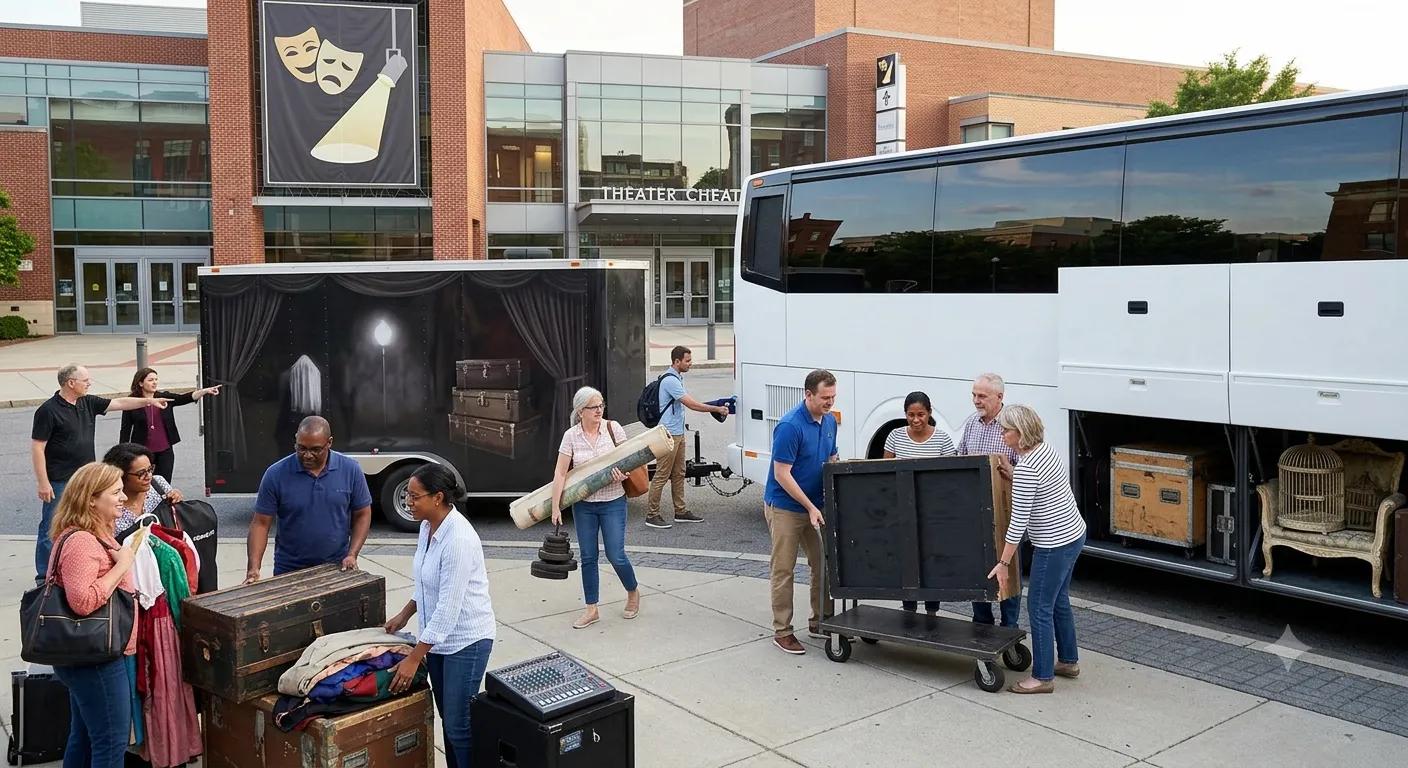
Production equipment needs separate consideration. Costume bags, prop containers, musical instruments, and technical supplies can occupy substantial storage space. Large scenery, platforms, and rigid set pieces may require a dedicated cargo van or truck.
Providing the transportation company with an accurate passenger count and equipment inventory helps ensure that the selected vehicles can accommodate the entire group and its materials.
Coordinate Actor Schedules and Performance Preparation
Actors need sufficient time to prepare before stepping onto the stage. Long journeys, rushed departures, and late arrivals can affect concentration and performance readiness.
Organizers should establish clear reporting times and ensure that cast members know when and where to board. The travel schedule should account for the time needed to check in at the venue, change costumes, review scenes, and complete vocal or physical warm-ups.
For productions with evening performances, consider whether an earlier arrival or overnight stay would provide a more comfortable schedule. Traveling several hours immediately before a show may leave performers tired and reduce the time available for preparation.
During the journey, actors can use quiet travel time to review scripts or rest. The stage manager should communicate any schedule changes promptly so that performers remain informed throughout the tour.
Organize Costumes, Props, and Technical Materials
Production teams often face their greatest transportation challenges when moving equipment between venues. Costumes can become wrinkled, props may be damaged, and technical supplies can be difficult to locate if packing arrangements are inconsistent.
The wardrobe department should label garment bags by performer or character and keep accessories organized. Props should be stored in secure containers, while fragile pieces should receive appropriate padding.
The technical crew should create an inventory of equipment and assign responsibility for loading and unloading. Materials required immediately upon arrival should be packed for easy access, while items needed later can be arranged accordingly.
Large scenery should be measured before transportation is booked. Organizers should confirm the dimensions and weight limits of available cargo vehicles rather than assuming every item will fit.
After each performance, the production team should complete a final equipment check before leaving the venue. This reduces the possibility of missing props or supplies at the next destination.
Plan Efficient Pickup Locations and Group Communication
Actors and crew members may live in different neighborhoods, making individual pickups difficult to coordinate. Establishing a central departure point, such as the theater or rehearsal facility, can simplify boarding and reduce unnecessary travel.
If multiple pickup locations are necessary, organize them in a logical sequence and communicate the schedule in advance. Each participant should receive the meeting address, departure time, destination, and transportation coordinator's contact information.
A shared digital itinerary can keep everyone informed, while a designated coordinator can communicate directly with the driver and venue representatives.
For multi-city tours, update the itinerary whenever performance times, accommodation arrangements, or departure locations change. Clear communication helps prevent confusion and allows the production team to concentrate on its responsibilities.
Manage Transportation Costs Across the Tour
Transportation expenses can become significant when a theater company travels to several cities. Vehicle rental, driver hours, fuel or mileage charges, parking, and overnight arrangements may all affect the final budget.
Request quotes based on the complete itinerary whenever possible. Provide the transportation provider with travel dates, passenger numbers, destinations, estimated waiting periods, and equipment requirements.
Ask about overtime charges, cancellation policies, parking fees, and driver accommodation. Understanding these details before confirming a reservation helps organizers avoid unexpected expenses.
Community theater companies can also consider local sponsorships, fundraising performances, arts grants, and planned participant contributions to support travel costs. Booking early provides more time to compare options and coordinate transportation with the overall production budget.
Coordinate Venue Access and Loading Arrangements
Every theater has different requirements for passenger drop-offs, equipment unloading, and vehicle parking. Some venues provide dedicated loading docks, while others have limited access for large vehicles.
Contact each venue before arrival to confirm the correct entrance, unloading location, parking instructions, and available equipment storage. Share these details with the transportation provider so the driver can follow an appropriate route.
The production manager should coordinate with the venue's technical staff to ensure that equipment can be unloaded during the designated time window. If the cast and cargo arrive in separate vehicles, their schedules should be coordinated to avoid delays.
Planning venue access in advance makes transitions between performances smoother and reduces unnecessary waiting.
Prioritize Safety and Driver Scheduling
Safety should remain a central consideration throughout a regional theater tour. Organizers should select a reputable transportation provider and confirm that the company meets applicable licensing, insurance, and vehicle safety requirements.
For longer journeys, discuss driver schedules and rest requirements with the provider before finalizing the itinerary. A late-night performance followed by equipment loading and a long return journey may require an overnight stay or a different driver arrangement.
The transportation coordinator should also maintain an updated passenger roster and emergency contact information. Participants should know whom to contact if they need assistance or if their travel plans change.
Accessibility needs should be discussed before booking to ensure that suitable vehicles and boarding arrangements are available for every participant.
Prepare for Unexpected Schedule Changes
Even carefully organized tours can experience delays. Traffic congestion, severe weather, venue scheduling changes, or a performance running longer than expected may affect the next stage of the journey.
Organizers should identify practical alternatives and maintain communication with the transportation provider. Where possible, allow enough flexibility between performances to accommodate minor delays without disrupting the entire itinerary.
At the end of each performance, review the next day's schedule, confirm pickup arrangements, and ensure that all equipment has been accounted for. This simple routine helps identify problems before they affect the following destination.
Conclusion
Regional theater tour planning requires coordination between transportation schedules, passenger needs, production equipment, venue access, and budget management. By developing a detailed itinerary and selecting appropriate vehicles, theater companies can make travel more organized and reduce unnecessary stress.
Clear communication, careful equipment handling, and realistic arrival times help actors and production teams prepare for each performance with greater confidence. Whether visiting two neighboring towns or touring several cities, a well-planned transportation strategy allows theater companies to focus on their creative work and deliver memorable performances to audiences throughout the region.