

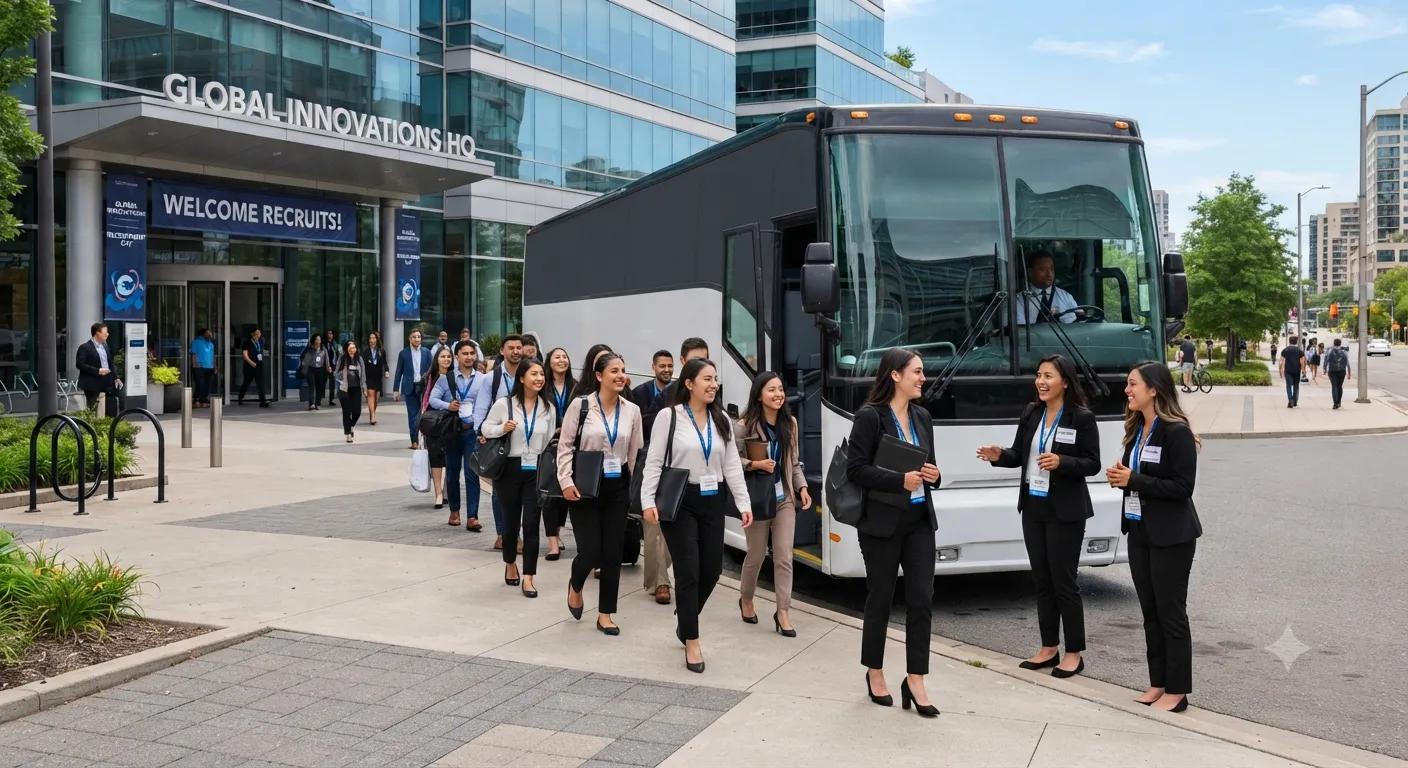
Recruitment Day Transportation: How to Move Candidates
A successful recruitment day depends on more than attracting qualified applicants and scheduling productive interviews. Candidates also need a convenient and dependable way to reach the event location without unnecessary delays or confusion. Well-planned candidate shuttle transportation can help employers coordinate arrivals, reduce travel-related stress, and create a professional experience from the moment applicants begin their journey. When transportation is integrated into the recruitment strategy, HR teams can focus more on connecting with potential employees while candidates arrive prepared and on time.

Why Efficient Transportation Matters on Recruitment Day
Recruitment events often bring together candidates from different neighborhoods, cities, universities, or professional backgrounds. Some applicants may be unfamiliar with the area, while others may not have access to a personal vehicle.
Expecting every candidate to manage transportation independently can create several challenges. Traffic congestion, parking limitations, unfamiliar roads, and public transportation delays can all affect arrival times. Even a small delay can cause candidates to miss an opening presentation or arrive at an interview feeling rushed.
Organized group transportation gives employers greater control over the arrival process. Candidates can meet at designated locations and travel together, making it easier for HR teams to coordinate registration and interviews.
Begin Transportation Planning Early
Transportation should be considered as soon as the recruitment day details are confirmed. Waiting until the event is approaching can limit vehicle availability and make it more difficult to establish convenient pickup locations.
Start by determining the expected number of candidates, the event venue, the approximate schedule, and where attendees are likely to travel from. These factors will influence the type of vehicle required and how the transportation route should be designed.
Early planning also allows employers to include transportation information in candidate invitations. When applicants know exactly how they can reach the event, they are less likely to experience confusion on the day.
Identify the Best Pickup Locations
The pickup location can have a direct effect on candidate participation. A convenient meeting point should be easy to find and accessible through major transportation routes.
Depending on the event, suitable locations may include transit hubs, university campuses, hotels, central parking areas, or recognizable landmarks. Employers should review candidate registration information to determine where the largest groups of attendees are located.
However, adding too many stops can make transportation inefficient. Each additional pickup can increase travel time and introduce another opportunity for delays. A small number of strategically selected locations is often more effective than creating a complicated route.
Select a Vehicle That Fits the Group
Choosing the appropriate vehicle is essential for moving candidates efficiently. A smaller recruitment event may only require a minibus, while a large hiring event may be better suited to a full-size charter bus.
Capacity is only one consideration. Employers should also think about passenger comfort, accessibility, travel distance, and the overall candidate experience.
Candidates may be traveling for several hours before reaching the recruitment venue, particularly when an organization is hiring for specialized positions. A comfortable vehicle can provide a more pleasant journey and allow attendees to arrive feeling prepared.
Accessibility should also be addressed before booking. Employers should communicate any known accessibility requirements so an appropriate transportation option can be arranged.
Build a Realistic Transportation Schedule
An efficient schedule should account for more than the actual driving time. Boarding, traffic, unloading, parking, venue access, and candidate check-in can all affect how long the transportation process takes.
Employers should schedule vehicle arrival early enough to give candidates time to check in before interviews or presentations begin. Building a reasonable buffer into the schedule provides additional protection against unexpected traffic or minor delays.
For larger events, staggered shuttle waves can be useful. Instead of having all candidates arrive simultaneously, transportation can bring groups to the venue according to their scheduled activities.
This approach can help prevent overcrowding at registration desks and make it easier for recruiters to manage the candidate flow.
Make Pickup Simple for Candidates
Even an efficient route can create problems if candidates cannot identify where they are supposed to board. Pickup instructions should therefore be clear and detailed.
Event communications should include the exact address, meeting location, boarding time, and any important landmarks. A map or visual direction can be especially helpful when the pickup point is located at a large transit station or parking facility.
A company representative can also be present at the pickup location. This person can welcome candidates, answer questions, confirm attendance, and direct everyone toward the correct vehicle.
Visible company signage can further simplify the process and reinforce the employer's professional image.
Communicate Transportation Information Clearly
Candidates should receive transportation information well before recruitment day. Important details should not be hidden in a long email or sent at the last minute.
The initial event invitation can explain the transportation options, while a reminder shortly before the event can repeat the pickup time and location. A final morning reminder may also be helpful for large recruitment programs.
Employers should provide a contact method for candidates who encounter problems. If someone cannot locate the pickup point or expects to arrive late, having a designated coordinator can prevent unnecessary confusion.
Turn Travel Time Into a Positive Experience
The journey to the recruitment venue can be an opportunity to make candidates feel welcome. For longer trips, a company employee can accompany the group and provide a brief introduction to the organization.
Candidates may appreciate informal conversations about company culture, workplace expectations, or what the recruitment day will involve. Hearing from an actual employee can provide a more authentic perspective than promotional materials alone.
However, the ride should not become another interview. The goal is to make candidates comfortable and informed, not to evaluate them before they arrive.
For short journeys, a simple and comfortable ride may be all that is necessary.
Coordinate Transportation With Event Staff
The transportation coordinator and recruitment team should maintain direct communication throughout the event. Registration staff need to know when candidates are arriving, while transportation staff should know exactly where passengers need to be dropped off.
This becomes particularly important when multiple vehicles are being used. A shared communication channel can allow staff to report delays, changes in passenger numbers, or adjustments to the event schedule.
Good coordination prevents transportation from becoming disconnected from the rest of the recruitment process.
Plan the Return Journey
Moving candidates efficiently also means planning how they will leave the event. Return transportation should be organized before recruitment day begins.
Candidates should know where they need to meet their vehicle and what time the return journey is scheduled. If interviews end at different times, employers may consider multiple departure windows.
A well-organized return trip provides a strong final impression. Employers can also use this time to thank candidates for attending and explain when they can expect to hear about the next stage of the hiring process.
Prepare for Changes in Attendance
Recruitment attendance is rarely completely predictable. Some candidates may cancel, while others may confirm shortly before the event.
Employers should maintain an updated attendance list and communicate significant changes to the transportation provider. Discussing flexibility before booking can also make it easier to adjust vehicle capacity if the final passenger count changes.
This approach can help companies avoid unnecessary transportation costs while still providing sufficient seating for confirmed attendees.
Evaluate Transportation After the Event
After recruitment day, HR teams should assess how well the transportation plan performed. Candidate feedback can reveal whether pickup locations were convenient, instructions were clear, and vehicles arrived on schedule.
Employers can also review attendance and punctuality data to determine whether organized transportation helped improve participation.
These insights can guide future recruitment events and help companies create increasingly efficient transportation plans.
Final Thoughts
Moving candidates efficiently requires careful attention to transportation before, during, and after recruitment day. By selecting convenient pickup locations, choosing the right vehicle, creating realistic schedules, communicating clearly, and coordinating closely with event staff, employers can reduce logistical challenges and improve the candidate experience.
Reliable group transportation allows candidates to arrive comfortably and prepared while giving HR teams greater control over the event schedule. Whether the event is a campus recruiting program, career fair, corporate hiring day, or large-scale recruitment event, a thoughtful transportation strategy can help employers create a professional experience from the first pickup to the final departure.