

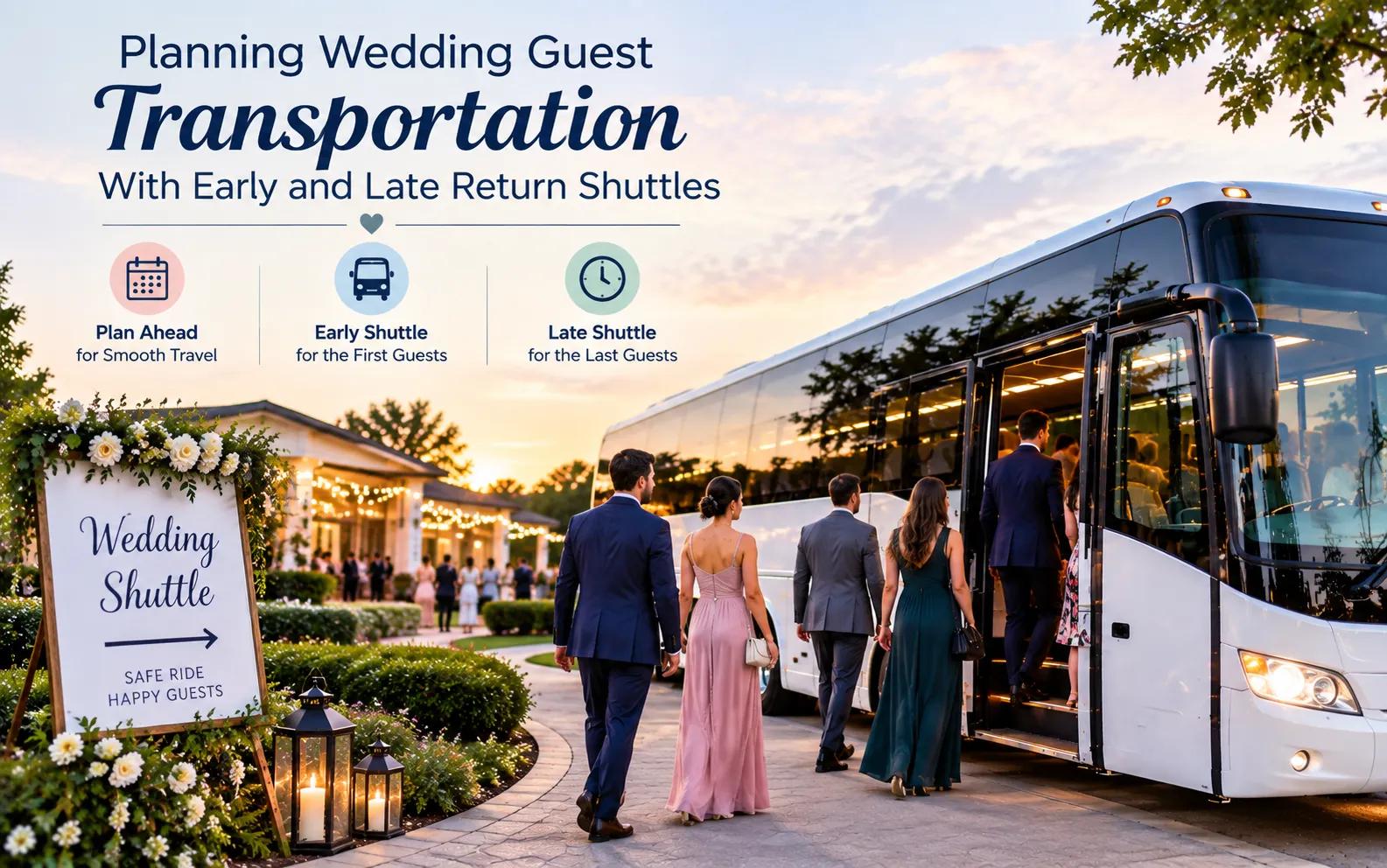
Planning Wedding Guest Transportation
Wedding transportation can be one of the most important parts of creating a comfortable and well-organized guest experience. While some attendees may want to remain at the reception until the final dance, others may prefer to return to their hotel earlier in the evening. Families with young children, older relatives, and guests with early morning travel plans may all have different needs. A flexible transportation plan can accommodate these preferences while keeping everyone connected. Couples arranging multiple departure times can also review this guide to wedding reception return shuttle planning for additional ideas on coordinating early and late transportation.

Why Wedding Guests May Need Different Return Times
A wedding reception does not necessarily end for everyone at the same time. Guest energy, personal schedules, and travel arrangements can influence when people decide to leave.
Some guests may be ready to return after dinner and formal reception activities. Older relatives may prefer an earlier evening, while parents with young children may appreciate the opportunity to return before bedtime becomes an issue. Guests with early flights or long drives the following morning may also want an earlier shuttle.
Other attendees may want to stay until the reception officially ends. Members of the wedding party, close friends, and guests who want to enjoy the dancing and final send-off may prefer a later departure.
Offering both early and late return options allows guests to enjoy the wedding according to their own schedules.
Start With the Wedding Reception Timeline
The reception schedule should be the foundation of the transportation plan. Before selecting shuttle departure times, review when guests will arrive, when dinner will be served, when formal activities will take place, and when dancing is expected to begin.
An early return shuttle often works best after major formal activities have finished. This gives guests an opportunity to participate in dinner, speeches, cake cutting, and other important moments before leaving.
The late shuttle should be connected to the expected conclusion of the reception. Instead of choosing an arbitrary time, review the venue's closing requirements and allow guests enough time to leave the building and board comfortably.
Estimate How Many Guests Will Use Each Shuttle
Knowing the total wedding guest count is important, but it does not automatically tell you how many people will use each return shuttle. The transportation plan should consider how many guests are likely to leave early and how many are expected to remain until the end.
RSVP information, hotel arrangements, and conversations with family members can provide useful clues. Guests staying at the same hotel may be easier to organize into one transportation group, while guests with different accommodations may require additional planning.
It is also important to remember that some guests will decide when to leave based on how the evening develops. Building a reasonable amount of flexibility into the plan can help accommodate these changes.
Set a Convenient Early Return Time
The early shuttle should provide a genuine alternative for guests who do not want to stay until the end. Scheduling it too early may cause guests to miss important parts of the reception, while scheduling it too late may not benefit those who need to return to their accommodations.
A natural transition point can be after dinner, formal speeches, cake cutting, or another major reception activity. This allows guests to participate in the core wedding celebration before choosing an earlier departure.
The ideal time will vary depending on the wedding's schedule and location. A professional transportation provider can help determine how travel time should fit into the overall evening.
Plan the Late Return Carefully
Late-night transportation requires careful coordination because guests may need time to gather personal belongings and say their final goodbyes before leaving the venue.
If the reception officially ends at a specific time, the shuttle should not necessarily depart at that exact minute. Guests may still be making their way outside, and venue closing procedures may take additional time.
A small buffer can give guests enough time to reach the designated pickup location without creating unnecessary delays. The transportation company should also be informed about the venue's music cutoff and building closing requirements so the driver schedule can be planned appropriately.
Coordinate Hotels and Shuttle Routes
Hotel locations can significantly affect the transportation schedule. If most guests are staying at one hotel, the route may be relatively straightforward. However, when accommodations are spread across several hotels, planners need to determine the most efficient way to serve each location.
Hotels that are close together may be combined into a single route. More distant accommodations may require separate transportation or additional vehicles.
The pickup location at the reception venue should also be easy to identify. Guests should receive clear instructions about where to wait for the shuttle, particularly when the reception ends at night.
Decide Whether One Vehicle Can Handle Both Waves
Planning early and late return shuttles does not always mean booking two full-size buses. Depending on the distance between the reception venue and hotels, the same vehicle may be able to complete both trips.
For example, the vehicle could transport the early group to the hotel and return to the reception in time to pick up the remaining guests. This arrangement can be practical when there is sufficient time between departures.
If the venue is far from the hotel or the early group is large, using separate vehicles may be more appropriate. A smaller vehicle can sometimes handle an early group while a larger vehicle serves the late group.
Discussing these options with the transportation provider can help couples find an arrangement that balances convenience and cost.
Consider a Shuttle Loop for Larger Weddings
Some large weddings may benefit from a continuous shuttle loop instead of two fixed departure times. A loop can give guests greater freedom to leave throughout the evening rather than requiring them to wait for a specific departure.
This option may be particularly useful when the reception venue is close to the primary hotel and many guests are expected to leave at different times.
However, continuous service can require additional vehicle hours and may cost more than two scheduled return trips. For smaller weddings or events with a limited transportation budget, two carefully selected departure times may be more practical.
Make the Schedule Easy for Guests to Understand
Clear communication is essential. Guests should know the available return times before the wedding rather than trying to figure out transportation during the reception.
The wedding website can include the complete shuttle schedule, while hotel welcome materials can provide another reminder. Signs at the reception can identify the shuttle pickup location and display the upcoming departure times.
A short announcement before the early shuttle leaves can also remind guests that transportation is available. Near the end of the reception, another announcement can direct remaining guests toward the late shuttle.
Plan for Safety After the Celebration
Wedding receptions may include alcohol, making dependable transportation especially valuable. Providing scheduled shuttle service gives guests an alternative to driving themselves after the celebration.
A reliable late-night shuttle can reduce uncertainty and allow guests to enjoy the reception without worrying about finding a ride afterward. Professional drivers can manage the route while guests relax and spend time with family and friends.
Including safe transportation in the wedding plan is therefore not only a matter of convenience but also an important part of responsible event planning.
Prepare for Changes and Unexpected Delays
Wedding schedules can change because of weather, extended speeches, delayed meals, photography, or other unexpected circumstances. Transportation plans should have enough flexibility to accommodate reasonable changes.
Outdoor weddings may require additional consideration because sudden rain or extreme temperatures can cause more guests to leave earlier than expected. Discussing possible changes with the transportation provider before the wedding can make it easier to respond if the schedule shifts.
It is also useful to establish how much waiting time is available if the reception runs longer than expected.
Create a Transportation Plan That Works for Everyone
Early and late return shuttles can make wedding transportation more flexible and guest-friendly. Instead of expecting every attendee to leave at one predetermined time, couples can create transportation options that accommodate different schedules and preferences.
The best plan depends on the guest count, reception timeline, hotel locations, venue distance, and budget. Whether the wedding requires one vehicle making multiple trips, separate vehicles, or a continuous shuttle loop, careful planning can make the transportation experience much smoother.
By organizing the schedule early, communicating details clearly, and working with a professional charter bus provider, couples can give their guests dependable transportation throughout the celebration. With the right plan in place, guests can leave when they are ready while still enjoying the wedding moments that matter most.