

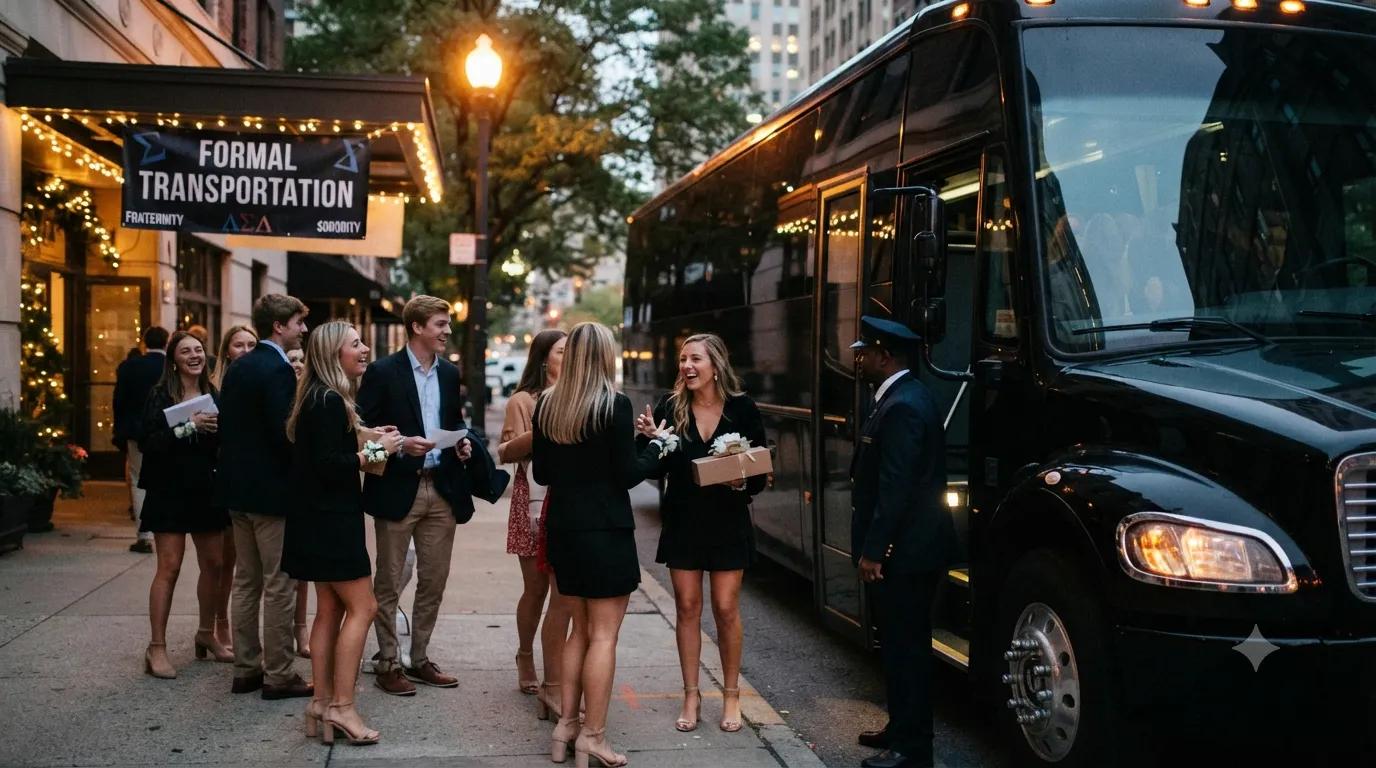
Planning Transportation for Fraternity and Sorority
Fraternity and sorority formal events bring together members, guests, chapter leaders, and sometimes multiple Greek organizations for an evening away from campus. When the venue is located at a hotel, banquet hall, country club, or event center, transportation becomes an important part of the planning process. A dependable transportation arrangement can help everyone arrive on time, travel together, and return safely. For organizers preparing an upcoming event, these formal event transportation planning strategies can provide a helpful foundation for coordinating group travel.

Start Transportation Planning as Soon as the Venue Is Confirmed
Transportation should be considered immediately after the event date and venue are established. Waiting until the final weeks can limit vehicle availability, particularly during popular formal seasons when several fraternities and sororities may be hosting events at the same time.
Begin by estimating how many members and guests will attend. Registration numbers may change, so chapter leaders should continue communicating with the transportation provider if the expected passenger count increases or decreases. Knowing the approximate group size also makes it easier to determine whether one charter bus, several buses, or a smaller vehicle will be appropriate.
Early planning provides additional time to review university requirements. Policies vary by institution, and some schools require event registration, transportation documentation, waivers, insurance certificates, or approved vendors. For example, the University of San Diego requires organizations using commercial transportation to meet specific insurance and documentation requirements.
Choose a Vehicle That Matches the Group
Selecting the right vehicle is one of the most important transportation decisions. The goal is to provide enough seating for everyone without creating unnecessary capacity or requiring passengers to travel separately.
A smaller group may be comfortable using a minibus, while a large chapter or combined Greek event may require one or more full-size charter buses. When several vehicles are necessary, chapter leaders can assign passengers to specific buses and designate a responsible representative for each vehicle.
Charter buses can simplify formal transportation because members and guests can travel together rather than depending on numerous personal cars. The University of South Carolina notes that buses are one of the common transportation options available to fraternities and sororities and recommends choosing the option that fits the event while complying with applicable risk-management policies.
Confirm Campus and Venue Pickup Locations
A transportation plan should clearly identify where passengers will meet the bus. The location should be convenient for attendees while providing enough room for buses to safely load and depart.
Chapter leaders should check campus rules regarding commercial vehicles before confirming a pickup point. Some universities have designated bus loading areas or require advance registration for charter vehicles. The venue should also be contacted to determine where buses can unload and wait during the event.
Choosing these locations in advance can prevent unnecessary delays. It also gives organizers an opportunity to communicate clear directions to members and guests instead of asking everyone to find the bus after arriving at a large campus or unfamiliar venue.
Build a Detailed Event-Day Schedule
A transportation schedule should include more than the final departure time. Organizers should establish when passengers need to arrive, when boarding begins, when the bus will leave campus, and when the group is expected to reach the venue.
Providing a boarding window gives passengers enough time to arrive without forcing the entire group to wait for late attendees. It is also helpful to communicate that the scheduled departure time is firm unless the transportation coordinator receives different instructions.
The return schedule should be planned at the same time. Guests should know approximately when buses will leave the venue and where they need to gather for the return journey. Clear arrival and departure information is part of the transportation guidance used by universities for student organizations.
Work With a Professional Transportation Provider
Reliability begins with selecting a transportation provider that can meet the chapter's requirements. Before signing an agreement, organizers should verify licensing, insurance, vehicle availability, and any documentation required by the university or national organization.
It is also important to review the transportation contract carefully. Chapter leaders should understand the rental period, pickup and drop-off locations, number of vehicles, waiting arrangements, cancellation policies, and procedures for schedule changes.
Some universities require student organizations to use approved or authorized transportation providers. Notre Dame, for example, states that recognized student groups using charter buses for university-sponsored travel must use authorized vendors and provide required travel documentation.
Checking these requirements before booking can prevent complications later in the planning process.
Establish Passenger Expectations Before Departure
Transportation planning should include clear expectations for members and guests. Everyone should know where to meet, when boarding begins, what time the bus leaves, and what behavior is expected during the journey.
This is particularly important for formal events where alcohol may be part of the broader event environment. Chapters should follow their university and national organization policies regarding alcohol, prohibited substances, passenger conduct, and designated event monitors.
Some university policies specifically recommend organized transportation for events involving alcohol. The University of Tampa, for example, states that bus-style transportation should be the primary transportation method for formal and semi-formal events under its applicable policy.
Communicating expectations before the event gives passengers a clear understanding of their responsibilities and helps drivers operate without unnecessary interruptions.
Assign a Transportation Coordinator
A designated transportation coordinator can make the entire process easier to manage. This person can serve as the main contact between the chapter, transportation provider, venue, and passengers.
For larger events, each bus can have its own chapter representative. These representatives can help organize boarding, communicate schedule changes, and report transportation issues to the main coordinator.
Having clearly defined responsibilities also reduces the chance of conflicting instructions. Instead of several people contacting the driver independently, the transportation coordinator can handle schedule-related communication and provide updates to the rest of the group.
Plan the Return Journey Carefully
The return trip deserves as much attention as the journey to the formal. Events can sometimes end later than expected, and guests may take additional time to leave the venue.
Before the formal, confirm where the buses will be waiting and how passengers will know when boarding begins. The transportation coordinator should have the driver's contact information and understand how to communicate if the schedule changes.
A return transportation plan can also reduce reliance on last-minute rideshares or individual drivers. Some university policies specifically require organizations to establish transportation arrangements for both directions of an off-campus event.
Prepare for Delays and Unexpected Changes
Traffic, weather, venue delays, and attendance changes can affect even a well-organized transportation schedule. A simple contingency plan allows chapter leaders to respond without creating unnecessary confusion.
Organizers should keep the transportation provider's contact information readily available and identify who has authority to approve schedule changes. It is also useful to build reasonable time buffers into the itinerary, especially when the venue is located in a busy downtown area or requires travel during peak traffic.
University transportation guidance also encourages student leaders to consider weather, destinations, emergency facilities, and other factors that could affect group travel.
Consider Accessibility Requirements
Every member and guest should have access to appropriate transportation. If someone requires an accessible vehicle, mobility assistance, or additional boarding support, those requirements should be communicated during the booking process.
Discussing accessibility early gives the transportation provider time to arrange an appropriate vehicle. It also reduces the possibility of last-minute complications that could affect an attendee's ability to participate in the formal.
Accessibility planning should be treated as part of normal event preparation rather than as an afterthought.
Keep a Transportation Roster
A passenger roster can make group transportation easier to manage, particularly when several buses are involved. The chapter can use the roster to confirm expected passengers before departure and help account for everyone during the return trip.
The University of San Diego, for example, requires student travel lists before departure for applicable fraternity and sorority transportation.
A designated chapter representative can maintain the roster and coordinate with other transportation leaders. The information should be handled responsibly and according to the university's privacy requirements.
Review the Plan Before the Event
A final transportation review a few days before the formal can catch problems before they become event-day issues. Confirm the passenger count, pickup location, vehicle assignments, departure times, venue access, return schedule, and transportation provider contact information.
Chapter leaders should also make sure members and guests have received the latest transportation details. A short reminder on the day of the event can help reduce missed departures and repeated questions.
Conclusion
Planning transportation for a fraternity or sorority formal requires careful attention to group size, scheduling, safety, communication, and university requirements. Starting early gives chapter leaders enough time to select an appropriate vehicle, verify transportation documentation, coordinate pickup and drop-off locations, and establish clear expectations for members and guests.
A professional charter bus can make group travel more organized by keeping attendees together and reducing the need for numerous individual vehicles. With a detailed schedule, designated transportation coordinators, a clear return plan, and appropriate safety measures, fraternities and sororities can create a dependable transportation experience that supports the success of the entire formal event.