

Planning Student Service-Learning Trips With Reliable Group
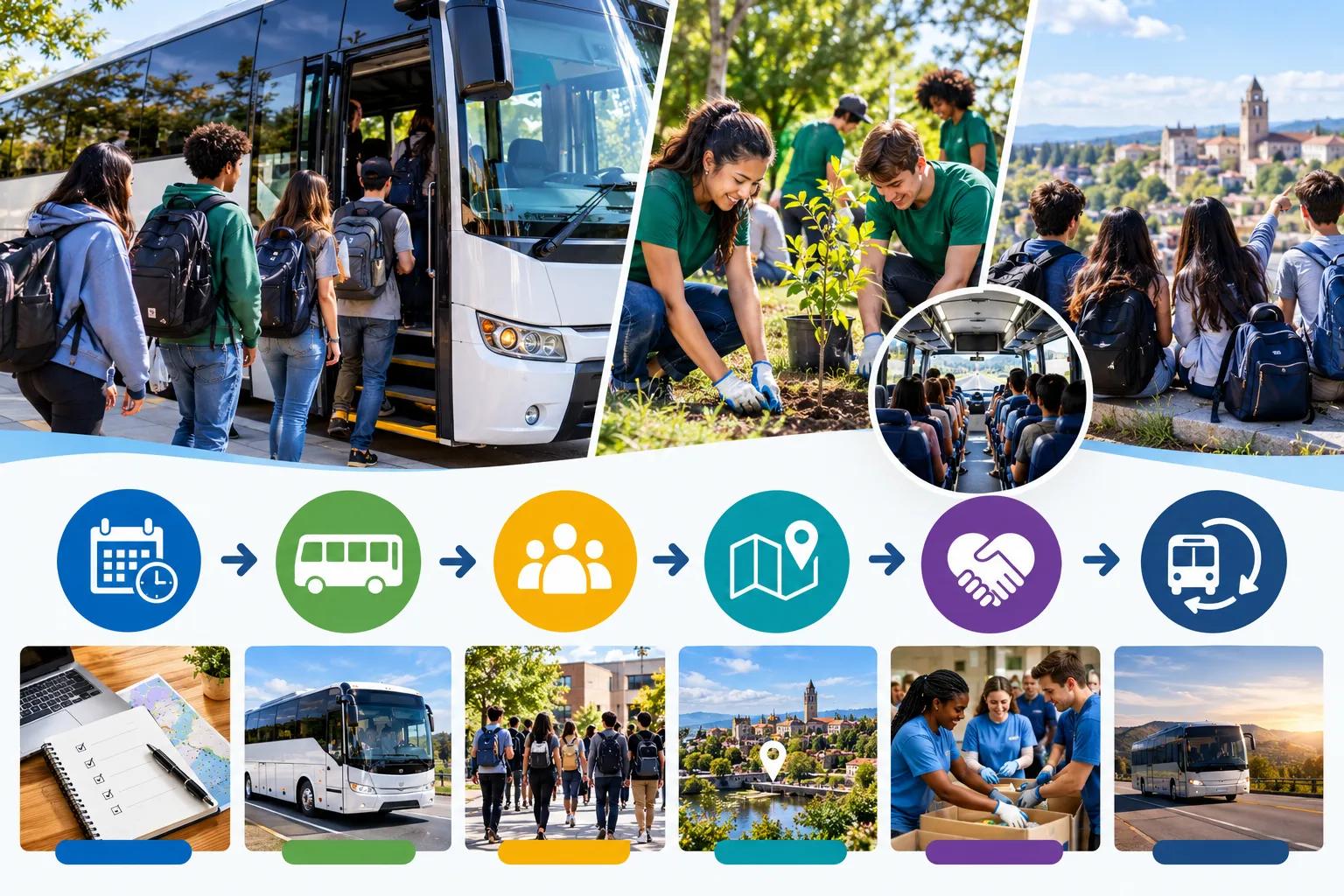
Student service-learning trips allow students to connect classroom knowledge with meaningful community involvement. Whether students are volunteering with nonprofit organizations, helping with environmental projects, assisting community centers, or participating in local improvement programs, transportation can have a major impact on the success of the experience. Schools and universities need a dependable way to move students, teachers, and chaperones while keeping the itinerary organized. Planning around reliable student group transportation can help schools reduce logistical challenges and give students more time to focus on learning and serving their communities.

Start Transportation Planning Early
Transportation should be considered at the beginning of the service-learning planning process rather than treated as a final detail. The location of the project, number of students, service hours, equipment requirements, and expected return time can all influence transportation decisions.
Starting early gives schools enough time to identify an appropriate vehicle, communicate with the service organization, review accessibility requirements, and establish a realistic schedule. It also provides additional time to address unexpected issues before students arrive at the project location.
Coordinate With the Community Organization
The service-learning partner should be involved in transportation planning. Community organizations understand their locations and can provide useful information about arrival procedures, parking, loading areas, site capacity, and accessibility.
Schools should also confirm how many students the organization can accommodate at one time. A transportation plan may work perfectly for the school but create problems if the community partner is only prepared to supervise a smaller group.
Maintaining communication with the partner helps ensure that transportation supports the service project rather than disrupting it.
Match the Vehicle to the Group
Passenger count is one of the first details transportation providers need. Schools should calculate the total number of students, teachers, chaperones, faculty members, and other participants traveling.
Vehicle selection should also account for trip distance, equipment, accessibility requirements, and the school's transportation policies.
Choosing an appropriately sized vehicle can make boarding, supervision, and unloading easier while avoiding unnecessary complications.
Build a Complete Itinerary
A reliable transportation plan should cover the entire trip. The itinerary should include the campus departure point, service-site addresses, arrival times, planned stops, service hours, meal breaks, and return arrangements.
Schools should avoid creating schedules that leave no room for traffic or boarding delays. Students may need additional time to gather supplies, complete attendance checks, and board the vehicle after the service project.
If several community organizations are involved, each stop should be clearly identified. Sharing the complete itinerary with the transportation provider allows the driver to understand the route and expected timing before the trip.
Keep Students Together
Group transportation can simplify student supervision by keeping participants together rather than requiring families, students, or staff to arrange individual transportation.
Before departure, students should know where to meet and when they need to be ready. Teachers and chaperones should have an accurate passenger roster and establish responsibility for headcounts.
Attendance checks can be particularly important when students leave a service location. A clear procedure ensures that the group does not depart before everyone is accounted for.
For larger programs using multiple vehicles, schools can assign students and chaperones to specific buses in advance. Each vehicle can have a designated adult responsible for communication and passenger organization.
Plan for Supplies and Equipment
Service-learning projects often involve materials that students need to transport. Depending on the activity, these could include gardening tools, cleanup supplies, donated food, clothing, educational materials, sports equipment, or construction supplies.
Schools should discuss these requirements with the transportation provider before the trip. Large or unusually shaped items may require additional storage space, while heavy materials may need to be packed and secured carefully.
Keeping supplies organized can make loading and unloading easier. Students can also be assigned responsibility for specific project materials so that important equipment is not left behind at the end of the day.
Include Accessibility in the Plan
An effective service-learning program should provide transportation that supports the needs of all participants. Schools should identify accessibility requirements before selecting a vehicle.
If a student, teacher, or chaperone requires accessible transportation, the provider should receive that information during the planning process. The community organization should also confirm that the drop-off location and service area are accessible.
Accessibility planning should cover the entire journey, including boarding, transportation, unloading, and participation at the project location.
Addressing these details early gives schools and community partners more time to resolve potential challenges.
Create a Realistic Return Schedule
Many transportation plans focus heavily on getting students to the service site but give less attention to the return trip. The return schedule is equally important.
Service projects can occasionally run longer than expected, particularly when students are completing hands-on work. Schools should establish a clear departure procedure and provide students with instructions about where to gather when the project ends.
For larger service events, site leaders can communicate with the trip coordinator when their groups are ready for pickup. This can make it easier to manage staggered departures.
A flexible return plan can also help reduce pressure when minor delays occur.
Prepare for Weather and Unexpected Changes
Outdoor service-learning activities can be affected by rain, storms, extreme temperatures, or other weather conditions. Schools should establish an alternative plan before the trip rather than attempting to create one at the last minute.
Transportation providers should know who is authorized to communicate itinerary changes. The school coordinator, community partner, and driver should have reliable contact information.
Road construction, traffic, accidents, or unexpected closures can also affect travel times. Building reasonable flexibility into the itinerary can make it easier to respond without disrupting the entire service-learning experience.
Use Travel Time for Preparation and Reflection
Transportation does not have to be separate from the educational experience. The journey to the service location can be used to prepare students for the project.
Teachers can explain the community organization's mission, discuss the issue students will be addressing, and review expectations for respectful participation. Students can also think about what they hope to learn.
The return journey provides an opportunity for reflection. Students can discuss what surprised them, what they learned from community members, and how the experience relates to their coursework.
Using transportation time in this way can strengthen the connection between service and academic learning.
Prioritize Transportation Safety
Safety should be considered throughout the planning process. Schools should review applicable transportation requirements and institutional policies and select providers that can meet the needs of the trip.
Requirements for student transportation can vary depending on the vehicle, type of trip, operating arrangement, state requirements, and whether travel crosses state lines.
Schools should also confirm relevant documentation, insurance requirements, accessibility arrangements, and other institutional approvals before departure.
Professional group transportation can reduce the driving responsibilities placed on teachers or students, allowing school staff to concentrate on supervision and the educational objectives of the trip.
Make Transportation Accessible to Students
Transportation can influence who is able to participate in service-learning. Students without personal vehicles may face barriers when service locations are far from campus or difficult to reach through public transportation.
Providing organized group transportation can help create more equal access to community experiences. This is particularly important for programs that expect students to participate outside regular class hours or travel to locations away from campus.
Transportation should therefore be considered part of the program's overall accessibility rather than simply an operational expense.
Include Transportation in the Budget
Schools should account for transportation costs when creating the service-learning budget. Vehicle size, distance, trip duration, number of stops, and special requirements can all influence the final cost.
Planning transportation early allows coordinators to compare options and determine how travel expenses fit within the available funding. Schools may also consider grants, community partnerships, fundraising, or institutional funding to support transportation.
Sharing vehicles between compatible service programs can sometimes improve efficiency as well. When several groups have similar schedules and nearby destinations, coordinated transportation may reduce unnecessary travel.
Review Everything Before Departure
A final transportation review should take place before students leave campus. Coordinators should confirm the passenger count, pickup location, vehicle details, destination addresses, schedule, community contacts, accessibility requirements, equipment, and return arrangements.
Teachers and chaperones should have access to the final itinerary, while students should receive a reminder about the meeting location and departure time.
Reviewing these details in advance can prevent small communication problems from becoming major disruptions during the trip.
Conclusion
Planning student service-learning trips with reliable group transportation requires attention to much more than simply booking a vehicle. Schools need to coordinate with community partners, determine the appropriate vehicle, create a realistic itinerary, account for supplies, consider accessibility, organize student supervision, and prepare for unexpected changes.
Reliable transportation can keep students together, simplify logistics, improve access to service opportunities, and give educators more time to focus on learning and community engagement. When transportation is integrated into the program from the beginning, students can arrive prepared to participate and return with meaningful experiences to reflect upon.
With thoughtful planning, clear communication, and dependable group transportation, schools and universities can create service-learning trips that are organized, accessible, and rewarding for students, educators, and community partners alike.