

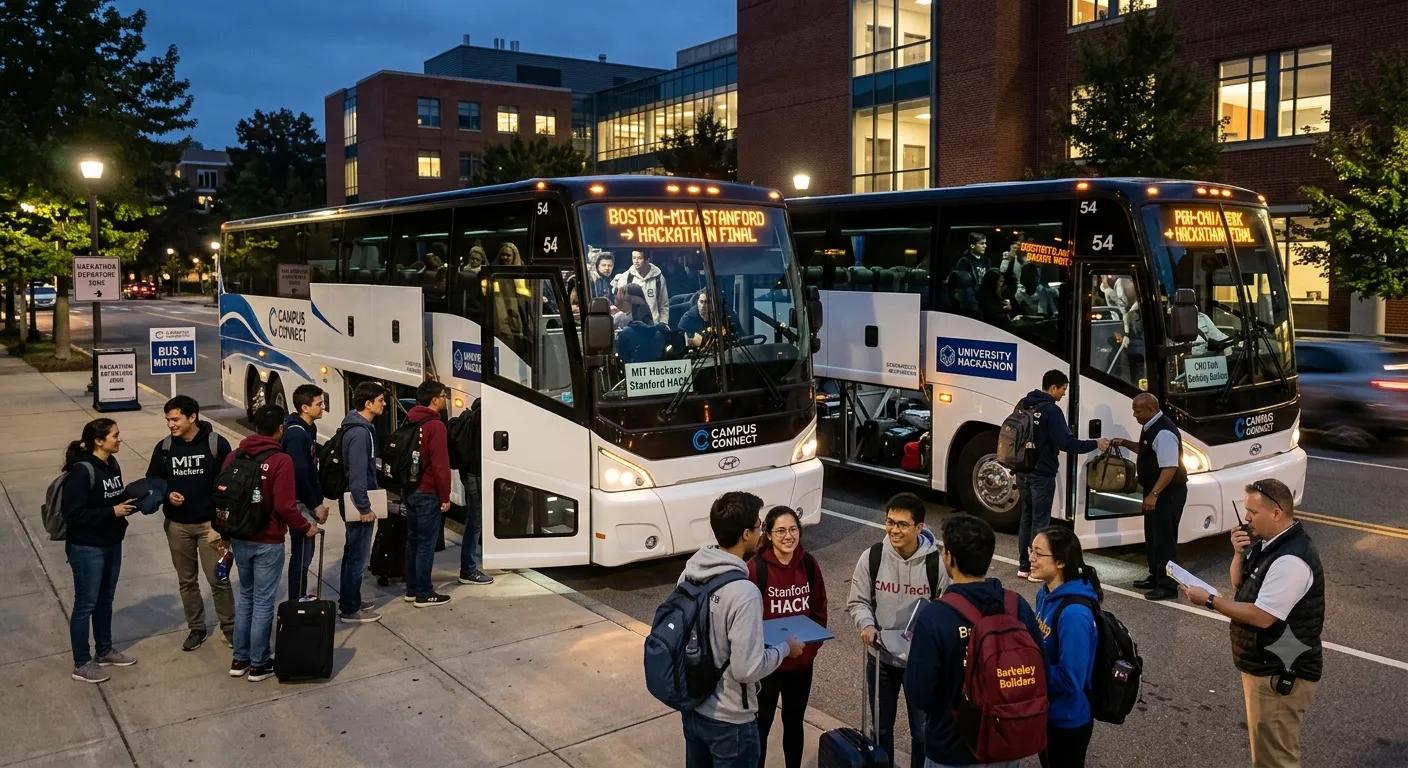
Planning College Hackathon Travel: Bus Rentals, Scheduling
College hackathons give students an opportunity to collaborate, develop innovative technology, and solve real-world problems through programming and creative thinking. These events often bring together students from different departments, universities, and technical backgrounds. Whether a competition takes place at a nearby campus or in another city, organizing transportation is an important part of ensuring that participants arrive comfortably and on time.
Choosing charter bus transportation for college hackathon travel can help universities and student organizations coordinate group journeys, manage equipment, and simplify event logistics. With a suitable bus, a realistic schedule, and clear safety procedures, organizers can reduce transportation challenges and allow students to focus on coding, teamwork, and project development.

Understand Your College Hackathon Travel Needs
The first step in planning a successful trip is understanding the group's transportation requirements. Organizers should determine how many students will attend, whether faculty advisers or mentors will accompany them, and how far the event venue is from the campus.
A small team attending a local coding competition may need a minibus, while a university sending several teams to a regional hackathon may require a larger charter bus. The choice should account for passenger numbers as well as luggage and technology equipment.
Organizers should also determine whether the group needs a one-way trip, round-trip transportation, or transfers between a hotel and the event venue. For multi-day competitions, it is important to confirm whether transportation will be required at specific times throughout the event.
Establishing these details early makes it easier to request accurate quotes and select a vehicle that suits the group's needs.
Choose the Right Charter Bus Rental
Selecting an appropriate vehicle helps improve comfort and simplifies the transportation process. A suitable charter bus should provide enough seating for all participants and adequate storage for their belongings.
Hackathon teams often carry laptops, monitors, keyboards, chargers, cables, and hardware development kits. Organizers should discuss these requirements with the transportation provider before booking to confirm that the selected vehicle can accommodate everything safely.
For longer journeys, amenities such as climate control and comfortable seating may help students arrive feeling more prepared. If any participants require accessible transportation, their needs should be communicated before the reservation is finalized.
It is also worth confirming whether the provider offers flexible scheduling, multiple pickup locations, and arrangements for waiting during the competition. Reviewing these details in advance can prevent confusion on the day of travel.
Build a Realistic Transportation Schedule
A well-organized schedule helps students arrive before registration closes and gives organizers more control over the travel experience. Start by reviewing the official hackathon itinerary, including registration, opening presentations, workshops, judging sessions, and closing ceremonies.
Work backward from the required arrival time to establish a departure time. Include enough room for traffic, boarding, equipment loading, and unexpected delays. For groups traveling from multiple campuses, arrange pickup stops along a practical route instead of adding unnecessary detours.
Communication is just as important as scheduling. Share the exact pickup location, departure time, expected arrival time, and trip coordinator's contact information with every participant. For multi-day events, confirm the return journey in advance and establish a clear meeting point after the closing ceremony.
If the event schedule changes, contact the transportation provider promptly to determine whether the booking can be adjusted.
Prioritize Student Safety and Comfort
Safety should guide every transportation decision. Before confirming a reservation, organizers should check the provider's applicable operating credentials, insurance coverage, driver qualifications, and vehicle maintenance practices.
Universities may have additional requirements for student travel, including approved transportation vendors, participant rosters, permission forms, and emergency contacts. Reviewing these policies early helps avoid administrative complications.
A designated trip coordinator can check attendance before departure and confirm that everyone is accounted for when the group reaches its destination. Students should also receive clear instructions about boarding, luggage storage, and meeting points.
Comfort is particularly important for hackathons that last an entire weekend. Participants may spend long hours programming and collaborating, so the return journey should allow them to rest. Organizers should discuss realistic departure times and appropriate driver rest arrangements with the transportation provider rather than assuming the bus can remain available indefinitely.
Protect Equipment and Prepare for the Journey
College hackathon teams often travel with laptops, monitors, chargers, keyboards, cables, and hardware development kits. These items should be organized before boarding to reduce the risk of damage or loss.
Students should pack fragile electronics in protective cases and label equipment bags clearly. Organizers should confirm the vehicle's storage capacity before booking, especially when the group plans to carry bulky project equipment.
It is also worth checking whether onboard Wi-Fi and power outlets are available. These features vary between vehicles, so students should charge their devices beforehand and carry suitable power banks when permitted.
Keeping a simple equipment inventory can help team leaders verify that essential belongings are collected at both departure and arrival. These small preparations make loading easier and reduce unnecessary stress.
Control Transportation Costs Through Early Planning
Budgeting is an important consideration for student clubs and university departments. Charter bus rental costs may depend on vehicle size, mileage, trip duration, waiting time, parking, tolls, and overnight arrangements.
Request detailed quotes from transportation providers and compare the total expected cost rather than focusing only on the starting price. Booking early and confirming the passenger count can help organizers select an appropriate vehicle without paying for unnecessary capacity.
Universities can also investigate student activity funds, departmental budgets, event sponsorships, or technology club funding to help cover travel expenses. For larger events involving several campuses, coordinating pickup routes may help simplify transportation management.
The best arrangement balances cost with passenger comfort, equipment capacity, safety, and dependable scheduling.
Conclusion
Planning college hackathon travel requires coordination between bus rentals, departure schedules, equipment preparation, and student safety. By identifying transportation needs early, selecting an appropriate vehicle, and maintaining clear communication, universities can make group travel more organized and convenient.
A reliable transportation plan helps students arrive prepared, keeps essential technology equipment organized, and reduces the challenges of coordinating separate vehicles. It also gives organizers a clearer way to manage budgets, pickup locations, and return journeys.
Ultimately, successful hackathon transportation allows students to concentrate on programming, teamwork, and creative problem-solving while leaving the travel logistics to a carefully coordinated plan.