

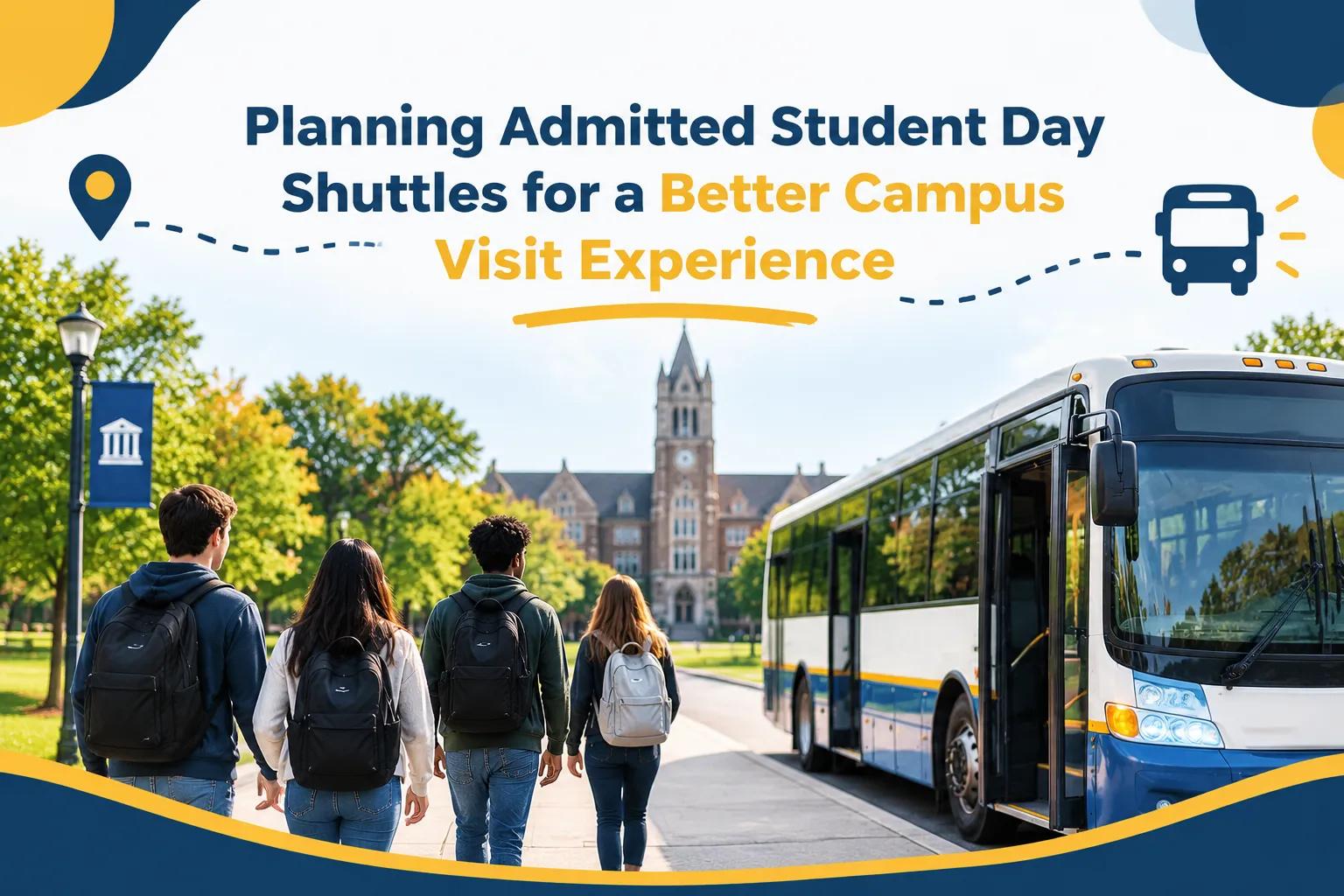
Planning Admitted Student Day Shuttles for a Better Campus
Admitted Student Day gives colleges and universities an important opportunity to welcome accepted students and their families. For many visitors, the event may be their first extended experience on campus, making organization and convenience especially important. Because parking, check-in, academic sessions, residence halls, and campus tours may be located in different areas, a well-planned campus visit shuttle service can make it easier for families to navigate the day without unnecessary delays or confusion.

Understand the Campus Visit Experience
Planning transportation begins with understanding how visitors will move through the campus. An Admitted Student Day schedule may begin with parking and registration before moving into welcome presentations, academic sessions, campus tours, residence hall visits, and student activities.
These destinations may be spread across a large campus. Visitors who have never been there before may not know which parking lot is closest to the event center or how long it takes to walk between buildings.
A shuttle system can connect these locations and create a more predictable transportation experience. Instead of leaving families to navigate unfamiliar roads and walkways, colleges can provide clearly defined routes between the locations they are most likely to visit.
Start With Parking and Check-In
Parking and check-in are usually the first major transportation points of the day. Event planners should determine where visitors will park and how they will travel from each parking area to the primary check-in location.
Some campuses may have several visitor lots, garages, or overflow parking areas. When these locations are far from the event center, shuttle service can reduce walking distances and help visitors arrive on time.
The check-in area should also have sufficient space for buses to unload passengers safely. Separating shuttle loading zones from private-car drop-off areas can help prevent traffic congestion and keep vehicles moving efficiently.
Plan Shuttle Routes Around Event Activities
A successful shuttle route should support the event schedule rather than simply follow the campus map. Organizers should identify when transportation demand will be highest and plan vehicle availability around those periods.
For example, many visitors may arrive shortly before the opening welcome session. Another busy period may occur when a large group finishes a presentation and needs to reach academic buildings or campus tours.
Transportation frequency can be adjusted throughout the day. More vehicles may be needed during arrival and major transitions, while fewer vehicles may be sufficient when most attendees are participating in sessions.
This flexible approach can help colleges provide convenient transportation without operating the same level of service when demand is low.
Choose Vehicles Based on Group Size
The number and type of vehicles should reflect expected attendance. Admitted Student Day often includes parents and other family members in addition to admitted students, so passenger estimates should account for the entire party.
Full-size charter buses can be useful when large numbers of visitors need to travel between remote parking areas and central campus locations. Smaller shuttle buses or minibuses can provide additional flexibility for routes with fewer passengers or locations where larger vehicles may be difficult to maneuver.
Colleges should also consider accessibility when selecting vehicles. If visitors may require wheelchair-accessible transportation, the appropriate vehicle should be arranged in advance.
Make Shuttle Stops Easy to Identify
A visitor who cannot find the shuttle stop may become frustrated even when vehicles are running on time. Clear signage can make a significant difference.
Shuttle stops should have highly visible signs that can be seen from parking areas and pedestrian walkways. Event maps can use the same names and symbols as the physical signs so families can easily match the information they received before arrival with what they see on campus.
Student ambassadors can also be stationed at busy stops to welcome families, answer questions, and help direct passengers toward the correct vehicle.
Coordinate With Admissions and Campus Teams
Transportation should be integrated into the broader event plan. Admissions staff, parking services, campus security, student ambassadors, facilities teams, and transportation providers may all have responsibilities that affect shuttle operations.
A designated transportation coordinator can act as the central contact for these groups. If a parking lot fills unexpectedly or a session changes locations, the coordinator can communicate the update to drivers and event staff.
This type of coordination is particularly useful when several vehicles are operating simultaneously. Drivers need accurate information about routes and stops, while event staff need to know how transportation changes may affect attendees.
Prepare for Peak Arrival Times
One of the most important parts of Admitted Student Day transportation is managing the initial arrival period. Many families may reach campus within the same hour, especially when the first major session has a fixed starting time.
Planning transportation around average attendance throughout the entire day may underestimate the number of vehicles required during this short window. Instead, colleges should estimate how many visitors are likely to arrive during the busiest period.
Additional vehicles can be assigned to high-demand parking lots during peak arrival. Once the majority of visitors have reached check-in, some vehicles can transition to campus circulation routes.
Support Transportation Between Tours and Sessions
The transportation need does not end after check-in. Large universities may have academic departments, residence halls, athletic facilities, and other attractions located far apart.
A campus circulator can help visitors reach these destinations, particularly when there is limited time between scheduled activities. Routes can be designed around the day's most important transitions.
For smaller campuses where buildings are close together, walking directions and student guides may be sufficient. For larger or hilly campuses, however, shuttle transportation can provide an important convenience for families who cannot comfortably walk long distances.
Consider Accessibility From the Beginning
Accessibility should be part of the transportation plan from the earliest planning stages. Families may include visitors who use wheelchairs, walkers, or other mobility aids.
Colleges can ask about transportation assistance during event registration. This provides useful information before the event and gives organizers time to arrange appropriate vehicles and pickup procedures.
Accessible parking should also be located as conveniently as possible. When accessible spaces are close to check-in and major event facilities, some visitors may not need to use the shuttle for every part of their visit.
Training student ambassadors to provide respectful assistance can further improve the experience.
Prepare for Weather Changes
Weather can affect the way visitors move around campus. Rain, heat, snow, or cold temperatures may make walking between distant buildings uncomfortable.
A reliable shuttle system can reduce the amount of time families spend outdoors and provide an alternative to long walks. Colleges should monitor weather conditions before the event and determine whether additional transportation or modified pickup locations may be necessary.
Covered waiting areas can also make shuttle stops more comfortable when weather conditions are unfavorable.
Communicate Transportation Details Before the Event
Families should receive transportation information before they arrive. Registration confirmations and reminder emails can explain where to park, where to find shuttle stops, and which locations the vehicles serve.
An event website can provide a campus transportation map showing parking areas, check-in locations, shuttle stops, and major event venues. Clear information helps first-time visitors feel more prepared when they arrive.
On the event day, roadside signs and student ambassadors can reinforce those instructions and help visitors who need additional directions.
Plan the Return Transportation
Departure transportation deserves as much attention as arrival service. Families may finish their activities at different times, but several groups can still leave campus simultaneously after a major final session.
Return shuttle stops should clearly identify the parking lots they serve. Families can also be encouraged to remember their parking location when they first arrive.
Maintaining transportation until the final scheduled activities have ended can prevent visitors from being stranded after other services have stopped. A small number of vehicles may be sufficient during the final departure period, depending on attendance.
Review Performance After Admitted Student Day
After the event, colleges should evaluate how the transportation system performed. Staff can review passenger demand, wait times, traffic congestion, route efficiency, and feedback from visitors.
Drivers and student ambassadors can provide additional insight because they see transportation challenges directly. Their observations can help identify stops that were difficult to access or periods when more vehicles were needed.
Keeping these records can make future Admitted Student Day planning more accurate and efficient.
Conclusion
Planning transportation carefully can make Admitted Student Day easier and more welcoming for students and their families. From the moment visitors arrive at a parking lot to the time they leave campus, shuttle service can connect important locations and reduce the challenges associated with navigating a large or unfamiliar university.
Colleges can improve the experience by designing routes around the event schedule, selecting suitable vehicles, clearly marking shuttle stops, preparing for peak demand, and coordinating closely with admissions, parking, security, and student ambassador teams. Accessibility, weather, and return transportation should also be considered before the event begins.
With a thoughtful transportation plan in place, colleges can reduce logistical stress and give admitted students and their families more time to focus on campus tours, academic programs, student life, and the overall college experience.