

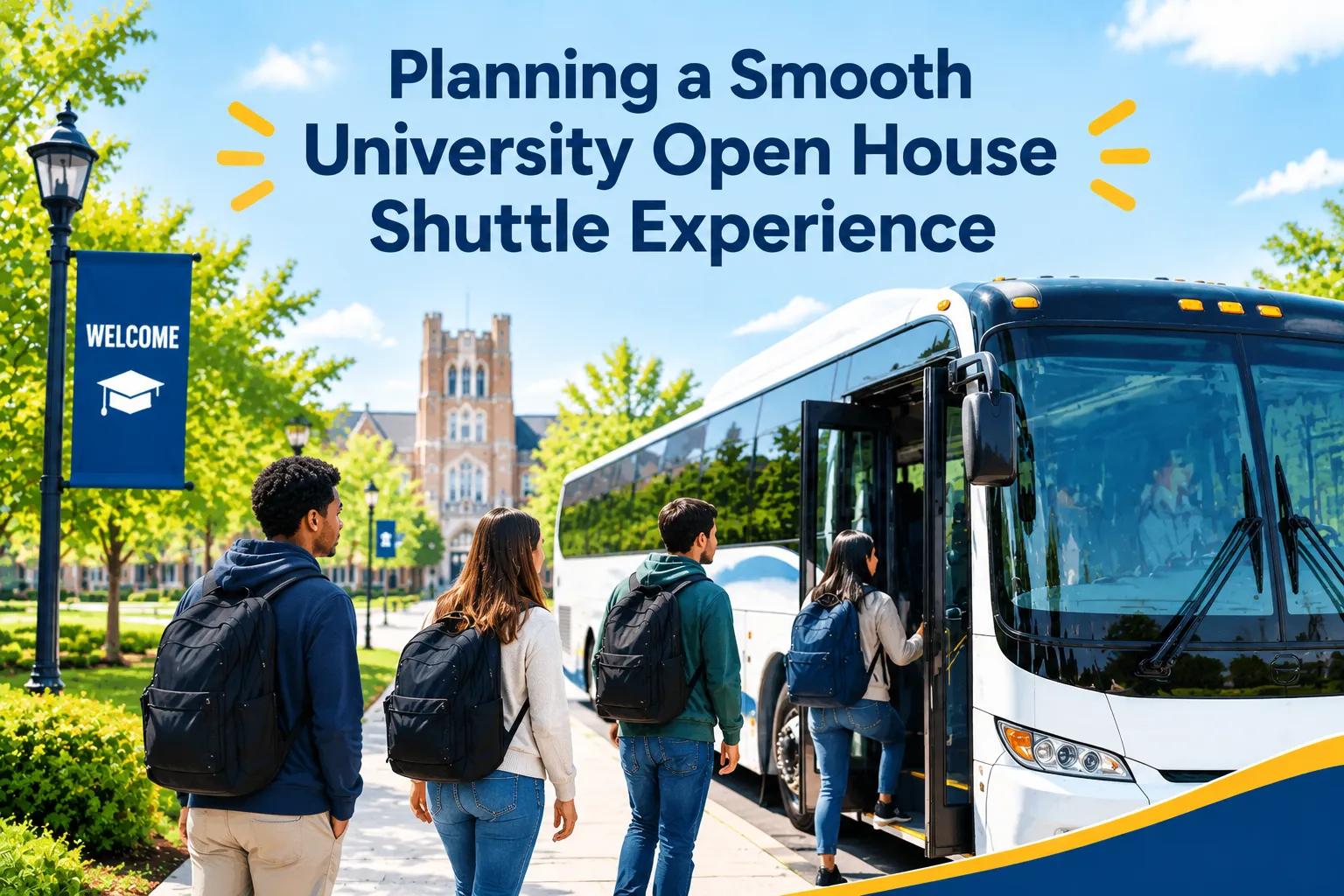
Planning a Smooth University Open House Shuttle Experience
A university open house is an exciting opportunity for prospective students and their families to experience campus, meet faculty, learn about academic programs, and get a better understanding of student life. However, the quality of the visit can be affected by something as practical as transportation. Parking congestion, long walking distances, unfamiliar campus roads, and crowded arrival periods can create unnecessary stress. A well-organized university campus shuttle service can help colleges connect parking areas, registration locations, academic buildings, and other event destinations while keeping visitors comfortable and on schedule.

Start Transportation Planning Early
A smooth open house shuttle experience begins well before the event date. Colleges should review the expected attendance, event schedule, campus layout, available parking, and locations where visitors will gather.
Unlike an ordinary campus tour, an open house can bring a much larger number of visitors within a limited arrival window. Families may also need to visit several buildings throughout the day instead of following one simple tour route.
Starting transportation planning early gives the university enough time to coordinate with parking services, admissions teams, event organizers, campus security, and transportation providers. Early planning also provides more opportunities to secure appropriate vehicles and develop routes that fit the campus.
Understand the Visitor Journey
Transportation planners should consider the open house from the perspective of someone visiting the university for the first time. A family may arrive at a remote parking lot, look for a shuttle stop, travel to registration, attend a welcome presentation, visit an academic department, tour a residence hall, and eventually return to the parking area.
Every transition should be easy to understand. If visitors have to repeatedly ask where to go or which bus to take, the transportation system can become a source of frustration.
Simple directions, visible shuttle stops, consistent route names, and helpful student ambassadors can make the entire journey easier. The goal is to make transportation feel like a natural part of the event rather than an additional challenge.
Connect Parking With Registration
Parking is often one of the biggest transportation concerns during a university open house. Convenient campus parking may be limited, particularly when hundreds of families arrive within a short period.
Remote parking lots can provide additional capacity, but they need to be connected with reliable shuttle service. Visitors should know exactly where to park and where to board a shuttle after leaving their vehicles.
Universities should provide specific parking information before the event. An exact address, parking lot name, and shuttle pickup location can be much more useful than a general instruction to “park on campus.”
Once visitors reach the shuttle stop, clear signage and student ambassadors can help them confirm that they are in the right place.
Plan for Peak Arrival Demand
Open house transportation should be designed around the busiest arrival period rather than average attendance. Many families will arrive shortly before registration or the first major presentation.
If too few vehicles are operating during this window, long lines can develop quickly. Visitors may become concerned about missing check-in or scheduled sessions.
Universities can increase shuttle frequency during peak arrival periods and adjust service later as demand changes. The exact number of vehicles needed will depend on attendance, route length, loading time, and parking capacity.
A transportation provider can help colleges evaluate these factors and create a schedule that balances passenger demand with efficient vehicle use.
Create an Internal Campus Shuttle Route
Parking transportation may solve the first part of the visitor journey, but guests may still need to travel between different campus locations.
An internal shuttle route can connect academic buildings, residence halls, dining facilities, student centers, athletic facilities, and other open house destinations. This can be especially useful on large campuses where walking between sessions may take significant time.
The route should be coordinated with the event schedule. Transportation demand may increase immediately after a large presentation when many visitors move toward different academic departments or tour locations.
Keeping the route simple and using clearly marked stops can help families understand how to use the service.
Select the Right Vehicles
Vehicle selection should match the size and requirements of each route. Full-size charter buses can be useful for moving large groups between remote parking areas and major event locations.
Smaller shuttle buses or minibuses can provide greater flexibility for internal campus transportation, especially when roads are narrow or loading areas have limited space.
Accessibility should also be considered when selecting vehicles. Universities should make sure transportation options can accommodate guests with mobility needs and that accessible service is clearly communicated before the event.
Make Shuttle Stops Easy to Find
Even an efficient shuttle route can cause confusion if visitors cannot identify the stops. Families attending an open house may be unfamiliar with campus terminology, building abbreviations, or parking lot numbers.
Universities can use large signs, flags, maps, and consistent stop names to make transportation easier to understand. Information should match across the event website, confirmation emails, printed materials, and physical signage.
Student ambassadors can also provide valuable assistance. A friendly representative at a busy shuttle stop can answer questions and help visitors choose the correct route.
Coordinate Transportation With Event Activities
The shuttle schedule should be connected directly to the open house program. If a large welcome presentation ends at the same time as several academic sessions begin, transportation demand can increase suddenly.
Event planners should identify these transition periods in advance and make sure enough vehicles are available. This can reduce crowding and help visitors reach their next activity without unnecessary delays.
Transportation staff should also remain in communication with event coordinators throughout the day so that routes can be adjusted when schedules change.
Prepare for Weather and Accessibility Needs
Weather can have a significant impact on shuttle demand. Rain, extreme heat, cold temperatures, or strong winds may encourage visitors to use transportation even for relatively short distances.
Covered waiting areas can improve comfort where available, while clear communication can help families understand where they should wait for vehicles.
Accessibility should be part of the transportation plan from the beginning. Guests may include older family members, people using mobility devices, or visitors who cannot comfortably walk long distances. Making appropriate transportation available helps ensure that everyone can participate in the open house.
Plan the Return Journey
A smooth shuttle experience should continue until visitors are ready to leave. Some families may depart immediately after the final presentation, while others may remain for additional tours, conversations, or activities.
Ending shuttle service too early can create unnecessary confusion. Universities should establish a clear final service period and make sure return stops identify the parking areas they serve.
This is particularly important for families who have long drives home or scheduled flights and need predictable departure transportation.
Communicate Before the Open House
Good transportation planning is only effective if visitors know about it. Universities should communicate parking and shuttle information before the event through registration confirmations, reminder emails, event webpages, and maps.
Visitors should understand where to park, where shuttles operate, where to check in, and how to return to their vehicles. Providing this information in advance reduces uncertainty and helps families arrive prepared.
The transportation section should use straightforward language rather than campus-specific abbreviations that first-time visitors may not understand.
Evaluate the Shuttle Experience Afterwards
After the open house, colleges should review how transportation performed. Feedback from families, student ambassadors, drivers, admissions staff, and event organizers can identify areas that worked well and areas that need improvement.
Universities can consider shuttle wait times, passenger demand, traffic congestion, route efficiency, parking usage, and accessibility feedback. These insights can help improve transportation planning for future open houses.
Conclusion
Planning a smooth university open house shuttle experience requires more than simply booking buses. Colleges need to consider the complete visitor journey, from arriving at the parking lot to reaching registration, moving between campus activities, and returning to their vehicles at the end of the day.
By planning early, connecting remote parking with reliable shuttle service, preparing for peak arrival periods, selecting appropriate vehicles, providing clear signage, supporting accessibility, and coordinating transportation with the event schedule, universities can make campus visits much easier for prospective students and their families.
A well-planned shuttle system reduces transportation-related stress and allows visitors to focus on what truly matters: experiencing the campus, learning about academic opportunities, and deciding whether the university feels like the right place for their future.