

Parent Pickup Planning for School Trips With Delayed
School trips involve careful coordination between teachers, chaperones, students, transportation providers, and families. While organizers usually create a detailed schedule, the return journey can sometimes take longer than expected. Traffic congestion, weather, extended activities, road construction, or delays at the destination can push a charter bus arrival beyond the original estimate. Creating a reliable parent pickup plan for delayed school trips helps schools manage these situations while keeping students supervised and giving parents accurate information about when and where to collect their children.

Why School Trip Bus Returns Can Be Delayed
A delayed school bus return can happen even when a trip has been carefully organized. Educational attractions, sporting events, theaters, museums, and other destinations may take longer than expected to clear a large student group. Students need to be accounted for, personal belongings need to be collected, and teachers must complete final headcounts before the group leaves.
Road conditions can create additional delays during the journey home. Heavy traffic, construction, accidents, severe weather, and road closures can all affect the estimated arrival time. Longer trips may also require restroom and meal stops, which can take additional time when dozens of students are traveling together.
Schools should therefore treat the planned arrival time as an estimate rather than an absolute guarantee. Preparing families for possible changes before departure can make the final pickup much easier to manage.
Create a Parent Pickup Plan Before the Trip
The best time to establish a pickup procedure is before students board the bus. Parents should know where the group will return, how they will receive updates, and what they should do if the bus is running late.
Permission forms can also collect information about the adult authorized to pick up each student. Schools may request a primary pickup person as well as a backup contact. This information gives staff a clear reference if the original pickup arrangement changes during the trip.
For older students, schools should follow their district policies regarding students who may be permitted to walk, drive, or use another approved transportation arrangement. Any special permission should be documented before the trip.
Give Families a Return Window
Providing parents with an estimated arrival window can be more useful than promising an exact time. For example, a school may communicate that the bus is expected to arrive between 7:00 and 8:00 p.m.
A return window gives transportation staff some flexibility and reduces the chance that parents will arrive at the school long before the students. Schools can also explain when families will receive updates, such as when the group leaves the destination, when the bus is approximately an hour away, and shortly before arrival.
If the bus is expected to arrive outside the original window, parents should receive a revised estimate as soon as dependable information becomes available.
Establish One Official Communication Process
Communication is one of the most important parts of managing a delayed return. Parents naturally want to know whether their children are safe and when they should arrive at the school.
A designated staff member should be responsible for communicating with families. The trip leader can provide information about the group's location and estimated arrival, while the communicator sends official updates through the school's approved messaging system.
Using one communication channel helps prevent conflicting information. Students may contact their parents when permitted, but the school's official message should remain the primary source for arrival information.
Parents should also be encouraged to wait for an official update before leaving home. This can reduce unnecessary congestion at the pickup location and prevent families from waiting outside for an extended period.
Select a Safe Pickup Location
The pickup location should be evaluated before the trip, especially if the return could occur after normal school hours. Lighting, parking, building access, security, and bus maneuvering space should all be considered.
Parents should be directed to a specific parking area that is separate from the bus loading zone. Keeping personal vehicles away from buses allows drivers to enter and leave more safely and reduces pedestrian congestion.
Schools should also identify an indoor waiting area in case students need to remain at the school for an extended period. A gym, cafeteria, lobby, or other suitable facility can provide a supervised environment if the weather is poor or the return occurs late at night.
Assign Staff Responsibilities
A delayed return can become difficult when one person is expected to handle every responsibility. Schools should assign clear roles before the trip begins.
The trip leader or bus lead can monitor students and communicate transportation updates. A separate staff member can handle parent messages and calls. An administrator can remain available for unusual situations, extended delays, or students whose authorized pickup person does not arrive.
Staff should have access to the relevant student information, authorized pickup records, emergency contacts, and transportation provider details. Keeping these resources available makes it easier to respond quickly when circumstances change.
Organize Student Release
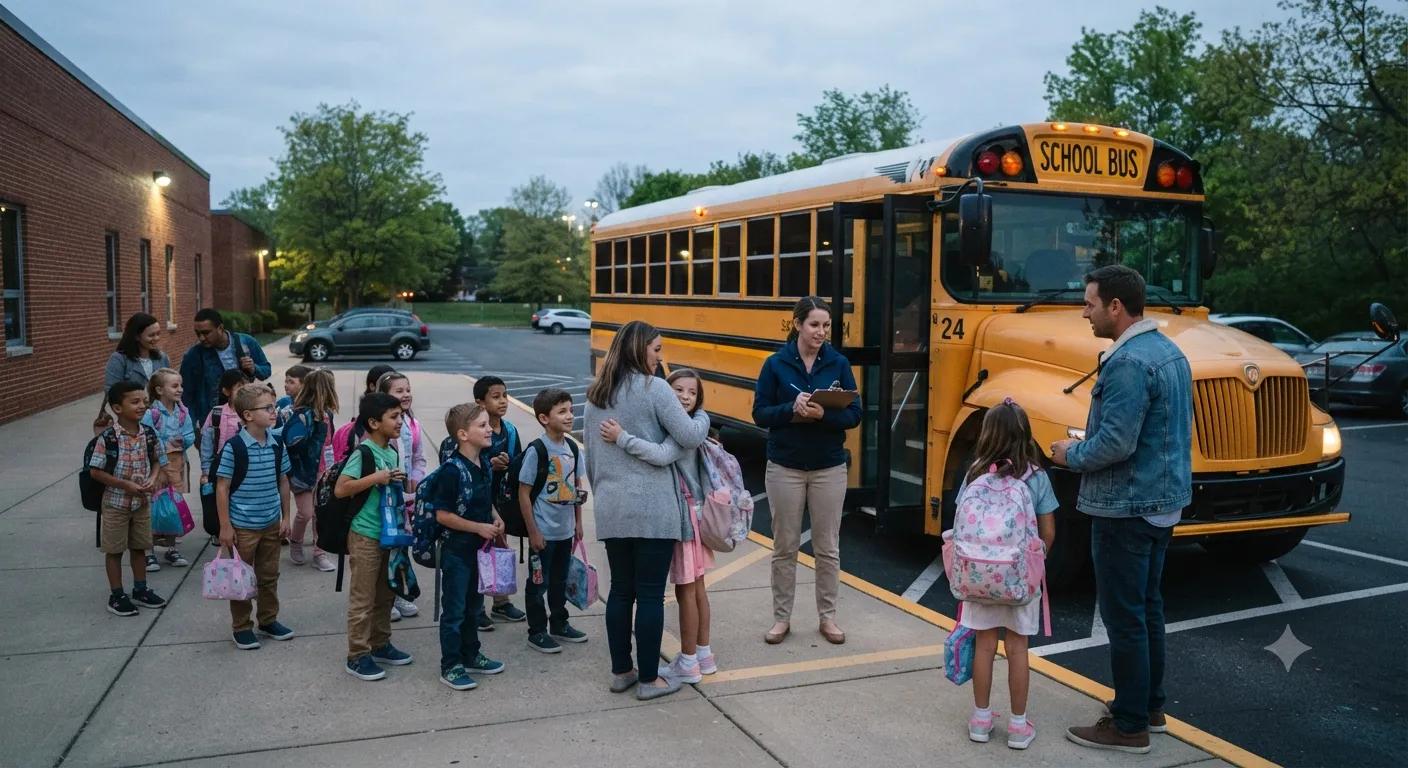
When the bus arrives, students should remain under staff supervision until they are officially released. A structured release process can prevent students from walking through the parking lot to find their parents.
Students can move from the bus to a designated supervised area. Parents can then check in with staff according to the school's established procedure. Staff can verify the authorized pickup information and, where required by school policy, confirm identification before releasing the student.
Once the student has been released, staff should record the departure. This helps the school maintain an accurate account of which students have left and which remain under supervision.
For trips involving multiple buses, schools can assign individual release areas or staff members to each bus. This can make the process easier to manage when several groups arrive at approximately the same time.
Have a Backup Plan for Unclaimed Students
A parent may be delayed even after receiving the school's arrival notification. Staff should know exactly how to handle this situation.
The student should remain in a supervised location while the school contacts the primary pickup person. If the primary contact cannot be reached, staff can follow the school's established process for contacting the backup or emergency contacts.
An administrator should be informed when the delay continues. The school should follow its own policies concerning extended supervision and any additional steps that may be necessary.
Staff should document important calls, messages, and the final release time. Maintaining an accurate record helps provide accountability and ensures that everyone involved understands what occurred.
Prepare for Weather-Related Delays
Weather can create additional challenges during a late school trip return. Snow, heavy rain, extreme cold, or severe storms may make an outdoor pickup area unsuitable.
Schools should identify an indoor alternative before the trip. If conditions deteriorate, students can remain in a supervised building area while parents receive updated instructions.
Transportation staff should also monitor the impact of weather on the route. A revised arrival estimate can then be communicated to families rather than allowing parents to rely on an outdated schedule.
Plan for Multiple Buses
Large school trips may require several charter buses, making the pickup process more complicated. Schools should maintain accurate bus assignments so staff know which students are traveling on each vehicle.
When multiple buses arrive, each vehicle can have a designated unloading or release area. Chaperones can help direct students while teachers or administrators manage the parent check-in process.
Parents should receive clear instructions about the location of their child's bus when necessary. This can prevent families from moving between buses and creating additional congestion.
Review the Process After Each Trip
After a delayed return, schools can review what worked well and what could be improved. Staff may discover that the communication schedule needs adjustment, the pickup area requires better lighting, or parents need clearer instructions before departure.
Reviewing these details can make future trips more efficient. Schools can also discuss recurring transportation issues with their charter bus provider and adjust future schedules when appropriate.
A practical pickup plan should evolve based on real experience while continuing to follow school and district policies.
Conclusion
Parent pickup planning is an important part of organizing school trips, particularly when a charter bus may return later than expected. Schools can prepare families by providing a realistic arrival window, collecting authorized pickup information, establishing an official communication process, and selecting a safe return location.
Clear staff responsibilities and an organized student release procedure can further reduce confusion when the buses arrive. Schools should also have a backup process for students whose parents are delayed and an indoor alternative for unfavorable weather.
By preparing for delayed returns before the trip begins, schools can respond more calmly when schedules change. A well-structured pickup plan keeps students supervised, gives parents dependable information, and helps the final stage of the school trip remain organized and safe.