

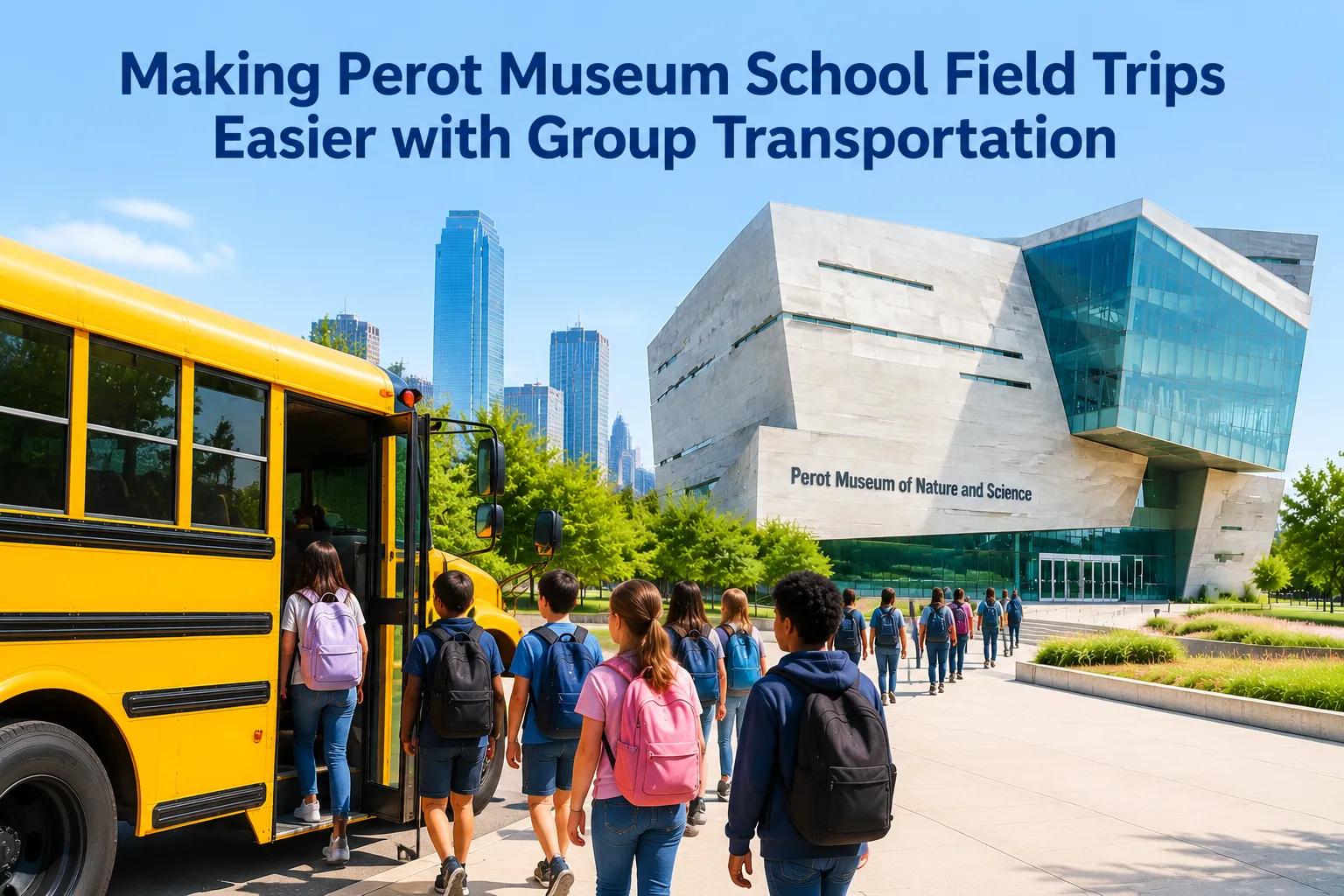
Making Perot Museum School Field Trips Easier with Group
Planning a school field trip to the Perot Museum of Nature and Science in Dallas, Texas, can provide students with an exciting opportunity to learn outside the classroom. From science and technology to dinosaurs, space, and the natural world, the museum offers engaging experiences that can support classroom lessons and encourage curiosity. However, organizing a successful visit requires careful coordination, particularly when arranging transportation for students, teachers, and chaperones.
Choosing convenient group travel solutions for Perot Museum school visits can make the planning process easier for school administrators. With a coordinated transportation arrangement, schools can simplify departure schedules, keep students together, and reduce the challenges associated with managing multiple vehicles. Proper planning helps create a comfortable, organized, and educational experience from the beginning of the journey to the return trip.

Why Group Transportation Matters for School Field Trips
School field trips often involve several classrooms, multiple teachers, and numerous chaperones. Coordinating separate vehicles can create unnecessary complications, including parking difficulties, different arrival times, and communication problems.
Group transportation provides a practical alternative by allowing students and accompanying adults to travel together. A charter bus can help schools establish one departure schedule and coordinate arrival at the museum more efficiently.
Traveling together also makes attendance management easier. Teachers can organize students before boarding, conduct headcounts, and communicate important instructions during the journey. This approach is especially helpful when several classes participate in the same educational outing.
For schools traveling from outside Dallas, arranging transportation in advance can also help account for longer travel times and reduce uncertainty on the day of the visit.
Create a Better Travel Experience for Students
Comfort is an important consideration when organizing educational trips. Students may spend a considerable amount of time traveling, particularly when their school is located outside the Dallas area.
Choosing an appropriately sized charter bus can provide comfortable seating and a shared environment for students, teachers, and chaperones. Depending on the vehicle, available features may include climate control and space for permitted belongings. Schools should confirm amenities and accessibility arrangements before making a reservation.
A comfortable journey can help students arrive ready to participate in museum activities. Teachers can also use travel time to introduce the day's learning objectives, discuss scientific topics, or encourage students to prepare questions about the exhibits.
When students travel together, the journey can become part of the educational experience rather than simply a transfer between locations.
Simplify Scheduling and Arrival Arrangements
A well-planned schedule helps schools make the most of their museum visit. Teachers need to coordinate departure times, travel duration, admission arrangements, exhibit activities, lunch breaks, and the return journey.
Group transportation makes it easier to establish a shared pickup time and plan the route. However, schools should allow extra time for traffic, boarding, unloading, and student movement between the bus and the museum entrance.
The Perot Museum asks school groups to arrive at least 15 minutes before their scheduled entry time. Schools should confirm their reservation details and review the latest arrival instructions before departure.
Organizers should also establish a clear pickup plan for the return journey. Sharing the final itinerary with the driver, teachers, chaperones, and school administrators helps everyone understand the schedule and respond appropriately if delays occur.
Choose the Right Charter Bus for Your Group
The best transportation option depends on the size of the school group and its specific requirements. A smaller bus may be suitable for one classroom, while a full-size charter bus may better accommodate several classes traveling together.
Before requesting a quote, schools should calculate the total number of students and adults attending. They should also consider the journey's length, the number of pickup locations, accessibility requirements, and any permitted storage needs.
Transportation providers should be evaluated based on vehicle condition, driver qualifications, insurance coverage, safety procedures, and experience transporting school groups. Schools should ask about available amenities and confirm that the selected vehicle meets their passenger and accessibility requirements.
Comparing quotes can help administrators select an option that fits the school's budget without overlooking important safety considerations.
Keep Students Organized and Supervised
Effective supervision is essential for a successful field trip. Before departure, teachers should assign students to designated groups and ensure every student knows which adult is responsible for them.
Schools should maintain attendance lists and conduct headcounts before boarding, upon arrival, and before returning to school. Students should receive clear instructions about safe boarding, remaining seated during travel, following the driver's directions, and respecting the vehicle.
The Perot Museum requires one adult chaperone aged 21 or older for every seven students, including high school groups. Students must remain with their chaperones throughout the visit. Schools should verify current requirements when confirming their reservation.
Teachers should also share emergency contact information and the itinerary with chaperones. Clear responsibilities help adults supervise students more effectively and make transitions between the bus and museum easier to manage.
Plan Museum Drop-Off and Parking in Advance
Transportation planning should include the museum's designated bus routes and parking arrangements. Schools should not assume that a bus can park directly outside the museum or remain at the drop-off point throughout the visit.
The Perot Museum's published guidance directs school buses to enter through River Street, use Lot A for student drop-off and pickup, and exit through Broom Street. Bus parking is not available at the museum itself. An off-site parking option through LAZ Parking at 1100 McKinney Avenue may be available, subject to current arrangements and availability.
Because instructions can change, schools should check the museum's official field trip information before departure and share the confirmed route with the transportation provider.
Coordinating these details early helps avoid confusion and allows students to move safely between the bus and the museum.
Make the Most of the Educational Visit
Group transportation can support learning when teachers prepare students for the museum experience. Before departure, educators can explain which exhibits relate to current classroom subjects and encourage students to think about questions they want to answer.
For example, students studying space can review astronomy concepts, while those learning about engineering can consider how scientific discoveries influence everyday technology. These activities encourage students to engage more actively with exhibits.
After the visit, teachers can organize discussions, short presentations, or written reflections to reinforce what students learned. Students can share their observations and connect the museum experience with lessons covered in class.
A coordinated journey and a well-designed educational plan help make the entire trip more meaningful.
Conclusion
Making Perot Museum school field trips easier begins with reliable group transportation and thoughtful organization. By choosing a suitable charter bus, coordinating arrival times, confirming museum access instructions, and preparing students and chaperones, schools can reduce travel-related challenges and create a smoother experience.
Group transportation helps keep students and teachers together while simplifying scheduling and supervision. Combined with engaging educational activities and careful preparation, a visit to the Perot Museum of Nature and Science can become a memorable opportunity for students to build knowledge, develop curiosity, and enjoy learning beyond the classroom.