

International Student Airport Transportation: Safe and Reliable Campus Shuttles
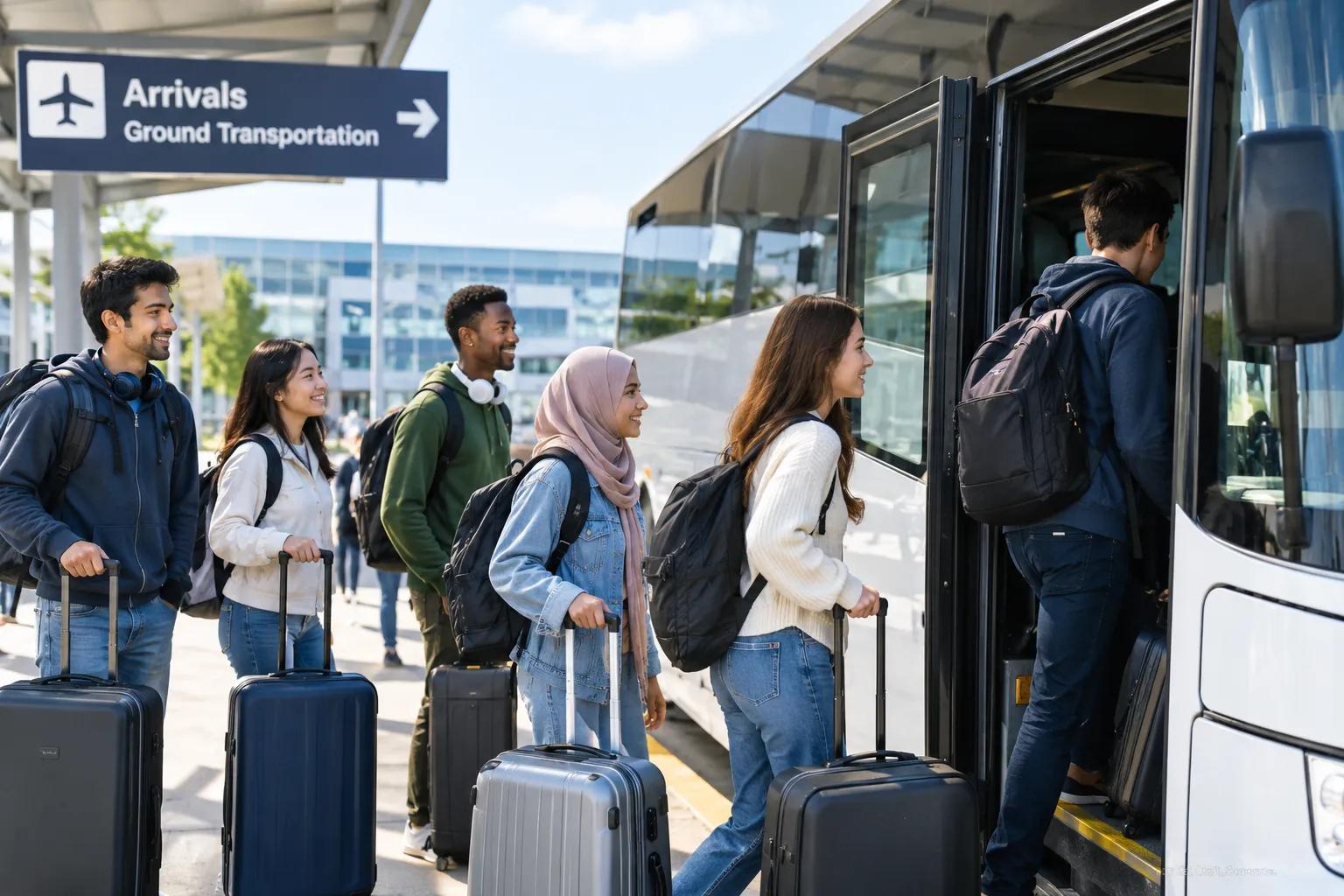
International Student Airport Transportation: Safe
For universities welcoming students from different countries, the journey does not end when an international flight reaches the airport. Students still need to navigate immigration, collect their luggage, find their way through an unfamiliar terminal, and travel to campus. Providing dependable campus transportation for international students can make this transition much easier. A professionally organized international student arrival shuttle service gives universities a practical way to connect incoming students with their residence halls while creating a welcoming first impression. With careful planning, airport transportation can become a smooth and reassuring part of the university arrival process.

Why Safe Airport Transportation Matters
International students may be traveling for many hours before they reach their university. Some may have connected through multiple airports, experienced long immigration lines, or traveled overnight. By the time they leave the terminal, they may be tired and unfamiliar with local transportation options.
Expecting newly arrived students to arrange transportation independently can create unnecessary stress. They may not know which rideshare pickup area to use, how far the campus is from the airport, or which transportation providers are reliable. A university-organized shuttle provides a clear and dependable alternative.
A coordinated transportation program also gives university staff greater visibility over arrival schedules. Transportation teams can know which students are expected on each vehicle, where they are going, and when they should reach campus.
Collect Student and Flight Information Early
Reliable airport transportation begins with good planning. Universities can ask incoming students to submit their airline, flight number, arrival airport, date, scheduled landing time, contact information, and campus housing details before traveling.
It is also useful to ask students whether they will arrive with family members. Parents, spouses, and children may require additional seats and luggage space, particularly when traveling together for an extended stay.
Luggage information is another important consideration. International students frequently bring multiple suitcases because they may be moving to campus for an entire academic year. Knowing approximate baggage quantities allows transportation planners to select vehicles with suitable storage capacity.
Build Pickup Schedules Around Realistic Arrival Times
A flight's scheduled landing time does not mean students will immediately be ready to board a shuttle. International passengers generally need to complete immigration procedures, collect checked luggage, and pass through customs before reaching the public arrivals area.
Universities should therefore create reasonable buffers between flight arrival and shuttle departure. Students arriving at several airports can be organized into separate pickup schedules based on airport, date, and time.
Grouping students with similar arrival times can make transportation more efficient while still giving passengers enough time to complete airport procedures. The schedule should also have flexibility for unexpected delays rather than relying on an exact minute-by-minute timeline.
Select Vehicles Based on Passengers and Luggage
Choosing the correct vehicle is an important part of providing safe and comfortable transportation. A vehicle may have enough seats for a group but still lack sufficient storage for everyone's luggage.
Full-size charter buses can work well for large groups and typically provide substantial luggage storage. Smaller groups may be better suited to minibuses or shuttle vehicles. During peak arrival periods, universities can use multiple vehicles to accommodate different pickup windows.
Transportation providers should receive both passenger counts and estimated luggage quantities when preparing a service plan. This helps avoid situations where students have seats but insufficient room for their belongings.
Establish Clear Airport Meeting Locations
Large international airports can be confusing, especially for students visiting the United States for the first time. A vague instruction such as "meet at arrivals" may not be enough.
Universities should provide a specific terminal, exit, or landmark for every scheduled pickup. Students can receive these directions before departure, along with a photograph or other visual reference when appropriate.
Having university representatives at the meeting point can make the process even easier. Staff members or trained student volunteers can help incoming students identify the correct shuttle and confirm that they are on the expected passenger list.
Prepare for Delayed and Missed Flights
Flight delays are an unavoidable part of international travel. A student may also miss a connection and arrive hours later than originally planned. Without a clear policy, one delayed passenger could affect an entire shuttle group.
Universities should establish a waiting and rescheduling procedure before arrival day. Students should know whether the shuttle will wait for a limited period, whether they will be moved to another scheduled pickup, or whether an alternative transportation option will be provided.
Transportation staff can monitor flight information throughout major arrival periods and communicate changes to drivers and students when practical. Having a predetermined process makes unexpected situations easier to manage.
Coordinate Airport Shuttles With Campus Housing
The transportation plan should continue beyond the airport. Universities need to coordinate shuttle arrival times with residence halls, housing offices, and campus welcome teams.
A student arriving at campus late at night should know exactly where to go and how to access their accommodation. Housing staff should be aware of expected shuttle arrivals so students can receive keys, check-in instructions, or temporary housing arrangements when necessary.
Some universities use a central welcome center where students check in before being transported to their residence halls. Others prefer direct hall-by-hall drop-offs. The appropriate approach depends on campus layout and staffing.
Keep Communication Simple and Accessible
International students may have limited access to their regular mobile phone service immediately after landing. Transportation instructions should therefore include alternatives such as airport Wi-Fi, messaging applications, or a university transportation hotline.
Before departure, students should receive their pickup window, airport meeting location, shuttle instructions, and emergency contact information. Sending a reminder shortly before the flight can reduce confusion on arrival day.
Universities serving students from many countries may also consider translating key transportation instructions into commonly used languages. Clear communication can help students feel more confident during their first hours in a new country.
Prioritize Transportation Safety
Safety should be central to any university transportation program. Before hiring a transportation provider, universities can review the operator's experience, insurance coverage, vehicle condition, driver qualifications, and safety procedures.
It is also useful to establish a passenger manifest for every vehicle. Staff can use the manifest to confirm which students have boarded and which students have reached campus.
Working with an experienced group transportation provider can help universities coordinate vehicle selection, scheduling, luggage requirements, and airport logistics. Advance planning also gives transportation teams more time to address potential problems before students arrive.
Make the Journey Part of the Welcome
Airport transportation can play a meaningful role in the student welcome experience. After spending many hours traveling, students appreciate simple gestures that help them feel comfortable and supported.
A university representative can welcome students when they board, provide basic campus information, or explain what will happen after they arrive. Comfortable seating, luggage assistance, and a clear drop-off process can make the final stage of a long journey much easier.
The shuttle can also give students their first opportunity to meet classmates who are arriving at the same time. This can make the experience feel less unfamiliar and help students begin forming connections before orientation begins.
Conclusion
Safe and reliable airport transportation is an important part of welcoming international students to campus. These students often arrive after long journeys and may have limited knowledge of the local area, making dependable transportation especially valuable.
By collecting flight information early, allowing sufficient time for immigration and baggage procedures, selecting vehicles according to passenger and luggage needs, establishing clear airport meeting points, preparing for delays, and coordinating closely with campus housing, universities can create a more organized arrival experience.
A professionally managed international student campus shuttle can do more than transport passengers from an airport to a university. It can provide reassurance, convenience, and a welcoming first connection between students and their new campus community.