

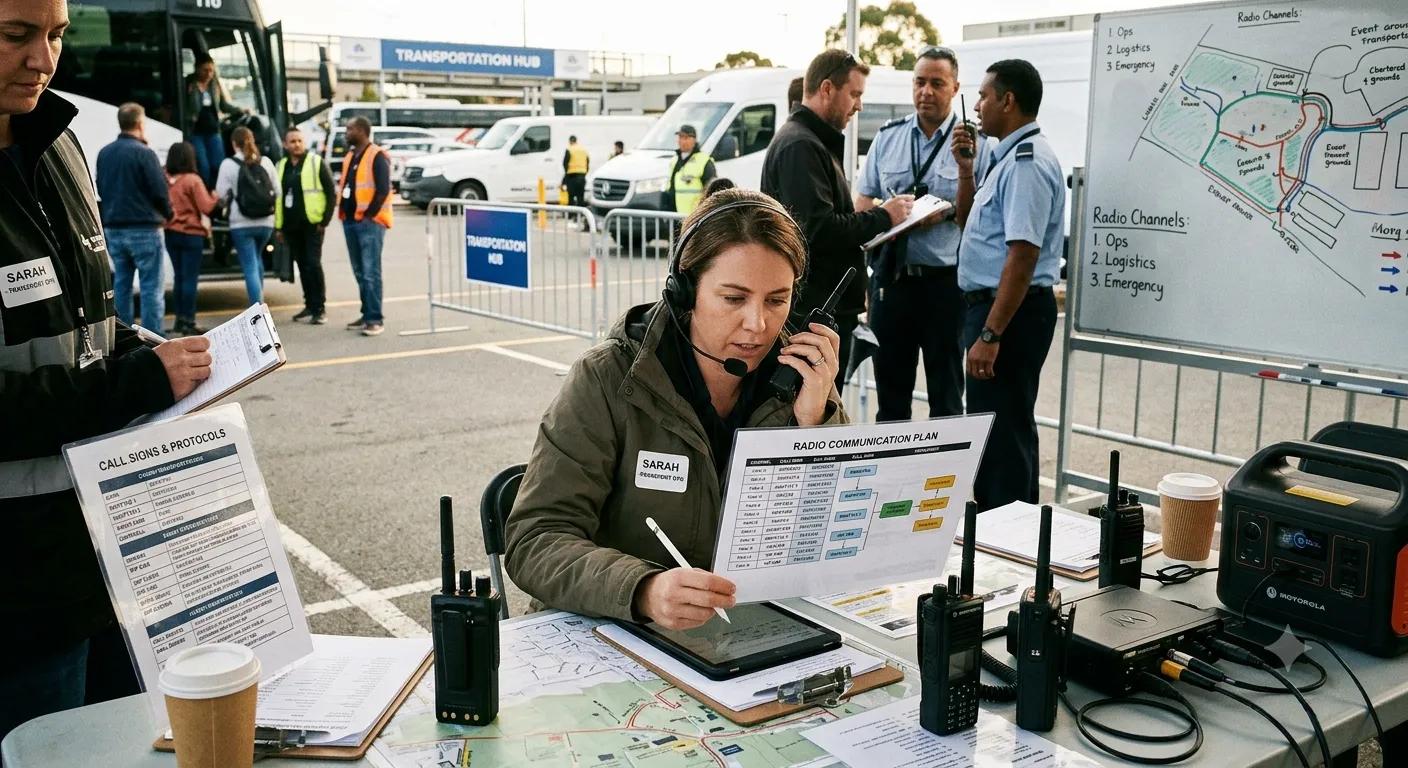
How Two-Way Radios Improve Event Shuttle Transportation
Organizing transportation for a large event requires careful planning, reliable vehicles, and continuous coordination between drivers, dispatchers, and event staff. Whether managing a corporate conference, music festival, wedding, sporting event, or community gathering, transportation teams must respond quickly to changing schedules and passenger demands. Communication delays can lead to missed pickups, overcrowded loading zones, and unnecessary waiting times. Implementing a structured two-way radio system for event shuttle logistics helps organizers share important updates, coordinate vehicle movements, and maintain a smoother transportation operation from the first pickup to the final departure.

The Importance of Communication in Event Transportation
Event shuttle transportation involves several interconnected activities. Drivers must follow designated routes, dispatchers need to monitor vehicle availability, and ground staff must manage passenger queues and boarding procedures. When these responsibilities are spread across multiple locations, exchanging accurate information becomes essential.
Traditional communication methods, such as individual phone calls and text messages, may create delays when several people need updates simultaneously. Two-way radios provide a practical alternative by allowing authorized team members to communicate directly through designated channels.
For example, a driver approaching a crowded venue entrance can notify dispatch immediately. The dispatcher can then advise the driver to use an approved alternative loading area or coordinate with ground staff to clear the entrance. This quick exchange helps prevent unnecessary congestion and keeps other vehicles moving.
Real-Time Coordination Between Drivers and Dispatchers
One of the greatest advantages of two-way radios is the ability to communicate in real time. Event transportation schedules can change rapidly because of traffic, road closures, delayed sessions, or unexpected increases in passenger demand.
Dispatchers need current information to make effective decisions. Drivers can report their locations, confirm arrivals, communicate delays, and request assistance when necessary. Based on these updates, dispatchers can adjust assignments and help maintain service continuity.
For events involving several shuttle routes, vehicle identification numbers make communication easier. When every bus has a unique identifier, dispatchers can quickly determine which vehicle needs instructions or support.
Real-time communication also helps transportation managers understand which vehicles are available for their next assignment. Instead of waiting for drivers to return to a central office or send separate messages, teams can coordinate movements while buses remain in operation.
Improving Passenger Flow at Pickup and Drop-Off Areas
Crowded pickup and drop-off zones are common challenges at large events. When several buses arrive simultaneously, passengers may form long queues, block walkways, or gather in the wrong location.
Two-way radios allow drivers and ground staff to coordinate arrivals more effectively. Ground personnel can notify dispatchers when a loading area is ready, report increasing passenger numbers, or request that incoming vehicles be temporarily redirected.
For example, if a designated pickup zone becomes congested after a conference session ends, ground staff can alert the transportation coordinator. The coordinator can then communicate with drivers and direct incoming shuttles toward another approved location when available.
This coordinated approach helps reduce vehicle bottlenecks and improves the boarding experience. It also allows staff to identify accessibility needs and prepare suitable boarding arrangements without unnecessary delays.
Clear passenger signage and consistent announcements should support radio communication so attendees receive accurate directions.
Reducing Delays and Improving Schedule Reliability
Even a carefully prepared shuttle schedule can be affected by changing road conditions and unpredictable passenger volumes. Two-way radios help transportation teams identify disruptions early and communicate practical adjustments.
When a driver encounters heavy traffic, the dispatcher can update the expected arrival time and notify ground staff. Staff can then manage waiting passengers, communicate revised expectations, and adjust boarding arrangements if necessary.
For continuous shuttle services, dispatchers can use vehicle updates to identify gaps between buses and coordinate available vehicles to maintain reasonable service intervals. For scheduled departures, communication helps staff determine whether a delay requires passenger notifications or an approved scheduling adjustment.
Organizers should avoid making unrealistic timing promises. Instead, they should use radio updates to communicate accurate operational information and make informed decisions based on actual conditions.
Strengthening Safety and Emergency Response
Safety is a major priority during event transportation, particularly when buses operate in crowded venues, unfamiliar areas, or busy parking facilities. Two-way radios provide a direct method for reporting hazards and communicating urgent instructions.
Drivers can report blocked access roads, unsafe loading conditions, vehicle problems, or other operational concerns. Transportation supervisors can then coordinate an appropriate response and notify relevant personnel.
If an incident occurs, established radio procedures help ensure that the correct people receive essential information promptly. Staff should know how to identify their location, describe the situation clearly, and contact emergency services when required.
Radio communication should complement, rather than replace, formal emergency procedures. Drivers must follow applicable traffic laws, avoid distractions while driving, and use communication equipment in accordance with safety requirements. Sensitive passenger information should never be broadcast unnecessarily over open channels.
Choosing the Right Two-Way Radio Equipment
Selecting appropriate radio equipment is an important part of transportation planning. The best option depends on the event's size, operating area, number of vehicles, and communication requirements.
Organizers should consider signal range, battery life, audio clarity, durability, and compatibility with the surrounding environment. Large venues, enclosed structures, and areas with significant interference may require additional planning to ensure reliable coverage.
Before the event, the transportation team should test radios at important locations, including pickup zones, parking areas, dispatch points, and shuttle routes. Spare batteries and backup devices should be available in case equipment stops working.
Organizers should also confirm applicable frequency, licensing, and operating requirements before using radio equipment. A device that performs well in one setting may not provide adequate coverage in another, making pre-event testing essential.
Establishing Clear Radio Communication Procedures
Reliable equipment is only effective when team members understand how to use it consistently. Organizers should establish a simple communication protocol before transportation operations begin.
Each driver, dispatcher, and ground team member should know their assigned call sign, the correct channel, and the person responsible for issuing instructions. Messages should be concise and include the vehicle identifier, location, issue, and any assistance required.
For instance, a driver reporting a delay should explain where the bus is located and provide a brief description of the problem. Dispatchers should acknowledge important messages and confirm revised instructions when clarification is necessary.
Emergency communications should receive priority according to the event's established procedures. Routine conversations should be kept brief so that essential operational messages can get through without unnecessary interruptions.
A pre-event briefing and short practice session can help employees become familiar with these procedures before passengers arrive.
Preparing Backup Communication Arrangements
Radio systems can experience equipment failure, low batteries, interference, or coverage gaps. Event organizers should establish alternative communication methods to prevent these issues from disrupting shuttle services.
Designated mobile phone contacts, backup channels where permitted, and clear escalation procedures can help maintain coordination if the primary system becomes unavailable. Staff should know whom to contact and how to receive updated instructions.
Transportation managers should also maintain an up-to-date contact directory and ensure that critical personnel understand the backup plan. Testing these arrangements before the event makes it easier to respond when problems arise.
Conclusion
Two-way radios can significantly improve event shuttle transportation by supporting real-time coordination, reducing communication delays, improving passenger flow, and helping teams respond to unexpected situations. When drivers, dispatchers, and ground staff share accurate information, transportation operations become easier to manage and more responsive to changing conditions.
Combining suitable radio equipment with clear communication protocols, staff training, and backup arrangements helps organizers maintain reliable shuttle services throughout an event. With thoughtful preparation and consistent coordination, event planners can improve transportation efficiency and provide attendees with a safer, smoother, and more convenient travel experience.