

How to Streamline Charter Bus Billing for Corporate Group
Corporate group travel requires careful coordination between transportation planners, finance departments, procurement teams, and service providers. Whether a company is organizing an employee conference, arranging airport transfers, planning a business retreat, or providing transportation for a corporate event, managing the financial side of the booking is just as important as coordinating the itinerary.
A disorganized billing process can lead to delayed payments, incorrect invoices, missing approvals, and unexpected expenses. Businesses can avoid many of these challenges by implementing clear procedures for corporate charter bus billing, from requesting quotations to reviewing invoices and recording payments. Understanding charter bus billing and invoice management can help corporate travel managers build a more organized process and maintain better control over transportation expenses.

Understand Your Corporate Transportation Requirements
The first step toward efficient charter bus billing is to establish the company's transportation requirements before requesting a quotation. Corporate trips may involve multiple pickup locations, different vehicle sizes, several destinations, or transportation services spread across multiple days.
Travel coordinators should identify the number of passengers, trip dates, pickup and drop-off locations, expected departure times, and any special requirements. Providing accurate information helps the transportation provider prepare a quotation that reflects the actual needs of the group.
For example, a company organizing a two-day conference may require airport transfers, hotel shuttles, and transportation to an evening networking event. Requesting a detailed quotation for these services makes it easier to understand the expected total cost and prepare the necessary internal approvals.
When transportation requirements are clearly documented, businesses can reduce last-minute changes that complicate billing and make budget planning more predictable.
Establish a Clear Purchase Order Process
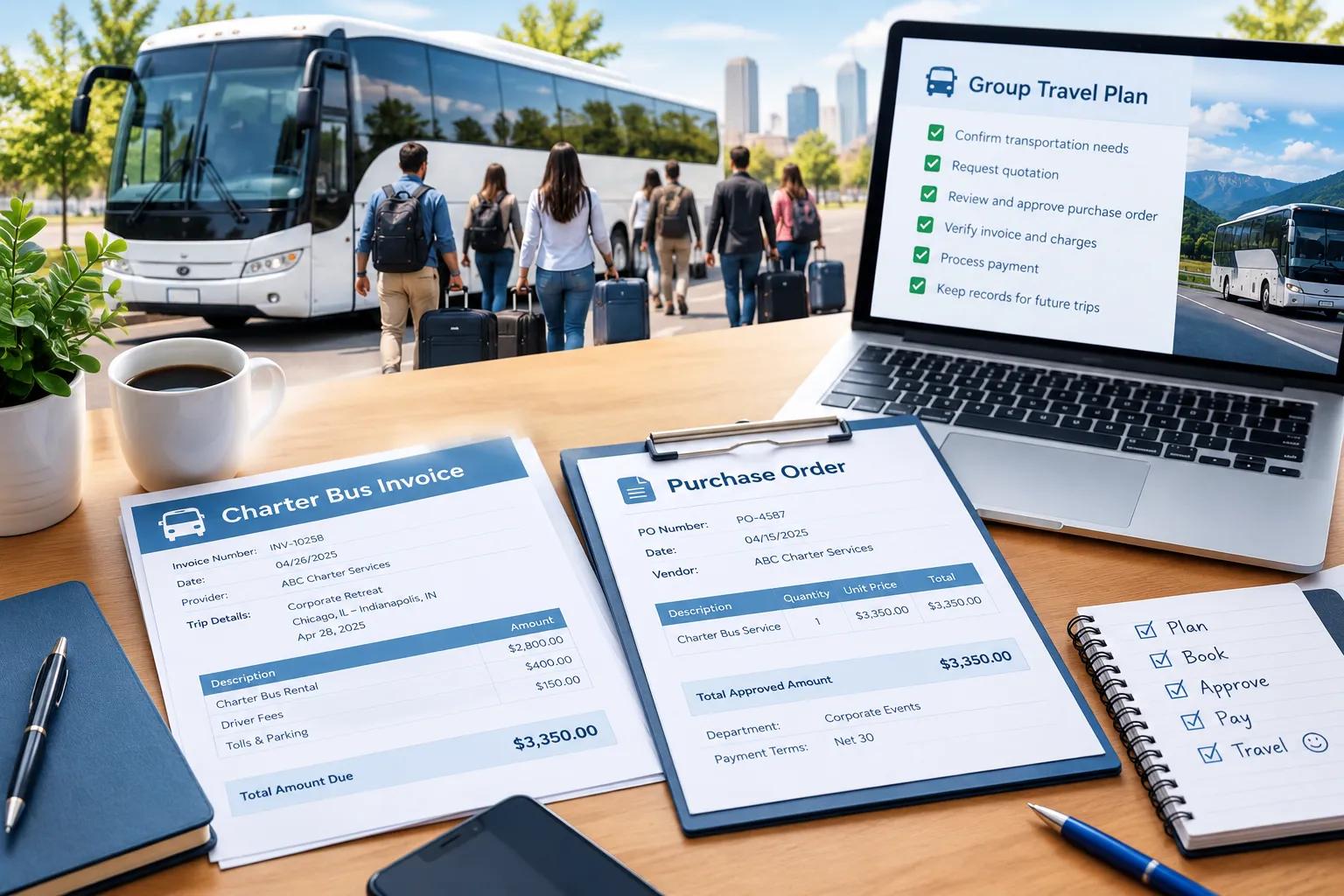
Purchase orders are an important part of corporate purchasing procedures. A purchase order, or PO, documents an organization's authorization to purchase services under specified terms and within an approved budget.
Companies that require purchase orders should establish their approval process before confirming a charter bus reservation. The purchasing department can review the transportation quotation, confirm that funds are available, and authorize the expense according to internal policies.
A purchase order should contain sufficient information to identify the transaction, including the transportation provider, expected service dates, booking reference, approved amount, and relevant payment terms. Where applicable, it should also include the department or project responsible for the expense.
Once approved, the purchase order number should be shared with the transportation provider if it is required for billing. This helps the accounts payable team connect the eventual invoice with the original authorization.
Not every corporate booking requires a formal purchase order. Requirements vary by organization and provider, so travel managers should confirm the applicable procedures before making a reservation.
Request Detailed and Transparent Quotations
A detailed quotation makes billing easier to manage because it establishes a clear understanding of the expected transportation costs before the company commits to a booking.
Corporate travel managers should ask providers to explain the pricing structure and identify which services are included in the quoted amount. Depending on the trip, charges may cover vehicle use, driver time, mileage, tolls, parking, additional service hours, or overnight accommodation.
The quotation should also clarify whether taxes, deposits, cancellation fees, or other applicable charges may affect the final cost. The exact terms depend on the provider and the transportation agreement.
Comparing quotations on the basis of included services, rather than price alone, helps businesses make informed purchasing decisions. It also gives the finance team a reliable reference when checking the final invoice.
If the transportation plan changes after the quote is approved, the travel coordinator should request updated pricing and obtain any necessary authorization before agreeing to additional services whenever possible.
Set Up Vendor Information Before the Trip
Corporate billing can become complicated when a transportation provider has not been fully registered in the company's purchasing system. Vendor onboarding may require a legal business name, tax documentation, insurance information, and verified payment details.
Starting this process early helps avoid delays when an invoice or deposit request arrives. The purchasing team should confirm the exact documentation required by its organization and provide the provider with the correct billing address and accounts payable contact.
Companies should also clarify whether the provider accepts purchase orders, requires a deposit to reserve the vehicle, or offers payment terms for established customers. A purchase order does not automatically guarantee a reservation, so booking arrangements and payment requirements should be confirmed directly.
Create a Consistent Invoice Approval Workflow
A consistent approval workflow makes it easier to process corporate transportation invoices without unnecessary back-and-forth communication.
The finance team should first verify the supplier information and invoice reference. It should then match the invoice against the purchase order and quotation, checking that the service dates, agreed charges, and payment terms are accurate.
The trip leader should confirm that the transportation service was delivered as expected. If additional hours, extra stops, or other changes affected the price, the organization should review the supporting details and follow its approval procedure.
For recurring transportation services, businesses may benefit from a standard invoice submission process or consolidated billing arrangement. The best approach depends on the company's accounting system and the provider's capabilities.
Track Deposits, Additional Charges, and Final Payments
One common source of billing confusion is the difference between the original quotation and the final invoice. Additional service hours, itinerary changes, tolls, parking, or other contractually applicable charges may affect the final amount.
Corporate travel managers should establish how these expenses will be documented and approved before the trip takes place. Where company policy permits, an agreed spending allowance may help accommodate reasonable variable costs. Otherwise, additional expenses may require an updated purchase order or separate authorization.
Deposits should also be tracked carefully. The final invoice should reflect any deposit already paid and clearly state the remaining balance. This reduces the risk of duplicate payments and gives accounts payable an accurate amount to process.
If an invoice contains a disputed charge, the finance team should document the issue and communicate with the provider promptly. Where practical and permitted by company policy, the undisputed portion can be handled separately while the remaining discrepancy is resolved.
Use Digital Records to Improve Efficiency
Digital recordkeeping can simplify the entire corporate transportation billing process. Storing quotations, purchase orders, booking confirmations, invoices, approvals, and payment receipts in one organized location allows authorized team members to find the information they need quickly.
Companies that manage frequent group trips can use accounting software or procurement platforms to track approval status, payment deadlines, and outstanding invoices. Consistent naming conventions and booking reference numbers also make reconciliation easier.
Historical billing records can help organizations compare transportation expenses across departments, events, and travel periods. Over time, this information can support better budgeting decisions and more accurate estimates for future corporate trips.
Organizations should use approved systems and follow their document-retention policies to keep financial records accessible and secure.
Conclusion
Streamlining charter bus billing for corporate group travel requires coordination, accurate documentation, and a clear approval process. Businesses can improve financial control by defining transportation requirements early, requesting itemized quotations, establishing purchase order procedures, completing vendor onboarding, and checking invoices before payment.
Tracking deposits and additional charges carefully helps prevent billing discrepancies, while organized digital records make it easier to manage recurring bookings and review transportation spending.
By bringing travel coordinators, purchasing departments, accounts payable teams, and transportation providers into the process from the beginning, companies can reduce administrative delays and keep group travel expenses transparent. A consistent billing workflow allows corporate teams to focus on successful events and reliable transportation rather than avoidable paperwork problems.