

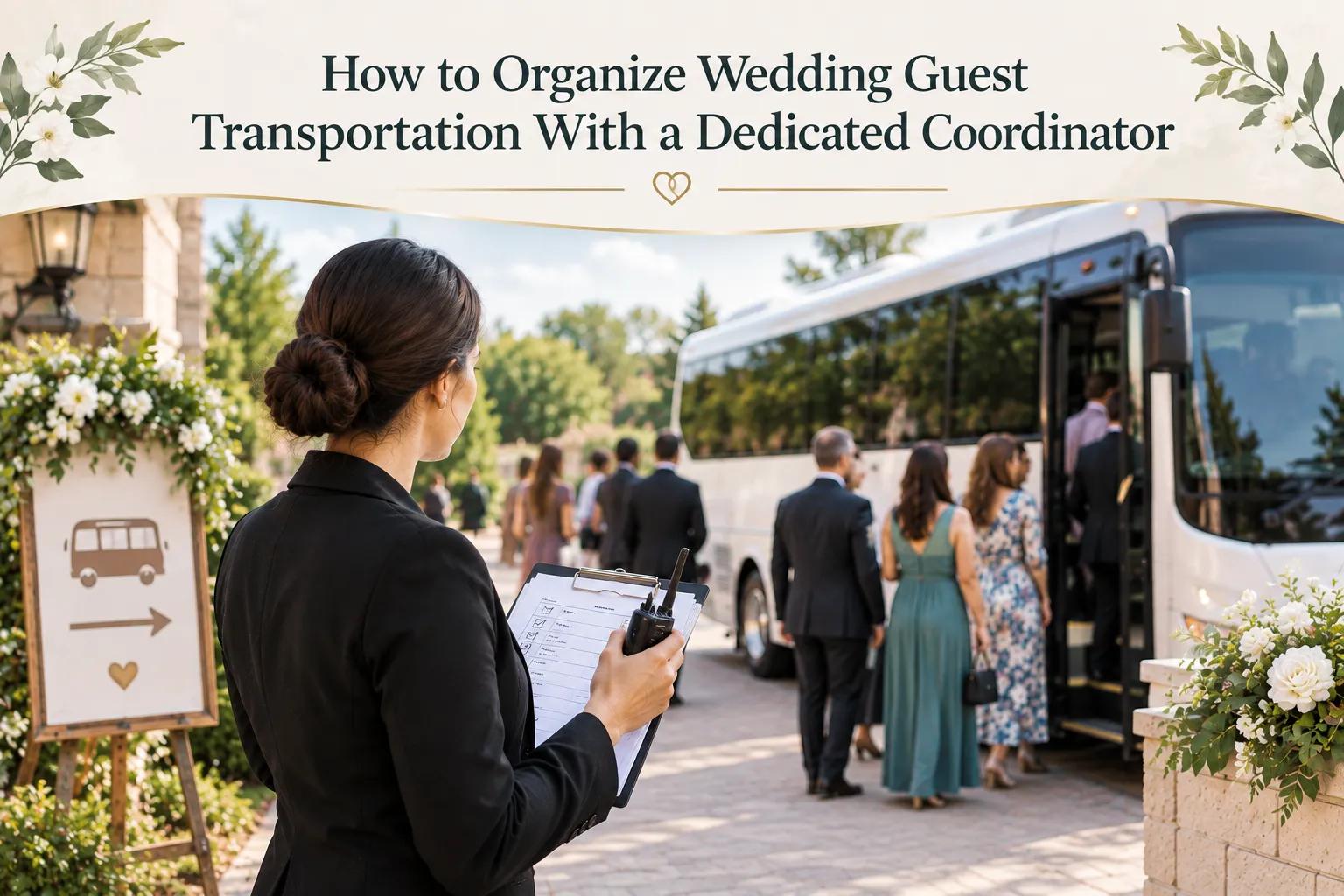
How to Organize Wedding Guest Transportation
Wedding guest transportation can quickly become complicated when guests are staying at different hotels, the ceremony and reception are at separate venues, or several vehicles are needed throughout the day. A dedicated coordinator can keep these moving parts organized while allowing the couple and wedding party to focus on the celebration. Effective wedding guest shuttle coordination gives guests a clear transportation contact, keeps drivers informed, and helps the wedding schedule stay on track from the first pickup through the final return trip.

Why a Dedicated Wedding Transportation Coordinator Matters
Wedding transportation is not simply about booking a vehicle and providing an address. Someone needs to know when each shuttle should arrive, where guests should gather, which vehicle serves each hotel, and when return transportation is scheduled.
Without a dedicated person handling these details, transportation questions can quickly reach the bride, groom, parents, or wedding planner. A guest may want to know whether the shuttle is leaving in ten minutes, while another may be unsure which bus serves their hotel. When several people are answering these questions at once, conflicting information can easily create confusion.
A dedicated coordinator provides one reliable point of contact. Guests know whom to ask, drivers know who to communicate with, and the couple does not have to manage transportation during important moments of the wedding.
Choose the Right Person for the Role
The coordinator should be dependable, organized, comfortable communicating by phone, and able to remain calm when plans change. The person should also be available throughout the transportation schedule rather than participating heavily in other wedding responsibilities.
Choosing someone from the wedding party may seem convenient, but it can create problems if that person needs to take photographs, participate in the ceremony, give a speech, or spend time with family. A transportation coordinator needs to be available when vehicles arrive and depart.
For larger weddings, assigning a lead coordinator with additional helpers can make the process easier. One person can manage communication with the transportation company while helpers remain at busy hotel pickups or the reception venue.
Build a Detailed Transportation Schedule
The coordinator should have a complete transportation schedule before the wedding day. This schedule should show the pickup locations, expected departure times, destinations, vehicle assignments, and return transportation.
It is helpful to work backward from important wedding events. If the ceremony begins at a specific time, the coordinator can determine when guests need to leave their hotels and how much time should be allowed for boarding and travel.
The schedule should also include reasonable flexibility. Wedding guests do not always arrive at the pickup location at exactly the scheduled time, and traffic or venue access can affect arrival times. A practical schedule gives the coordinator enough information to make small day-of decisions without constantly contacting the couple.
Confirm Every Pickup Location
A transportation plan can look perfect on paper but become difficult when the actual pickup location is unclear. Hotels may have several entrances, while wedding venues may have separate areas for guests, deliveries, and buses.
Before the wedding, the coordinator should understand exactly where each vehicle is expected to stop. If possible, they should communicate with the hotel or venue about staging areas and loading zones.
Guests should also receive simple instructions explaining where to wait. A clear meeting location can prevent people from wandering around a large hotel property while the shuttle is preparing to leave.
Organize Guests by Transportation Route
When guests are staying at different hotels, the coordinator needs to know which guests belong to each route. This does not necessarily mean assigning individual seats. Instead, the goal is to create a transportation structure that makes it easy to identify which guests should use each vehicle.
The wedding website, invitation information, or pre-wedding communication can tell guests their assigned pickup location. The coordinator can then reinforce that information on the wedding day.
For larger groups, guest lists can help the coordinator understand expected passenger numbers. They can also make it easier to identify guests who may need additional assistance during boarding.
Communicate With the Transportation Company
The transportation coordinator should have the transportation company's day-of contact information saved before the wedding. Ideally, the coordinator and transportation provider should already understand the final schedule.
Before the first vehicle arrives, the coordinator can confirm the pickup location and make sure everyone understands where the vehicle should stage. If there are multiple vehicles, communication becomes even more important because each driver may have a different route or departure time.
The coordinator should also know which situations require immediate escalation. A major delay, vehicle issue, or change that affects the wedding timeline should be communicated promptly to the appropriate wedding decision-maker.
Keep Guests Informed Before the Wedding
Good transportation coordination begins before guests arrive at the hotel. Guests should receive the important transportation information in advance so they know where to go and when to be ready.
Wedding websites are useful for sharing hotel pickup locations, estimated departure times, and basic shuttle instructions. Guests can also receive reminders shortly before the event.
The coordinator should avoid changing information unnecessarily once the schedule has been communicated. If a legitimate change occurs, the updated information should be shared consistently so guests are not receiving different instructions from different people.
Manage Transportation During the Ceremony
The coordinator's responsibilities do not end once guests arrive at the ceremony. They should understand what happens to the vehicles while the ceremony and reception are taking place.
Drivers may need instructions regarding where to wait, when to move, and where the return pickup will occur. The coordinator can communicate these details so drivers are prepared before guests are ready to leave.
This is particularly useful when the ceremony and reception are at different locations. Guests may need transportation between venues, and the timing of those movements can affect photographs, cocktail hour, dinner, and other scheduled activities.
Plan the Return Trip Carefully
Return transportation deserves just as much attention as the initial pickup. Guests may leave the reception at different times, particularly when some attendees are older, traveling with children, or staying at multiple hotels.
The coordinator should understand the planned return schedule and communicate it clearly to guests. If there are multiple departure windows, guests should know when each one is expected.
Near the end of the reception, the coordinator can make sure guests know where to wait for their shuttle. This reduces confusion and helps vehicles leave efficiently once passengers are ready.
Prepare for Last-Minute Changes
Even a carefully organized wedding can experience unexpected changes. A guest may arrive late, a venue entrance may become unavailable, or the wedding schedule may shift.
The coordinator should have enough authority to handle small transportation decisions without involving the couple in every detail. At the same time, larger changes should be passed to the person responsible for approving them.
Having a backup contact is also important. If the primary coordinator's phone stops working or they become unavailable, another person should know the transportation plan and have access to the necessary contact information.
Give the Coordinator a Complete Information Package
A transportation coordinator works much more effectively when all relevant information is kept in one place. The coordinator should have the final transportation schedule, hotel and venue addresses, transportation company contact information, driver details when available, guest information relevant to transportation, and return schedules.
Keeping this information digitally on a phone can be convenient, but having an accessible backup can also be useful. The goal is to prevent the coordinator from searching through multiple messages or asking the couple for information during the wedding.
Final Thoughts
Organizing wedding guest transportation becomes much easier when one dedicated person takes responsibility for coordinating the moving parts. From confirming pickup locations and communicating with drivers to guiding guests and monitoring return trips, the coordinator helps keep transportation separate from the couple's responsibilities.
The key is to choose someone dependable, provide them with a clear schedule, establish communication procedures, and make sure they understand what decisions they can handle independently. For larger weddings, additional helpers can support different hotels or venues while one lead coordinator manages the overall plan.
With thoughtful preparation and clear communication, a dedicated transportation coordinator can help guests travel between hotels and wedding venues with less confusion and give the couple more freedom to enjoy their special day.