

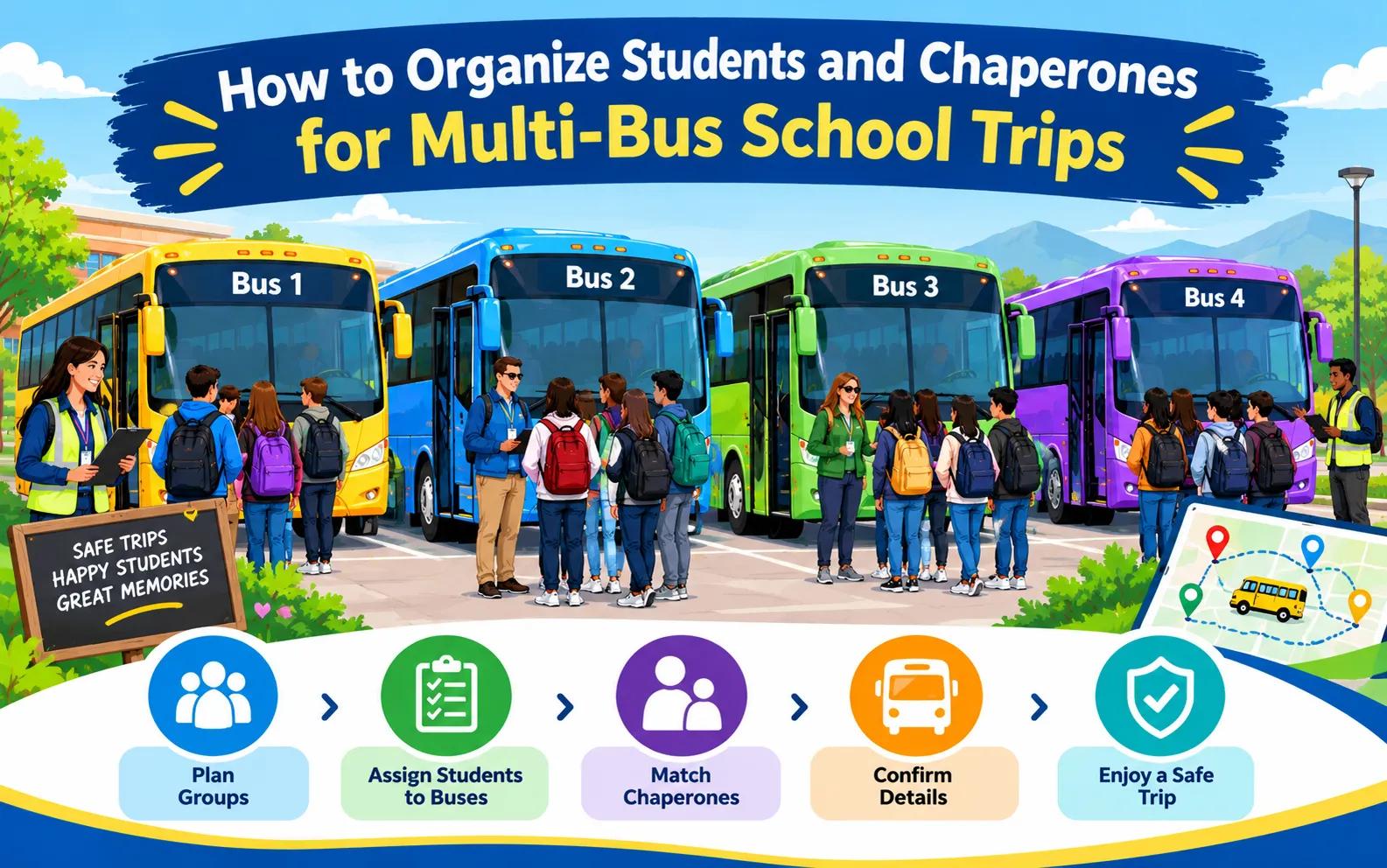
How to Organize Students and Chaperones for Multi-Bus
Planning a school trip with several charter buses requires more than dividing students into equal groups. Schools need to consider passenger capacity, chaperone responsibilities, student needs, attendance procedures, and what happens when groups return from stops. A well-organized multi-bus school trip transportation plan gives teachers and chaperones a practical framework for keeping students organized from the initial departure through the journey home.

Start by Confirming Passenger Numbers
Before creating bus assignments, schools should establish an accurate count of everyone traveling. This includes students, teachers, administrators, coaches, and approved chaperones.
The number of seats available should also be confirmed with the transportation provider. The advertised capacity of a vehicle may differ from the practical working capacity because of accessibility requirements, equipment, luggage, or other trip considerations.
It can be helpful to leave a small amount of seating flexibility on each bus. Spare capacity gives organizers room to accommodate attendance changes or move a student closer to a supervising adult without completely rebuilding the assignment plan.
Once the usable capacity of each vehicle is known, organizers can establish reasonable passenger targets for every bus.
Choose One Primary Grouping Method
Schools should decide how students will be grouped before assigning individual names. The best approach depends on the purpose and itinerary of the trip.
For a traditional field trip, grouping students by homeroom or class can make supervision easier because teachers already know their students. Athletic teams may be better organized by team, while band members, academic competitors, or club participants may benefit from staying with their respective advisors or coaches.
The itinerary can also determine the most practical arrangement. If different groups are visiting separate locations or participating in different activities, students should generally be assigned according to their destination and schedule.
Using one primary grouping method prevents conflicting assignments and makes the final rosters easier for chaperones to understand.
Assign Chaperones Before Students
Chaperones should be distributed across the buses before the remaining student seats are filled. Every vehicle should have a clearly identified adult responsible for that bus.
The lead chaperone can maintain the official roster, communicate with the driver, coordinate headcounts, and stay in contact with the overall trip coordinator. Additional adults can then be assigned according to the school's required supervision ratio and the needs of the students on each vehicle.
Adult numbers are not the only consideration. Schools should also consider the experience and responsibilities of each chaperone. A teacher familiar with a particular class may be more effective supervising that group than an adult who does not regularly work with those students.
Each bus should have enough qualified adults to supervise its own passengers rather than relying on the total adult-to-student ratio for the entire fleet.
Identify Students With Specific Requirements
Some students may need particular transportation arrangements, and these should be addressed before the remaining seats are assigned.
A student who uses mobility equipment may need an accessible vehicle. A student who requires medication should travel with the appropriate responsible adult and necessary supplies according to school procedures. Other students may have documented educational accommodations, seating requirements, or supervision considerations.
Schools can designate these students early in the assignment process so their needs do not require major changes later.
Sensitive information should remain limited to the staff members who need it. General student lists should not contain unnecessary medical or personal details.
Build Student Groups Around Supervising Adults
After the chaperones and students with specific requirements are placed, schools can begin filling the remaining seats.
Rather than assigning students individually, it is often easier to move groups or clusters. A classroom, activity group, or smaller section of a large class can form a transportation cluster under one supervising adult.
This approach helps maintain accountability because the chaperone knows exactly which students belong to their group. It also reduces the number of individual changes required when the bus loads need to be balanced.
If a class is too large to remain on one bus, divide it into clearly defined sections and assign each section to a specific adult.
Keep Bus Loads Reasonably Balanced
Once the initial groups are assigned, schools should compare passenger totals across the vehicles.
Keeping loads reasonably balanced can make boarding, supervision, and luggage distribution easier. A bus that is nearly full while another has significant unused capacity may create unnecessary delays and uneven responsibilities.
However, exact numerical equality should not override practical grouping. Keeping a classroom or activity group together may be more useful than ensuring every bus has exactly the same number of students.
The final assignment should balance capacity, supervision, itinerary, and group organization rather than relying on passenger numbers alone.
Give Each Bus a Clear Identity
Students should have an easy way to recognize their assigned bus. Large bus numbers are simple and effective, but schools can make identification even clearer by combining numbers with colors.
For example, Bus 1 could be Blue, Bus 2 Green, and Bus 3 Orange. The same color can appear on student badges, chaperone materials, and signs displayed in the bus windows.
This system becomes particularly useful after stops. When students leave a museum, stadium, restaurant, or rest area, they can quickly identify their vehicle without asking several adults.
If a replacement bus is provided, the transportation coordinator should update the identification information and communicate the change before students begin boarding.
Prepare Individual Bus Rosters
A master list can help the trip coordinator understand the complete group, but each vehicle should have its own passenger roster.
The bus roster should identify the students and adults assigned to that specific vehicle. Chaperones can use it during initial boarding, after activities, following meal breaks, and before the return journey.
Printed copies are useful as a backup because phones can lose power or connectivity may not be available during parts of a trip.
Schools should update the official roster whenever an approved change occurs. If a student moves between buses, both bus leads should be informed so that their records remain accurate.
Establish a Reliable Boarding Process
A structured boarding procedure helps prevent students from gathering randomly around the buses.
Students can first assemble with their classroom, team, or assigned cluster. The responsible teacher or chaperone can conduct an initial attendance check before leading the group to the appropriate vehicle.
After students board, the bus lead should compare the passengers with the roster. The lead can then report the final count to the trip coordinator before the vehicle departs.
The same procedure should be followed after significant stops. Students should know that returning to the correct bus is part of the transportation plan.
Use a “Same Bus In, Same Bus Out” System
One of the biggest challenges during multi-bus trips occurs after students leave the vehicles. Friend groups can mix, and students may attempt to board a different bus when the group is ready to depart.
Schools can reduce this problem by establishing a simple rule: students return to the bus they arrived on unless an authorized adult approves a change.
If a legitimate change is necessary, the responsible chaperones should update both rosters before departure. This prevents the passenger records from becoming inaccurate.
Headcounts should also involve actually verifying students against the roster rather than simply asking whether everyone is present.
Prepare for Unexpected Changes
Even a detailed transportation plan may need to change. A student could be absent, a chaperone could become unavailable, or a vehicle could require replacement.
Schools should establish procedures before travel day. If a student is absent, the bus lead should record the absence and update the passenger count. If a chaperone cannot attend, an approved replacement should be assigned or student groups should be adjusted while maintaining the school's supervision requirements.
If a bus becomes unavailable during the trip, students should remain with their assigned supervising adults while the transportation provider and trip coordinator arrange the next step.
Communicate Assignments Before the Trip
Students and chaperones should know their assignments before arriving at the departure location.
Students should receive their bus number or color, meeting location, and departure instructions. Chaperones should receive their roster, responsibilities, schedule, and communication details.
Teachers can also explain the assignment system before travel day. When students already understand where they need to report, the actual boarding process becomes much easier to manage.
Conclusion
Organizing students and chaperones for a multi-bus school trip requires careful preparation and consistent communication. Schools can begin by confirming passenger numbers, determining usable vehicle capacity, selecting a primary grouping method, and assigning chaperones before placing the remaining students.
Student-specific transportation needs should be addressed early, while balanced loads, clear bus identification, accurate rosters, and consistent headcounts can help maintain organization throughout the journey. Keeping students with their assigned buses also makes supervision and attendance tracking easier after every stop.
With a well-planned assignment system in place, schools can coordinate several charter buses as one organized transportation operation, helping teachers and chaperones maintain clear responsibilities while giving students straightforward instructions throughout the trip.