

How to Coordinate Shuttle Loading Zones with Event Venues
Successful event transportation requires close coordination between event organizers, transportation providers, venue management, drivers, and on-site staff. When large groups arrive or depart at the same time, even a small problem with bus access or passenger movement can create significant congestion. A clearly planned loading zone gives shuttle buses enough room to operate while helping passengers board and exit safely. For this reason, event venue transportation coordination should begin well before the day of the event.
A useful starting point is to establish a detailed shuttle loading zone plan that considers the venue layout, bus access, passenger flow, staging locations, event schedules, and traffic conditions. Federal Highway Administration guidance emphasizes that shuttle stations should allow rapid loading and unloading while limiting impacts on nearby traffic and pedestrian movement.

Start Coordination Early
The earlier transportation planning begins, the easier it is to resolve potential loading-zone problems. Event organizers should contact the venue and transportation provider well before the event to discuss how buses will access the property.
Early conversations can identify important restrictions, including vehicle entrance points, permitted loading areas, security checkpoints, parking limitations, and access times. Venue management may already have established procedures for charter buses, while transportation providers can explain the space and maneuvering requirements of the vehicles being used.
FHWA recommends stakeholder coordination and partnerships as part of planned-event transportation management because major events can affect safety, mobility, and travel-time reliability.
Review the Venue Layout Together
A map alone may not provide enough information to determine whether a loading zone will work effectively. Event planners, venue representatives, and transportation professionals should ideally conduct a physical site review.
During the walkthrough, the team can examine bus entrances, exits, turning areas, pedestrian paths, parking lots, security gates, emergency routes, and potential staging areas. The size of the buses should also be considered.
A full-size motorcoach needs substantially more maneuvering space than a passenger vehicle. FHWA guidance recommends using appropriate bus turning templates and conducting test drives where necessary to verify that vehicles can complete required movements without backing up.
Select a Dedicated Loading Location
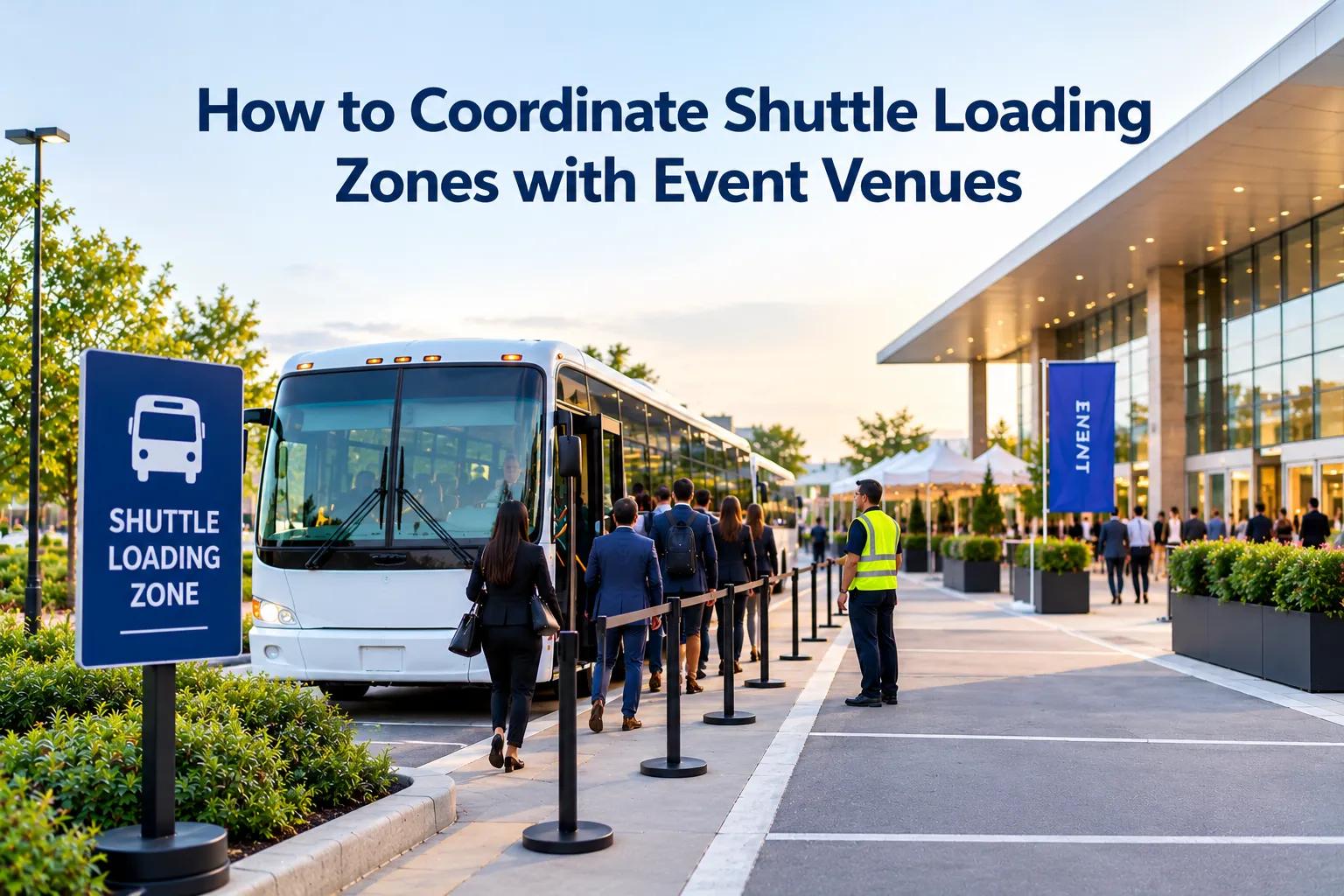
A dedicated shuttle loading zone can make transportation easier to control. Instead of competing with taxis, rideshare vehicles, private cars, and delivery vehicles, shuttle buses can operate from a designated location.
The ideal location should be convenient for passengers without interfering with the venue's primary pedestrian entrances. It should also provide sufficient curb space for buses to stop, load passengers, and depart without creating a queue that extends into surrounding traffic.
FHWA specifically recommends considering exclusive curbside bus lanes or suitable areas adjacent to venues and locating shuttle stations to support safe and efficient bus movement.
Establish a Separate Staging Area
When several shuttle buses are involved, separating staging from passenger loading can significantly improve coordination. Buses can wait in a designated holding area until transportation staff are ready to bring them into the active loading zone.
This prevents unnecessary bus queues near the venue entrance. It also allows transportation coordinators to control how many vehicles are present at the curb at any given time.
A staging system becomes especially useful when a large event has concentrated arrival or departure periods. Instead of sending every bus to the venue simultaneously, staff can release vehicles according to actual passenger demand.
Coordinate the Loading Schedule with the Event Program
Transportation schedules should be developed around the event timetable. Organizers should identify when guests are expected to arrive, when major sessions begin and end, and when large groups are likely to leave.
For example, a conference may have heavy shuttle demand before registration and immediately after the closing session. A concert may require substantial departure capacity shortly after the performance ends.
FHWA notes that the number of shuttle buses required can vary during event ingress and egress and that shuttle station design should accommodate rapid passenger loading and unloading.
Coordinating vehicle schedules with the program helps prevent situations where too many buses arrive before passengers are ready or too few buses are available when demand suddenly increases.
Create Clear Passenger Routes
The loading zone should connect naturally with the venue's pedestrian routes. Guests should be able to leave the venue and reach their shuttle without unnecessary crossings or confusion.
A defined passenger waiting area can keep people away from moving buses. Temporary barriers, cones, or barricades may be used to create a clear boundary between pedestrians and vehicles.
FHWA recommends connecting shuttle stations to planned pedestrian access routes and using temporary barriers around waiting areas when appropriate. These measures can improve passenger safety and reduce conflicts with surrounding pedestrian traffic.
Organize Multiple Shuttle Destinations
If the event uses shuttles to several hotels, parking facilities, transit stations, or other destinations, each route should have a clearly identified boarding area.
Passengers should be able to determine their destination before reaching the bus queue. Large signs, destination boards, and staff members can help direct guests to the appropriate section.
FHWA guidance recommends designating sections within passenger waiting areas for different shuttle destinations and providing staff or volunteers to answer questions and assist with boarding.
This organization can reduce passenger confusion and help buses spend less time waiting at the curb.
Assign Clear Responsibilities
Transportation coordination works better when everyone knows who is responsible for each task. The venue may manage property access and security, while the transportation provider manages drivers and vehicles. Event staff may handle passenger communication and queues.
One transportation supervisor should ideally serve as the primary contact for shuttle operations. This person can communicate with drivers and venue personnel and make decisions when conditions change.
FHWA recommends giving shuttle operators access to relevant traffic-management communication channels and having supervisors coordinate responses to schedule delays, vehicle breakdowns, station overcrowding, and traffic incidents.
Consider Accessibility
Accessibility should be included in loading-zone coordination from the beginning. The path from the venue to the shuttle area should remain clear and usable for guests with mobility limitations.
Organizers should communicate accessibility requirements to the transportation provider in advance. If an accessible vehicle or specific boarding arrangement is needed, the loading area should provide adequate space for safe boarding.
FHWA guidance emphasizes providing accessible pedestrian routes between transportation points and the venue and maintaining an unobstructed path for patrons with disabilities.
Prepare for Weather and Passenger Comfort
Outdoor shuttle areas should also be evaluated for weather conditions. Depending on the venue and event schedule, passengers may need protection from rain, heat, cold, or strong winds.
A covered waiting area can provide greater comfort and make the shuttle station easier to identify. Lighting is also important for evening events because passengers and drivers need clear visibility.
These considerations should be discussed with the venue before the final loading-zone location is approved.
Develop a Contingency Plan
Even a carefully coordinated transportation plan can be affected by traffic incidents, weather, unexpected attendance, road restrictions, or event schedule changes.
Venue managers and transportation providers should establish an alternate loading area or staging location whenever practical. Drivers should know the backup route before event day, and staff should know who has authority to activate the alternative plan.
FHWA notes that planned events can significantly affect transportation operations and recommends advance planning, stakeholder coordination, and resource sharing to manage these impacts.
Conduct a Final Pre-Event Review
Before the event begins, all involved teams should review the final transportation plan. The walkthrough should confirm the bus entrance, staging area, active loading zone, pedestrian routes, signs, staff positions, and emergency access.
A test drive can also help identify practical problems that were missed during the initial planning stage. If a bus cannot make a turn comfortably or the passenger queue interferes with another venue operation, the issue can be corrected before attendees arrive.
This final review creates a shared understanding among drivers, venue staff, transportation coordinators, and event organizers.
Conclusion
Coordinating shuttle loading zones with event venues requires communication, preparation, and attention to both vehicle and passenger movement. Selecting an appropriate loading location, establishing separate staging, coordinating schedules, organizing passenger queues, providing clear signage, supporting accessibility, and preparing contingency plans can make event transportation much more efficient.
The most effective event transportation coordination begins weeks or months before guests arrive. When venue managers and transportation providers work together from the planning stage through event day, shuttle operations can remain organized even during busy arrival and departure periods. A well-coordinated loading zone ultimately helps reduce congestion, improve passenger safety, and create a smoother experience for everyone attending the event.