

How to Coordinate Flexible Bus Schedules for Adult Education Group Activities
How to Coordinate Flexible Bus Schedules for Adult Education
Adult education programs bring together learners who balance classes with employment, family responsibilities, and personal commitments. Whether an institution is organizing a museum visit, a professional training workshop, a campus tour, or a community learning event, coordinating transportation can be challenging when participants have different availability. A flexible transportation plan helps organizers manage departures, reduce delays, and make group activities more accessible. By developing custom bus schedules for adult education activities, institutions can accommodate different travel needs while keeping educational programs organized. Learn more about coordinating transportation for adult education groups with mixed schedules.

Understand Participants' Scheduling Requirements
The foundation of flexible transportation planning is understanding when participants can travel. Adult learners may attend morning classes before work, join evening courses after their shifts, or participate in weekend educational activities. Some may also have strict return deadlines because of childcare or other family responsibilities.
Organizers should collect availability information during registration. Asking about preferred departure times, required return times, pickup locations, and accessibility needs provides a clearer picture of the group's requirements.
Once this information is collected, coordinators can identify scheduling patterns and determine which participants can share the same transportation arrangements. This approach helps avoid choosing departure times that exclude learners who would otherwise benefit from the activity.
Build a Schedule Around the Educational Program
Transportation schedules should support the educational itinerary rather than dictate every activity. Coordinators should first confirm the event's start time, expected duration, planned breaks, and return requirements.
For example, a workforce development center organizing a visit to a regional training facility may need to accommodate learners attending different morning sessions. Rather than requiring everyone to arrive at the same time, the institution could arrange separate departure windows based on the workshop timetable.
It is also important to include a reasonable buffer for traffic, boarding, and unexpected delays. A schedule that allows no flexibility can cause participants to arrive late or miss important activities.
When possible, choose departure times that accommodate the largest number of learners while preserving options for those with more restrictive schedules.
Choose the Most Suitable Transportation Model
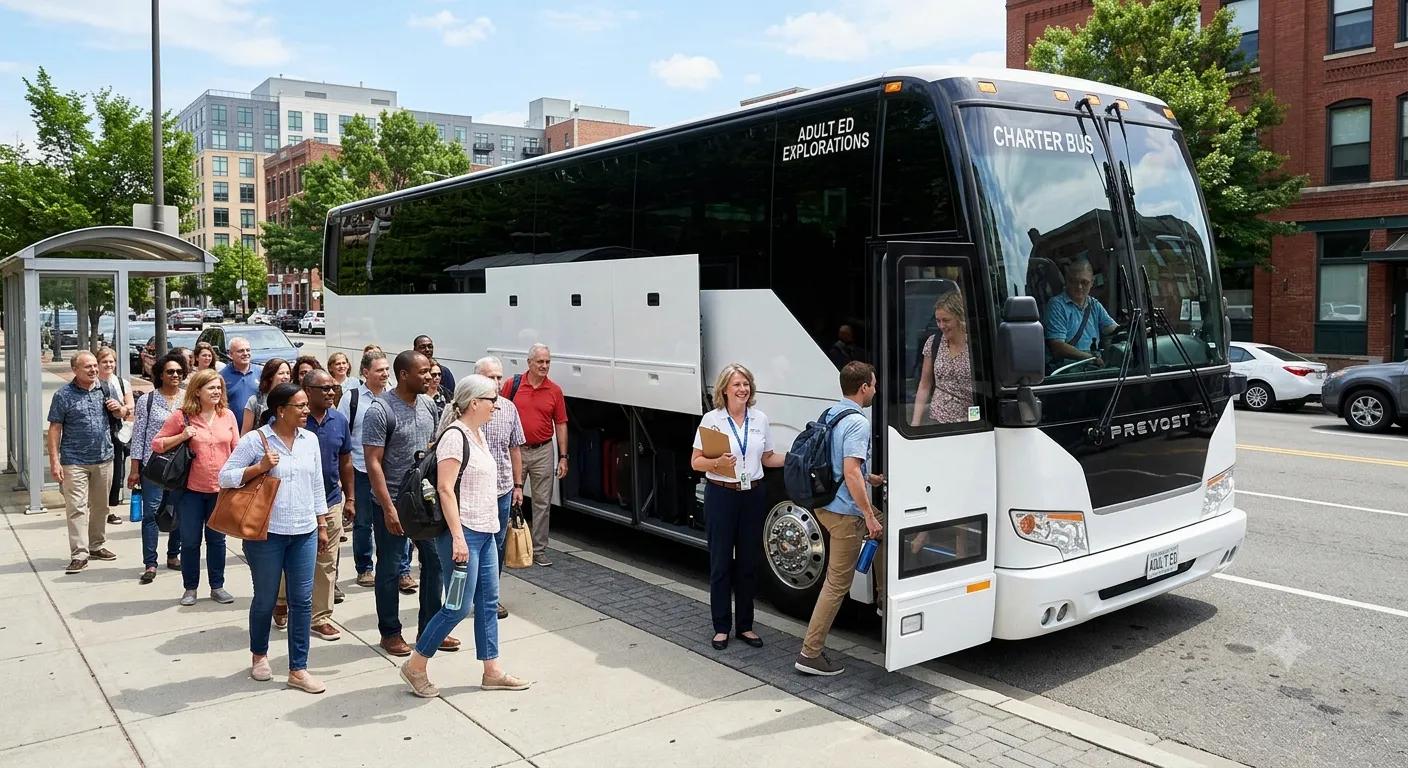
Different educational activities require different transportation arrangements. A single charter bus with one departure and return time may be ideal for a short field trip where most participants share the same schedule.
Programs with multiple sessions may benefit from staggered departures. For instance, one vehicle could transport morning participants, while a later departure serves learners attending an afternoon workshop.
A scheduled shuttle can also be useful when participants need transportation between several campuses, community centers, or training facilities throughout the day. For groups with strict early-return requirements, organizers may consider arranging a separate vehicle for those participants.
Each model has different cost and scheduling implications. Coordinators should compare passenger numbers, route duration, vehicle availability, and the number of required trips before making a decision.
Select Vehicles Based on Group Size and Travel Needs
The right vehicle depends on the number of passengers, trip distance, duration, and any special requirements. A minibus may be suitable for a small group attending a local educational activity, while a full-size charter bus may work better for larger groups traveling to conferences or regional learning events.
Passenger comfort should remain a priority, particularly when the journey involves several hours of travel. Organizers can discuss available features such as climate control, comfortable seating, and luggage storage with the provider.
Accessibility requirements should be confirmed before booking. If participants need wheelchair-accessible boarding or additional space for mobility equipment, the transportation provider should know these details when preparing the quote.
Selecting an appropriately sized vehicle helps prevent unnecessary expenses while providing a comfortable journey for participants.
Coordinate Multiple Pickup and Drop-Off Points
Flexible transportation sometimes requires collecting learners from different locations. Participants may live in separate neighborhoods, attend different campuses, or depend on public transportation to reach the meeting point.
Organizers should identify pickup locations that are easy to access, safe for boarding, and suitable for the selected vehicle. Educational campuses, community centers, and transit hubs can serve as practical meeting points.
However, every additional stop increases travel time. Coordinators should group nearby participants and use a limited number of strategic pickup locations to keep the route efficient.
Drop-off arrangements also need attention. Confirm that the destination permits charter buses to load and unload passengers at the proposed location. Clear instructions about the exact meeting point can prevent confusion and missed departures.
Manage Transportation Costs Carefully
Budgeting is essential when coordinating multiple departures or flexible return arrangements. Transportation costs may depend on vehicle type, mileage, service duration, parking, tolls, and additional stops.
Organizers should request detailed quotes that explain what is included in the price. They should also ask about charges for extended waiting periods, schedule changes, and additional vehicle hours.
Comparing the estimated cost with the expected number of passengers helps institutions understand the approximate expense per participant. Educational programs may cover these costs through institutional budgets, grants, sponsorships, or participant contributions.
Efficient route planning can also reduce unnecessary mileage. Instead of running multiple vehicles throughout the day without sufficient demand, coordinators should schedule departures around actual attendance patterns.
The most economical arrangement is not always the one with the lowest initial price. Reliability, accessibility, and the ability to meet participants' schedules should also influence the decision.
Communicate Schedules Clearly to Participants
Even a well-designed transportation plan can fail if participants do not understand the arrangements. Every learner should receive clear information about the pickup location, boarding time, expected arrival, and return schedule.
When several departure windows are available, organizers should explain which option each participant has selected. Email confirmations and text reminders can help participants remember their assigned departure time.
A designated transportation coordinator should manage questions and communicate any changes. This person can also update passenger lists, contact the provider, and ensure that everyone receives revised instructions when necessary.
Organizers should establish a clear late-arrival policy and explain what happens if someone misses the scheduled departure. Consistent communication reduces uncertainty and helps the group remain on schedule.
Prepare for Unexpected Schedule Changes
Adult education programs may experience last-minute changes because of instructor availability, extended workshops, traffic delays, or participants' personal responsibilities. A flexible transportation plan should include procedures for handling these situations.
Before confirming the booking, coordinators should ask the provider how schedule changes are managed and whether additional service hours or alternative departure times can be arranged.
For longer activities, avoid planning the return journey too tightly around the expected end time. Allowing a reasonable buffer makes it easier to manage delays without disrupting the entire itinerary.
Maintaining an updated passenger list and assigning one person to oversee transportation can also simplify decision-making. Clear responsibilities help organizers respond efficiently when plans change.
Evaluate the Plan After Each Activity
Reviewing transportation performance helps educational institutions improve future arrangements. After each trip, coordinators should consider whether departure times were convenient, pickup locations were accessible, and the chosen vehicle met the group's needs.
Participant feedback can reveal problems that were not obvious during the planning stage. For example, a pickup location may appear central but still be difficult to reach using weekend public transportation.
Organizers should also review actual travel times, attendance, and unexpected costs. These details can help refine future schedules and determine whether additional departure windows or different vehicles are necessary.
For recurring educational programs, keeping records of previous trips makes it easier to estimate demand and plan transportation more accurately.
Conclusion
Coordinating flexible bus schedules for adult education group activities requires careful planning, a clear understanding of participant availability, and reliable communication. By organizing departures around educational timetables, choosing suitable vehicles, and selecting convenient pickup locations, institutions can make transportation more efficient and accessible.
Flexible arrangements such as staggered departures, scheduled shuttles, and separate return options can accommodate learners with different professional and family commitments. Careful budgeting and preparation for unexpected changes further improve the experience.
Whether organizing a community learning trip, a workforce training visit, or a professional development event, a well-designed transportation schedule allows participants to travel with greater confidence. With the right planning approach, educational institutions can reduce logistical challenges and help learners focus on the value of their educational activities.