

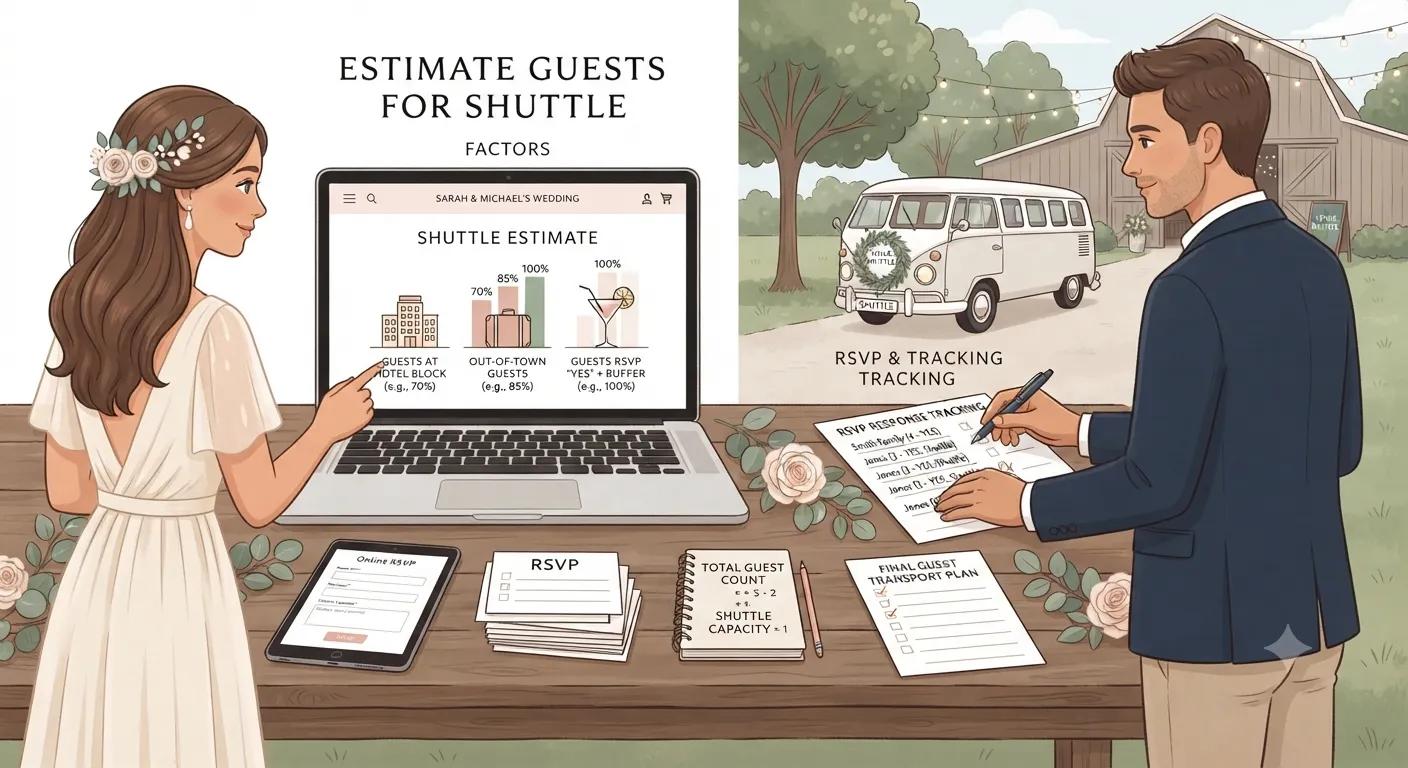
How to Calculate the Number of Wedding Guests
Figuring out how many wedding guests will actually use a shuttle is an important part of planning a smooth event. The number of invitations sent does not necessarily equal the number of people who need transportation. Some guests may drive themselves, while others may stay at a hotel and depend on organized transportation. A practical approach to wedding shuttle transportation can help you estimate demand more accurately and select an appropriate vehicle without paying for unnecessary capacity.

Start With Your Confirmed Guest Count
The first number you need is your confirmed attendance. Avoid calculating shuttle demand from the original invitation list because many invited guests may decline the invitation or be unable to attend.
Once your RSVPs are mostly complete, use the confirmed attendance figure as the starting point. For example, if you invited 180 people but 130 confirmed their attendance, your transportation calculation should begin with 130 guests.
If you are still several months away from the wedding and RSVPs are not available, you can create a preliminary estimate for budgeting purposes. However, plan to revisit the calculation once actual responses begin coming in.
Identify Guests Who Need Transportation
The next step is to determine how many confirmed guests are likely to need a shuttle. Not every attendee will require organized transportation.
Local guests who live near the venue may drive their own vehicles. Some out-of-town guests may rent cars, while others may arrange rides with relatives or friends. These guests should not automatically be included in your shuttle estimate.
Hotel guests are often more likely to use the provided transportation, especially when they do not have access to a personal or rental vehicle. Identifying this group gives you a more realistic pool of potential shuttle riders.
Review Hotel Accommodations
Hotel information can make your calculation much more accurate. If most of your out-of-town guests are staying at one host hotel, you can estimate shuttle usage based on the number of guests staying there.
For example, suppose 100 guests are confirmed for your wedding, and 65 are staying at the designated hotel. If most of those 65 guests do not have their own transportation, the hotel group becomes your primary shuttle audience.
If guests are staying at several hotels, consider each location separately. The number of guests at each hotel can affect how many pickup points you need and whether one vehicle can efficiently handle the schedule.
Ask Guests About Shuttle Usage
The most reliable way to improve your estimate is to ask guests directly. Include a transportation question on your RSVP form or wedding website so attendees can indicate whether they expect to use the shuttle.
You might ask guests whether they plan to use the provided transportation, drive themselves, rent a vehicle, or arrange another ride. This information can significantly reduce guesswork.
You can also ask guests where they will be staying. Combining accommodation details with transportation preferences gives you a much clearer understanding of potential shuttle demand.
For larger weddings, this information becomes particularly valuable because even a small difference in the estimated rider count can affect the type and number of vehicles required.
Consider the Wedding Venue Location
The venue's location can influence how many guests choose the shuttle. A remote venue with limited rideshare coverage may encourage more people to use the provided transportation.
For example, guests attending a wedding at a countryside estate, vineyard, or rural venue may not want to depend on finding a rideshare late at night. A scheduled shuttle provides a more predictable option.
Urban venues can produce different results because guests may have access to taxis, rideshare services, and public transportation. Some attendees may therefore choose independent transportation even when a shuttle is available.
Consider the distance between the hotel and venue, parking availability, traffic conditions, and transportation alternatives when estimating your likely usage rate.
Make the Shuttle Convenient for Guests
The way you communicate transportation can also influence how many guests use it. If the shuttle information is difficult to find, some guests may simply make their own transportation arrangements.
Include the pickup location, departure time, venue arrival time, and return schedule on your wedding website and guest communications. Make the instructions simple enough that guests know exactly where to go and when they need to be ready.
When the shuttle is presented as the easiest transportation option, guests are more likely to choose it. Clear communication can therefore make your estimate more accurate while reducing confusion on the wedding day.
Account for Guests With Their Own Vehicles
Some guests who appear to be good shuttle candidates may still have their own transportation. Out-of-town guests sometimes rent cars because they are staying in the area for several days or have additional plans before and after the wedding.
Wedding party members may also have separate transportation arrangements because they need to arrive earlier for photographs, preparation, or other activities.
Review these groups before finalizing your rider estimate. Removing guests who already have transportation can prevent you from booking more capacity than necessary.
Add a Reasonable Buffer
Even an accurate estimate can change before the wedding. Guests may change their transportation plans, add a plus-one, or decide at the last minute that they would rather use the shuttle.
For that reason, avoid booking a vehicle with exactly the same number of seats as your calculated estimate. A modest buffer gives you flexibility if a few additional guests decide to ride.
If your estimate is close to a vehicle's maximum capacity, consider moving up to the next appropriate vehicle size rather than risking an overcrowded shuttle.
Calculate Return Transportation Separately
The number of guests using the shuttle to reach the wedding may not be the same as the number returning to their hotels.
Some guests may drive themselves to the venue but decide not to drive home after the reception. As the evening progresses, guests may prefer the shuttle because they want to avoid driving after drinking or simply do not want to navigate unfamiliar roads at night.
For this reason, estimate the outbound and return rider counts separately. Your return transportation may need additional capacity or multiple departure times.
Use a Simple Calculation Method
A practical calculation can begin with your confirmed guest count, followed by the number of guests who actually need transportation.
For example, imagine that 140 guests are confirmed. If 40 local guests have their own transportation, that leaves 100 potential shuttle riders. If 15 of those guests are renting cars or have another transportation arrangement, the candidate pool becomes 85.
If approximately 80 to 90 percent of that remaining group is expected to use the shuttle, your estimated demand would be around 68 to 77 riders. Adding a reasonable buffer can then help you select the appropriate vehicle capacity.
The exact percentage will vary depending on your venue, hotel arrangements, guest preferences, and available transportation alternatives.
Choose Your Vehicle Based on the Final Estimate
Once your calculation is complete, compare the expected rider count with available vehicle capacities. Smaller groups may be suited to a minibus, while larger wedding groups may require a full-size charter bus or multiple vehicles.
Do not focus only on total seating capacity. The number of hotels, pickup locations, departure times, and return waves can all affect the transportation setup.
Discuss your estimated rider count and complete itinerary with your transportation provider so the vehicle arrangement can match your actual wedding schedule.
Plan Ahead for a Smoother Wedding Day
Calculating wedding shuttle demand is much easier when you break the process into clear stages. Begin with confirmed attendance, identify guests who genuinely need transportation, review hotel accommodations, ask about shuttle preferences, and account for guests with independent transportation.
You should also consider the venue location and calculate return transportation separately because the number of riders can change throughout the event.
With a realistic estimate and a small amount of extra capacity, couples can avoid both overcrowded shuttles and unnecessary transportation expenses. A well-planned shuttle service gives wedding guests a convenient way to travel between their accommodations and the celebration while allowing the couple to focus on enjoying their special day.