

How to Calculate Garage-to-Garage Charges for Charter Bus
Understanding charter bus rental costs is essential when planning transportation for corporate events, school trips, weddings, sporting events, or private group outings. While many customers focus on the distance between their pickup and destination, the bus may need to travel additional miles before the journey begins and after passengers are dropped off. Learning how to calculate garage-to-garage charter bus rental costs can help you understand your quote, compare transportation providers, and prepare a more accurate budget.

Garage-to-garage charges can vary depending on the operator's billing policy, vehicle location, travel schedule, and pricing structure. Knowing which details to review makes it easier to determine what you are paying for before confirming a reservation.
What Are Garage-to-Garage Charges?
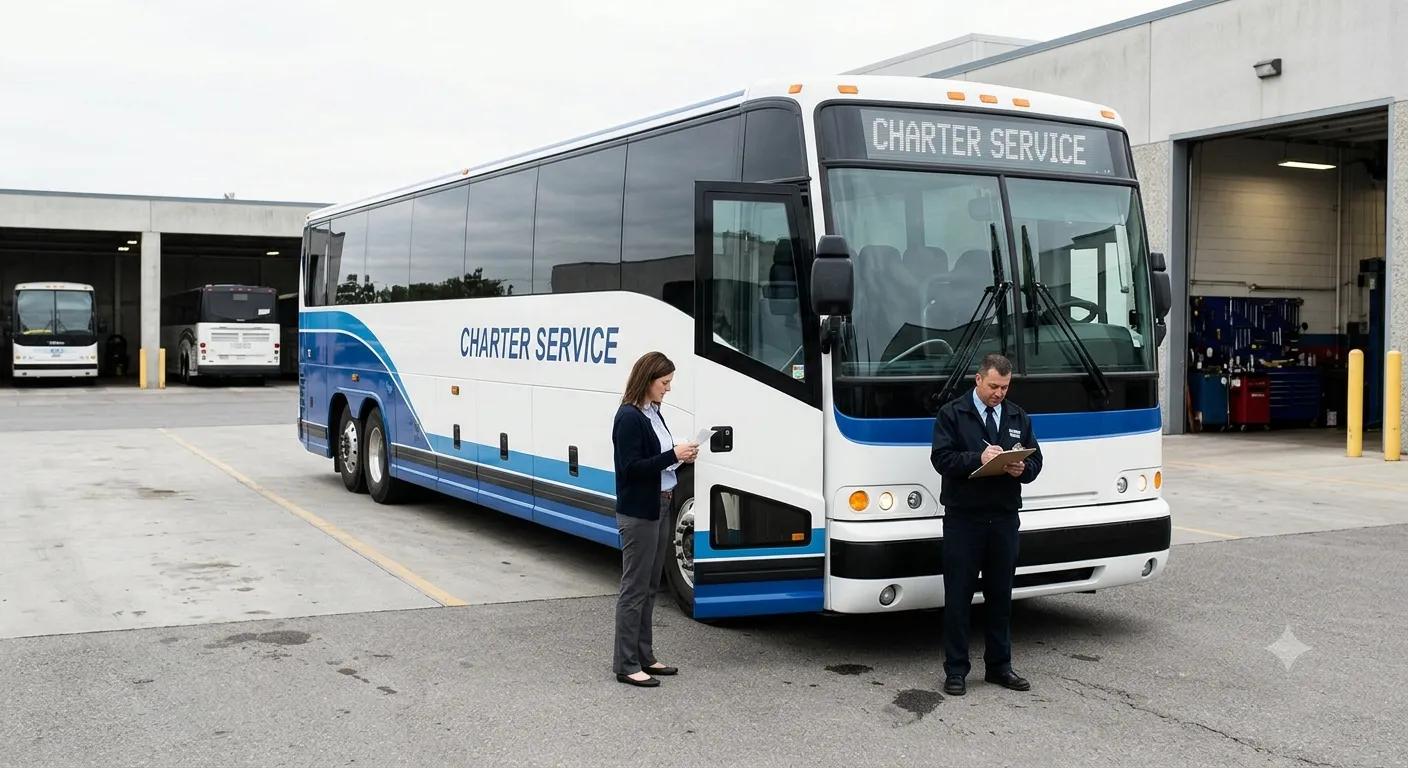
Garage-to-garage charges refer to the cost associated with a bus's complete operating assignment, beginning when it leaves its designated garage and ending when it returns. This may include the journey to the passenger pickup location, the scheduled trip, and the return journey after the final drop-off.
For example, a company may book a charter bus for a five-hour corporate event. However, the vehicle might require 30 minutes to reach the pickup location and another 30 minutes to return to its garage. If the operator bills the entire period, the total chargeable time could be six hours rather than five.
Not every charter bus company follows the same approach. Some operators may incorporate positioning expenses into an overall quote, while others may calculate charges using hourly rates, mileage, or a combination of methods. Reviewing the rental agreement is therefore important.
Step One: Determine the Total Travel Distance
The first step in calculating garage-related charges is identifying the complete distance associated with the assignment. This includes the distance from the garage to the pickup location, the passenger journey, and the distance from the final drop-off back to the garage when these portions are included in the pricing method.
Suppose a charter bus travels 12 miles from its garage to the pickup point. It then transports passengers for 35 miles before traveling another 12 miles back to its garage. The total operating distance is 59 miles.
This figure can help estimate mileage-based expenses, but it does not automatically determine the final rental price. Some companies charge by time rather than mileage, and others use a combined pricing structure.
Before calculating the cost, confirm which portions of the journey the operator includes in its billable mileage.
Step Two: Calculate the Total Billable Time
When a charter bus company uses garage-to-garage hourly billing, you need to calculate the full period covered by the rental agreement.
Imagine that a bus leaves its garage at 8:00 a.m., arrives at the pickup location at 8:30 a.m., completes the passenger trip and scheduled service by 1:30 p.m., and returns to the garage at 2:00 p.m.
The total operating period is six hours, even though the scheduled passenger service lasts five hours.
The calculation is based on the difference between the departure time from the garage and the return time. However, some operators use different billing start and end points, minimum rental periods, or rounding increments. Always use the rules specified in your quote rather than assuming every company bills identically.
Step Three: Apply the Applicable Rental Rate
Once you know the billable hours, multiply them by the hourly rate specified by the transportation provider.
For example, assume the operator charges an illustrative rate of $150 per hour and the agreement includes six billable hours. The estimated hourly rental charge would be:
6 hours × $150 = $900
This amount represents the hourly rental portion only. It does not necessarily include tolls, parking fees, gratuities, taxes, driver lodging, or other expenses that may apply under the contract.
If the operator uses a mileage-based rate, you would instead multiply the applicable billable miles by that rate. If the company provides a daily or custom package, follow the terms of that quotation.
The purpose of this step is to apply the correct rate to the correct billing unit, whether that unit is hours, miles, days, or a combination of these.
Step Four: Review Additional Fees and Conditions
After calculating the basic rental charge, review the quote for other expenses. Depending on the provider and itinerary, tolls, parking, permits, driver accommodations, overtime, or additional waiting time may be billed separately.
Minimum rental requirements can also affect the total. For instance, if a company requires a minimum of five billable hours, a shorter trip may still be charged at that minimum. Garage travel may also count toward the rental period if the agreement specifically provides for it.
Schedule changes are another consideration. Extending an event, adding destinations, or returning later than planned may increase the charge if the revised itinerary exceeds the agreed service period.
Ask the operator to identify which fees are included in the quoted price and which may be added later. This allows you to calculate the expected total more accurately.
Step Five: Calculate the Estimated Total Cost
After adding the applicable rental charges and additional fees, you can estimate the total transportation cost.
For example, assume the six-hour rental costs $900, parking and tolls total $45, and the agreed driver gratuity is $135. The estimated total would be $1,080, before any taxes or other applicable charges.
These figures are hypothetical and are not a quote from a specific provider. Your actual total will depend on the operator's rates and contract terms.
Tips for Getting an Accurate Charter Bus Quote
The best way to calculate garage-to-garage charges is to provide the rental company with complete trip information. Share your pickup address, destination, departure time, expected return time, passenger count, and any planned stops. These details help the operator estimate the full assignment.
Request the expected garage departure and return times, total billable hours, and any additional mileage charges in writing. It is also worth comparing quotes from multiple providers, especially when the available buses are based at different distances from your pickup location.
Compare the final estimated prices rather than hourly rates alone. A company with a higher hourly rate may offer better overall value if it has a shorter positioning journey or includes certain expenses in its quote.
Conclusion
Calculating garage-to-garage charges for charter bus rentals involves understanding the vehicle's total operating distance or billable time, applying the appropriate rate, and accounting for additional fees. The exact method depends on the transportation provider's pricing policy and the terms of the rental agreement.
By checking garage travel, confirming minimum rental hours, reviewing extra charges, and comparing complete quotations, you can estimate your transportation budget more accurately. Careful preparation helps you select a charter bus service that meets your group's needs while minimizing unexpected costs.