

How Charter Bus Rentals Make Public Library Group
Public libraries bring people together through reading programs, educational activities, cultural events, and community outings. Whether a library is arranging a historical tour, a visit to a university library, a literary festival, or an educational excursion for children and adults, transportation is an important part of the planning process. When participants travel separately, organizers may face scheduling problems, parking difficulties, and the challenge of ensuring everyone reaches the destination on time.
Choosing charter bus transportation for public library trips can make these outings easier to coordinate. By arranging group travel through a single transportation provider, librarians can simplify logistics, improve communication, and create a more comfortable journey for participants. With careful preparation, charter bus rentals can help libraries organize memorable outings while keeping the focus on learning and community engagement.

Keeping the Entire Group Together
One of the biggest challenges of organizing a library outing is coordinating participants who would otherwise travel in separate vehicles. When people drive independently, they may encounter different traffic conditions, struggle to find parking, or arrive at different times.
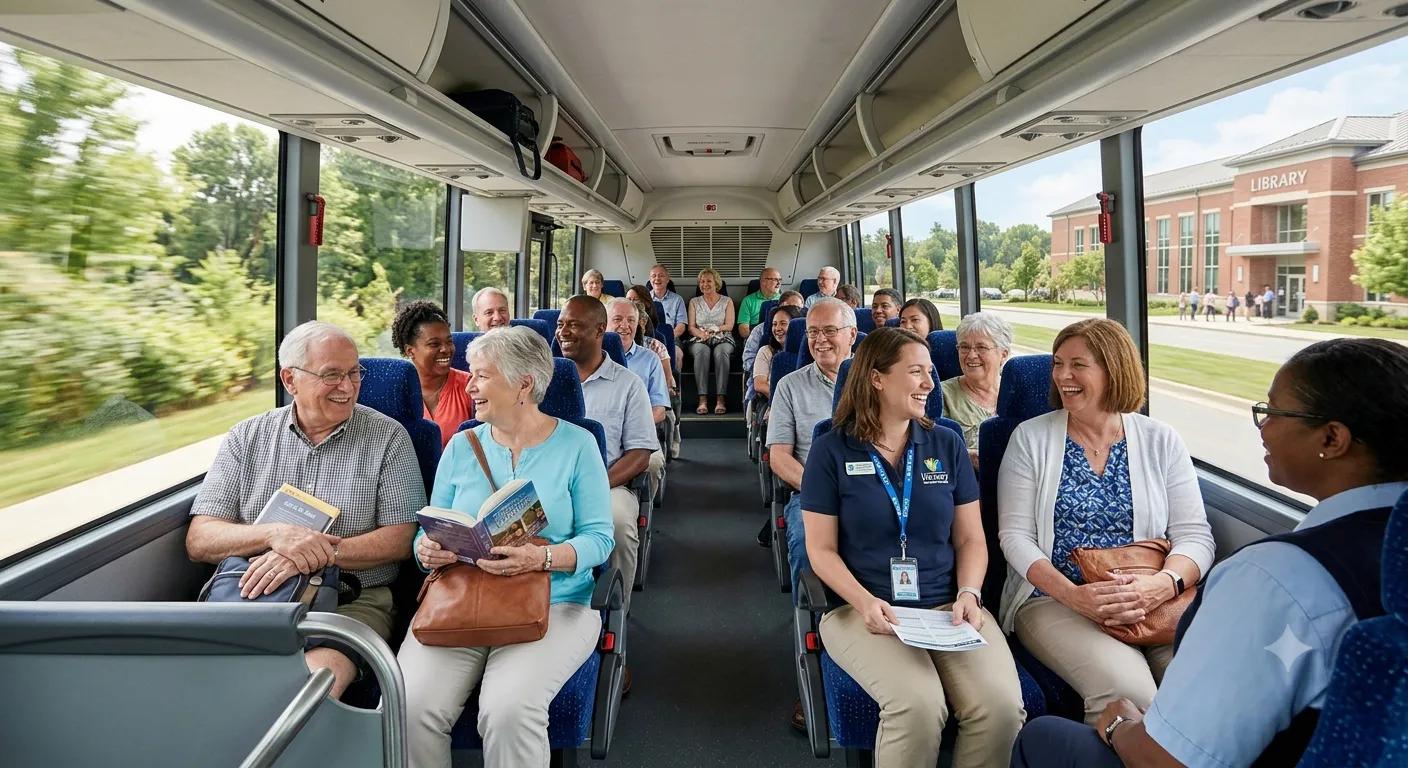
A charter bus allows participants to travel together according to a shared schedule. Organizers can establish one primary meeting location, coordinate boarding, and communicate departure instructions before the journey begins.
Keeping the group together also simplifies attendance checks and makes it easier for trip coordinators to communicate important information. This arrangement is particularly useful for school reading programs, senior community outings, book clubs, and library-sponsored educational tours.
Simplifying Trip Planning and Scheduling
A successful library outing depends on a realistic itinerary. Organizers must consider destination opening hours, activity schedules, travel time, and the expected return journey. Coordinating several personal vehicles can make these arrangements more complicated.
Charter bus rentals allow libraries to organize transportation around their planned itinerary. Before booking, librarians can discuss the departure time, destination, pickup arrangements, planned stops, and return schedule with the provider.
For example, a library organizing a day trip to a historical archive could arrange transportation that allows the group to arrive before a scheduled guided tour. If the outing includes multiple attractions, organizers can coordinate the stops in advance and allow sufficient time for participants to board between activities.
A carefully planned schedule helps reduce unnecessary waiting and gives participants more time to enjoy the experience.
Choosing a Vehicle That Fits the Group
Public library programs attract people of different ages and group sizes. A small reading club may include a dozen participants, while a community-wide educational excursion may involve several dozen passengers.
Selecting the right vehicle helps ensure that everyone has an appropriate seat without paying for unnecessary capacity. A minibus may work well for smaller groups attending local events, while a full-size charter bus may be suitable for larger groups or longer journeys.
Organizers should consider more than passenger numbers when choosing a vehicle. Storage space may be necessary for backpacks, books, educational materials, and personal belongings. Climate control and comfortable seating can also make longer journeys more pleasant.
If the group includes wheelchair users or participants with mobility requirements, confirm the availability of appropriate accessibility features before finalizing the reservation.
Making Transportation More Convenient for Participants
Convenience is an important benefit of organized group transportation. Participants do not have to arrange separate drivers, coordinate carpools, or search for parking near unfamiliar destinations.
This can be particularly helpful when libraries organize outings to busy downtown areas, large cultural institutions, university campuses, or venues with limited parking. A planned drop-off location can make arrival easier, provided the transportation provider and destination confirm that the vehicle can safely and legally load and unload passengers there.
Libraries should also communicate the pickup location clearly and explain where participants will meet after the event. Providing these details in advance helps prevent confusion, particularly for first-time visitors or people unfamiliar with the destination.
When transportation arrangements are straightforward, participants can spend less time worrying about logistics and more time enjoying the outing.
Supporting Educational and Cultural Experiences
Library trips often provide learning opportunities that extend beyond books and reading rooms. Participants may visit historical landmarks, archives, museums, literary events, cultural centers, or other educational institutions.
Traveling together can make these experiences more engaging. Group leaders can review the itinerary, explain the purpose of the visit, or share general background information before arrival, provided the group can do so safely and without distracting the driver.
For children's programs, teachers and designated chaperones can coordinate supervision during the journey. Adult reading groups may use the travel time to discuss their interests or prepare questions for a scheduled event.
The transportation itself becomes part of a well-organized educational experience, helping participants arrive ready to take part in the day's activities.
Improving Budget Management
Many public libraries operate within carefully managed budgets, so transportation expenses must be considered alongside admission fees, program materials, and other outing costs.
A charter bus rental provides an opportunity to organize transportation under one agreed booking rather than managing numerous separate travel arrangements. For larger groups, sharing the rental cost among participants or allocating it through an approved program budget may make the trip easier to plan financially.
However, the overall value depends on the group's size, distance, rental duration, and vehicle requirements. Organizers should request a detailed quotation and confirm whether the price includes the planned service hours, mileage, driver arrangements, and any applicable additional charges.
Parking fees, tolls, extra stops, and schedule extensions may affect the final cost, so it is sensible to clarify these details before confirming the reservation.
Booking early can also give libraries more time to compare suitable options and coordinate transportation with admission reservations.
Prioritizing Passenger Safety and Accessibility
Passenger safety should remain central to every library transportation plan. Before booking, organizers should review the provider's credentials, applicable operating requirements, insurance arrangements, and vehicle suitability.
The trip coordinator should maintain an accurate passenger list and conduct headcounts before departure and whenever the group regathers after a stop. For outings involving children, clear supervision responsibilities should be established with teachers, parents, or designated chaperones.
Accessibility also deserves attention. Libraries serve people with different physical abilities and mobility needs, so organizers should ask about accommodation requirements and confirm that the chosen vehicle can meet them.
For longer journeys, consider whether scheduled rest stops are appropriate and allow additional boarding time when needed. These arrangements help create a more inclusive and comfortable experience for all participants.
Making Communication Easier
Clear communication helps prevent misunderstandings before and during a group trip. Participants should receive essential details in advance, including the departure location, boarding time, destination, expected return time, and contact information for the trip coordinator.
It is also helpful to explain what participants should bring and whether the destination has special entry requirements. If the itinerary changes because of traffic, weather, or venue scheduling, the coordinator should have a practical way to notify the group.
Working with one transportation provider can simplify communication about pickup times, route adjustments, and service arrangements. Nevertheless, librarians should keep the itinerary and contact details readily available rather than relying on verbal instructions alone.
These small organizational steps can make the outing easier to manage and help participants feel prepared.
Conclusion
Charter bus rentals can make public library group trips easier by simplifying transportation, keeping participants together, and supporting more organized scheduling. From selecting an appropriate vehicle to coordinating pickup locations, managing costs, and accommodating accessibility needs, thoughtful planning helps libraries create a smoother travel experience.
By confirming arrangements early, communicating clearly, and prioritizing passenger comfort and safety, librarians can reduce logistical challenges and focus on the purpose of the outing. Whether the destination is a literary festival, historical site, educational institution, or cultural attraction, reliable group transportation can help public libraries deliver rewarding experiences that strengthen learning and community connections.