

Flexible Transportation Solutions for Basketball Tournament Schedule Changes
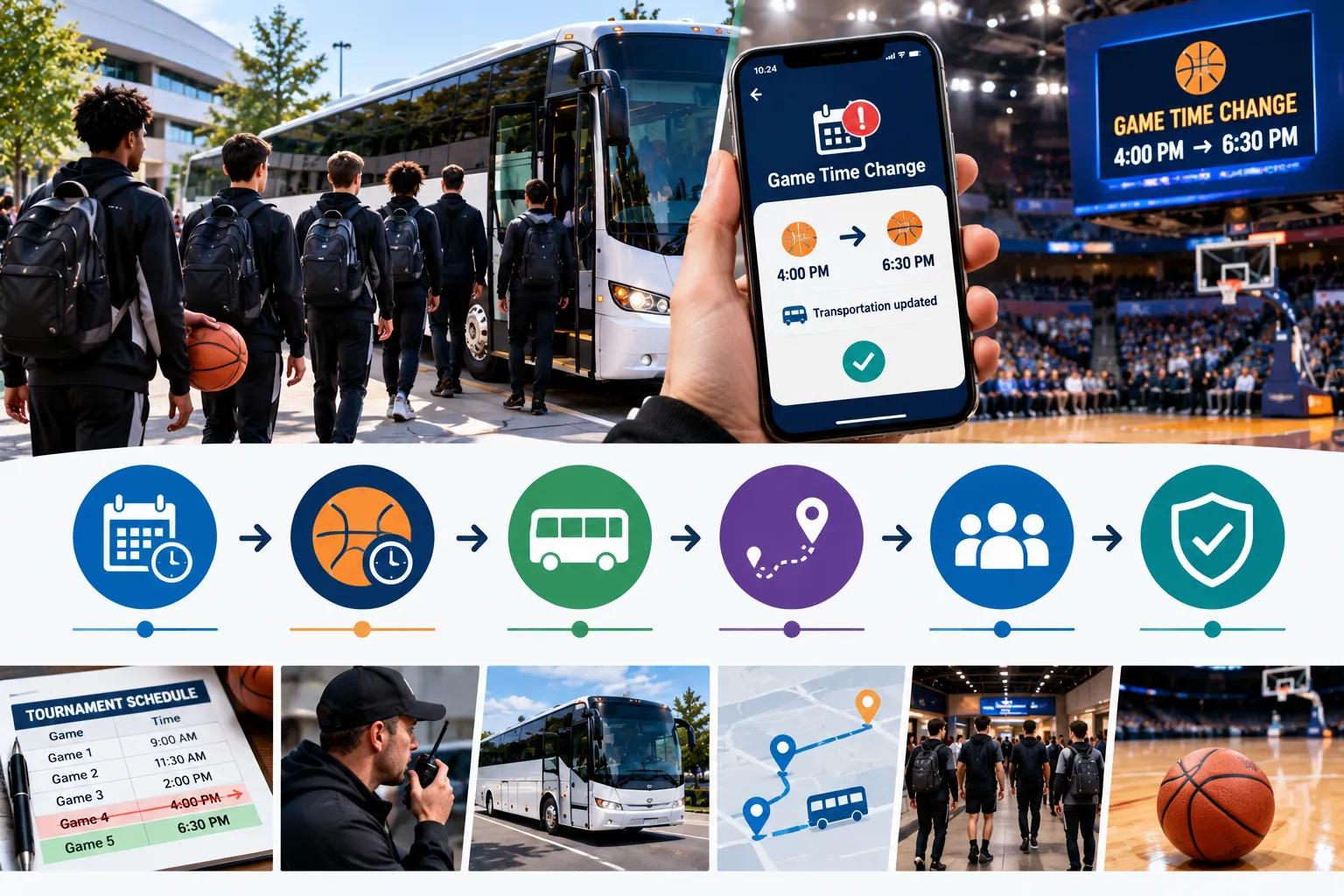
Flexible Transportation Solutions for Basketball Tournament
Basketball tournaments can involve multiple games, venues, hotel transfers, practices, and changing brackets, making transportation one of the most important parts of team travel planning. A game that runs into overtime or moves to another gym can quickly affect the rest of the day's itinerary. Reliable flexible basketball tournament travel allows teams to adjust transportation plans while keeping players, coaches, staff, and families on the same schedule.

Why Flexibility Matters During Basketball Tournaments
Tournament schedules are often created around tightly arranged game slots. While the original itinerary provides an important framework, it may change once competition begins. Overtime can delay several games, court issues can force organizers to move teams, and referee availability can affect the timing of a tournament.
Multi-venue tournaments create even more transportation challenges. A team might begin the day at one sports complex and later be directed to a school gym across town. Without a flexible transportation plan, even a small schedule change can create unnecessary stress.
Teams should therefore think about transportation as an adaptable service rather than a simple ride from a hotel to a gym. The transportation plan should be capable of responding when the tournament schedule changes.
Build Schedule Flexibility Into the Reservation
The best time to discuss flexibility is before the tournament begins. Team managers should explain the expected itinerary to the transportation provider and mention that game times or venues may change.
An hourly or daily transportation arrangement can provide greater flexibility when a team needs to remain at a tournament longer than originally expected. If a game moves from the afternoon to the evening, the team may be able to extend the transportation service rather than arranging a completely different ride.
Managers should also ask about policies for additional service hours, changed pickup locations, waiting time, and early departures. Understanding these details in advance makes it easier to make decisions when the tournament schedule changes.
Establish a Single Transportation Coordinator
A schedule change can become difficult when several people give instructions to the driver. Parents, assistant coaches, players, and team managers may all receive different information from the tournament organizer.
Designating one transportation coordinator creates a clear communication system. The coordinator can monitor official tournament updates, confirm the change, and communicate directly with the driver or transportation company.
Once the revised plan has been confirmed, the coordinator can share the information with the rest of the team. This reduces conflicting instructions and helps everyone follow the same departure and arrival schedule.
Prepare for Game Time Delays
Overtime and longer-than-expected games are common reasons tournament schedules fall behind. A team may expect to begin at 2 p.m., only to learn that the previous game has extended the start time.
Transportation should include reasonable time buffers instead of being built around extremely tight schedules. This gives players enough time to finish their previous activity, gather equipment, board the vehicle, and travel to the next location.
If the team is already at the venue when the schedule changes, the transportation coordinator should determine whether the vehicle should remain nearby or return at a later time. The best option will depend on parking, tournament rules, transportation arrangements, and the length of the delay.
Respond Quickly to Venue Changes
A new game location requires more than changing the destination in a message. The transportation coordinator should confirm the complete address and determine the appropriate entrance and loading area.
Some tournament venues may have limited parking for larger vehicles. School gyms, recreation centers, and smaller athletic facilities may use designated areas for team buses.
The driver should receive the updated destination as soon as possible. Providing accurate information early allows the route to be reviewed and reduces the possibility of arriving at the wrong facility.
Account for Bracket Advancement
One of the biggest reasons a tournament schedule changes is successful bracket advancement. A team may originally expect to finish in the afternoon but advance to another round later in the evening.
Transportation plans should account for this possibility. Before the event, team managers can discuss potential semifinal and championship games with the transportation provider.
If the team advances, the manager can then provide the updated game time and expected departure window. This is much easier when the provider already knows that additional games are possible.
Prepare for Early Elimination
Flexibility is also useful when a team finishes earlier than expected. If a team is eliminated from the tournament, it may no longer need transportation for the later portion of the original itinerary.
The team manager can contact the transportation provider to discuss whether the departure time can be moved forward. Depending on the reservation terms and vehicle availability, an earlier return may be possible.
Having a clear communication process makes this decision easier because the manager does not have to coordinate with multiple people before contacting the provider.
Consider Driver Availability and Safety
A changing tournament schedule can create a much longer transportation day. A team that starts its first game early in the morning may still be competing late in the evening if it continues advancing.
Driver availability and applicable operating limits must be considered before extending transportation service. A driver cannot necessarily remain on duty indefinitely simply because a tournament game has been delayed.
When a potential late game is announced, the transportation provider should be contacted promptly. The company can determine whether the existing driver can continue or whether another transportation arrangement is needed.
Keep Players and Families Informed
Transportation changes can affect everyone traveling with the team. Parents may have hotel reservations, meals, airport connections, or other plans based on the original schedule.
Once a change has been confirmed, the team manager should communicate the new information through one established channel. Players should know the revised game time, venue, departure location, and transportation meeting time.
Clear communication helps prevent players from gathering at the wrong location or arriving after the vehicle has departed. It also reduces pressure on coaches who would otherwise have to answer multiple individual messages.
Plan for Multiple Tournament Locations
Teams attending large events should collect all potential venue addresses before traveling. This information can include primary gyms, secondary facilities, practice locations, and possible championship venues.
Having these addresses ready makes it easier to respond when organizers announce a venue change. The transportation coordinator can quickly confirm the new location with the driver rather than searching for information during a busy tournament day.
Travel times between venues should also be considered. A facility that appears nearby may require additional time because of traffic, parking restrictions, or congestion surrounding the event.
Choose Transportation Based on the Group
The size and structure of the traveling party should influence the vehicle selected. A single team with players and coaches may have different transportation needs from a large club bringing several teams and families.
A smaller vehicle may offer greater maneuverability at crowded tournament facilities, while a full-size charter bus can be more suitable for larger groups. When several teams have different schedules, separate vehicles may provide additional flexibility.
The right transportation solution should account for passengers, equipment, hotel locations, venues, expected travel time, and the possibility of schedule changes.
Review the Plan Before Tournament Weekend
A final transportation review can help identify potential problems before the first game begins. Team managers should confirm the latest tournament schedule, hotel address, venue locations, passenger count, equipment needs, departure windows, and transportation contacts.
It is also helpful to identify who has authority to approve schedule changes. When everyone understands who communicates with the driver and transportation company, the team can respond more efficiently when an update arrives.
The goal is not to predict every possible change. Instead, the objective is to create a transportation plan that can adapt without disrupting the team's entire tournament experience.
Conclusion
Basketball tournament schedules can change for many reasons, including overtime, bracket advancement, venue changes, delayed games, and unexpected tournament developments. A transportation plan that is too rigid can make these changes difficult to manage, while a flexible approach allows teams to adjust without unnecessary confusion.
By discussing schedule flexibility during the booking process, establishing one transportation coordinator, preparing for additional and earlier games, communicating venue changes quickly, and considering driver availability, teams can maintain a more organized travel experience. Flexible transportation gives coaches and players greater confidence that their travel arrangements can adapt while they remain focused on competition and team performance.