

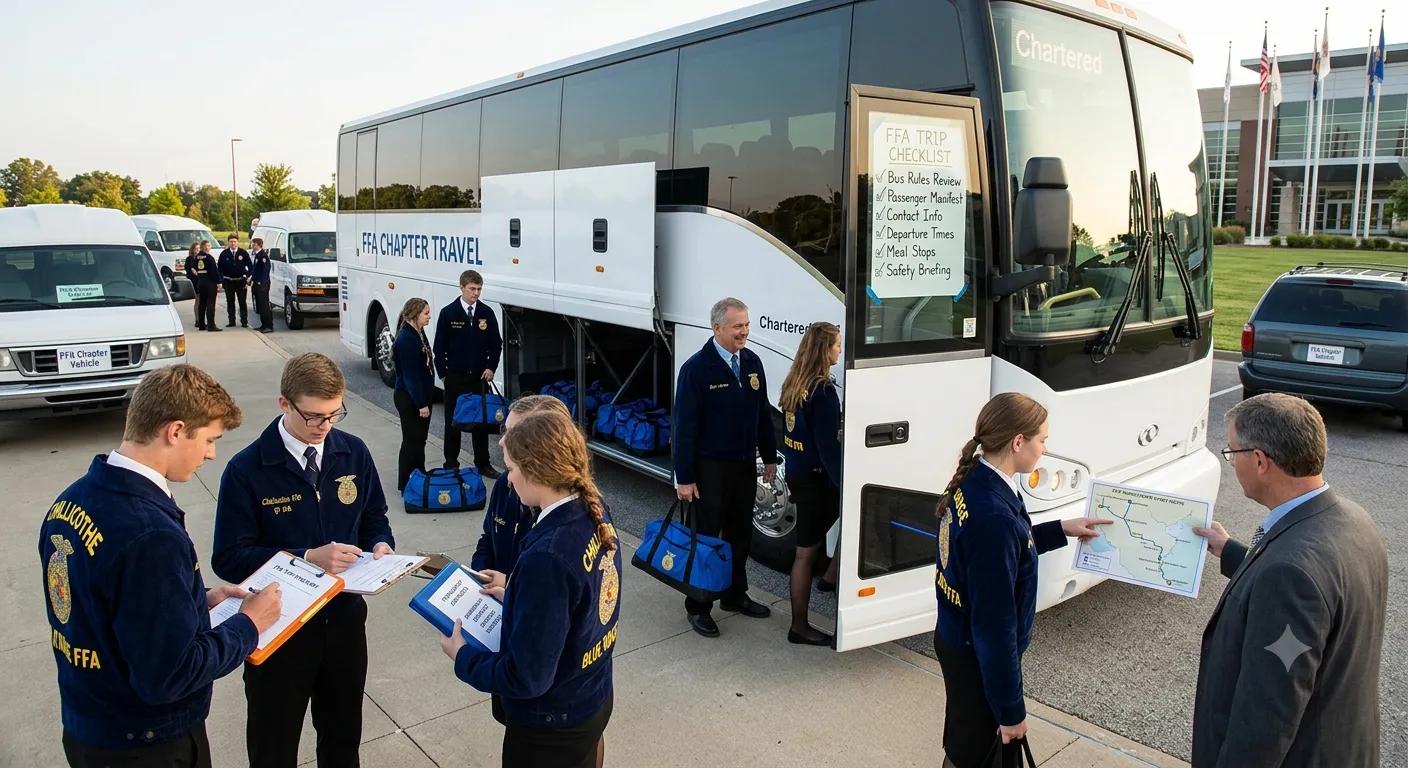
FFA Chapter Trip Planning: A Complete Guide to Group
FFA chapter trips give students opportunities to strengthen leadership skills, learn about modern agriculture, participate in competitions, and build lasting connections with fellow members. From local farm visits to regional career development events and national conventions, every trip requires reliable transportation and careful coordination. Effective group transportation planning for FFA chapters helps advisors organize travel schedules, manage costs, maintain student safety, and ensure participants arrive ready for their educational activities.

Understand Your Chapter's Transportation Needs
The first step in planning an FFA chapter trip is identifying the group's specific requirements. Organizers should determine the destination, number of students, number of chaperones, travel distance, event duration, and expected departure and return times.
Different activities require different arrangements. A short agricultural facility visit may need only a few hours of transportation, while a statewide convention can involve multiple venues, hotel transfers, and several days of travel. Identifying these details early helps advisors select an appropriate vehicle and develop a realistic itinerary.
Organizers should also check event registration deadlines, arrival requirements, and any restrictions on bus access at the destination. These details can influence departure times, pickup locations, and the overall transportation budget.
Choose the Right Charter Bus for Your Group
Vehicle selection plays an important role in keeping group travel comfortable and organized. A minibus may work well for a small FFA officer team or a local educational visit. Larger groups attending competitions, leadership conferences, and statewide conventions may benefit from a full-size charter bus.
Charter bus transportation allows students, advisors, and chaperones to travel together rather than coordinating several personal vehicles. This can simplify attendance checks, reduce confusion about directions, and make communication easier throughout the journey.
Before booking, organizers should confirm passenger capacity, luggage space, seat belts, accessibility requirements, and available amenities. Students attending agricultural competitions may need extra room for presentation materials, project supplies, uniforms, or personal luggage.
For trips involving rural farms or agricultural facilities, the vehicle must also be suitable for the access roads, turning areas, and unloading locations. Confirming these conditions with the destination and transportation provider helps prevent last-minute complications.
Develop a Practical Travel Itinerary
A detailed itinerary keeps transportation aligned with the event schedule. Advisors should work backward from the required arrival time and account for driving distance, traffic, boarding procedures, rest stops, and parking.
For example, an FFA chapter attending a morning judging competition should plan to arrive early enough for registration, orientation, and equipment preparation. Groups attending a multi-location event should include realistic travel times between venues instead of assuming every transfer will be immediate.
Pickup and drop-off locations should be specific and easy for participants to identify. Organizers should share the exact meeting point, boarding time, departure time, destination address, and expected return schedule with students and parents.
When the itinerary changes, the trip coordinator should communicate updates promptly to the transportation provider and relevant participants. A single, current schedule helps everyone understand where they need to be and when.
Make Student Safety a Priority
Student safety should guide every transportation decision. FFA advisors should work with a reputable transportation company and verify applicable licensing, insurance, vehicle inspection, and driver qualification requirements before confirming a reservation.
Before departure, students should receive clear instructions about safe passenger behavior. They should remain seated while the vehicle is moving, follow the driver's directions, keep aisles clear, and treat other passengers respectfully.
Adult supervision is equally important. Each bus should have an assigned advisor or approved chaperone who understands the group's schedule, manages attendance, and knows how to contact the trip coordinator.
Organizers should maintain appropriate emergency contact information and establish procedures for delays, severe weather, medical concerns, and unexpected itinerary changes. Longer trips should also account for planned breaks and applicable driver-hours requirements.
When visiting farms or agricultural facilities, advisors should communicate any additional safety instructions related to livestock, machinery, uneven ground, or restricted areas. Proper preparation helps students enjoy educational experiences while respecting their surroundings.
Organize Rosters and Parent Communication
Accurate passenger records help organizers account for every student throughout the journey. Before departure, advisors should prepare a roster identifying participating students and the adults responsible for supervising them.
Headcounts should take place before leaving the school, after scheduled stops, upon arrival at event venues, and before the return journey. For multiple-bus trips, each vehicle should have a designated supervisor and an accurate passenger list.
Parents and guardians should receive transportation information well in advance. Important details include departure and return times, pickup locations, the trip coordinator's contact information, supervision arrangements, and procedures for reporting a change in participation.
Student information should be handled responsibly. Personal details and emergency contacts should be shared only with authorized individuals who need them for trip coordination and safety.
Prepare for Equipment, Meals, and Comfort
FFA trips frequently involve activities that require specialized materials. Students may need agricultural project supplies, notebooks, laptops, competition uniforms, appropriate footwear, or presentation materials. Advisors should communicate packing requirements early and explain how equipment should be stored during travel.
For longer journeys, organizers should consider meal breaks, drinking water, rest stops, and the availability of onboard amenities. Climate control, comfortable seating, and adequate storage can make a substantial difference when students travel several hours before participating in demanding activities.
Amenities vary between vehicles, so organizers should confirm specific features rather than assuming they are included. If a participant requires an accessible vehicle or another transportation accommodation, the chapter should communicate those needs to the provider before booking.
Clear expectations about cleanliness, food, noise, and personal belongings can also help create a more comfortable environment for everyone.
Build a Realistic Transportation Budget
Transportation expenses can represent a significant portion of an FFA chapter's trip budget. Costs may include the vehicle rental, driver time, mileage, tolls, parking, overnight arrangements, and additional transportation between event locations.
Organizers should request detailed quotations and clarify what each estimate includes. Comparing providers on total cost, vehicle suitability, service reliability, and safety practices helps chapters make informed decisions.
Fundraising campaigns, school activity budgets, approved chapter funds, and local business sponsorships may help cover expenses. When multiple chapters attend the same event, sharing a charter bus can sometimes reduce per-person costs, provided the schedules and pickup locations are compatible.
Booking early can provide more vehicle choices and time to secure financial approval. A contingency allowance can also help the chapter manage unexpected expenses without disrupting other activities.
Coordinate With Event Venues and Transportation Providers
Successful group travel depends on clear communication between chapter advisors, drivers, parents, and event organizers. Before departure, confirm the reservation, pickup arrangements, destination access, parking instructions, and return schedule.
For conventions or multi-day events, verify hotel loading zones and transportation requirements between different venues. Some locations restrict large vehicles to designated entrances or require advance parking arrangements.
The chapter's transportation coordinator should serve as the main contact for schedule updates and logistical questions. This helps avoid conflicting instructions and allows the driver to receive accurate information.
After the event, advisors can review the trip to identify improvements for future transportation arrangements. Evaluating timing, communication, costs, and passenger comfort helps make subsequent trips more efficient.
Conclusion
FFA chapter trip planning involves much more than arranging a ride. It requires suitable transportation, realistic scheduling, careful budgeting, clear communication, and consistent attention to student safety.
By identifying transportation needs early, choosing the right vehicle, organizing passenger records, preparing students, and coordinating with transportation providers, FFA advisors can make group travel more reliable and manageable. A well-planned journey allows students to focus on agricultural education, leadership development, competitions, and meaningful experiences with their chapter.
With thoughtful preparation, every FFA trip can become a safer, more comfortable, and more rewarding part of the student experience.