

Employee Transportation Planning: A Guide to Shuttle
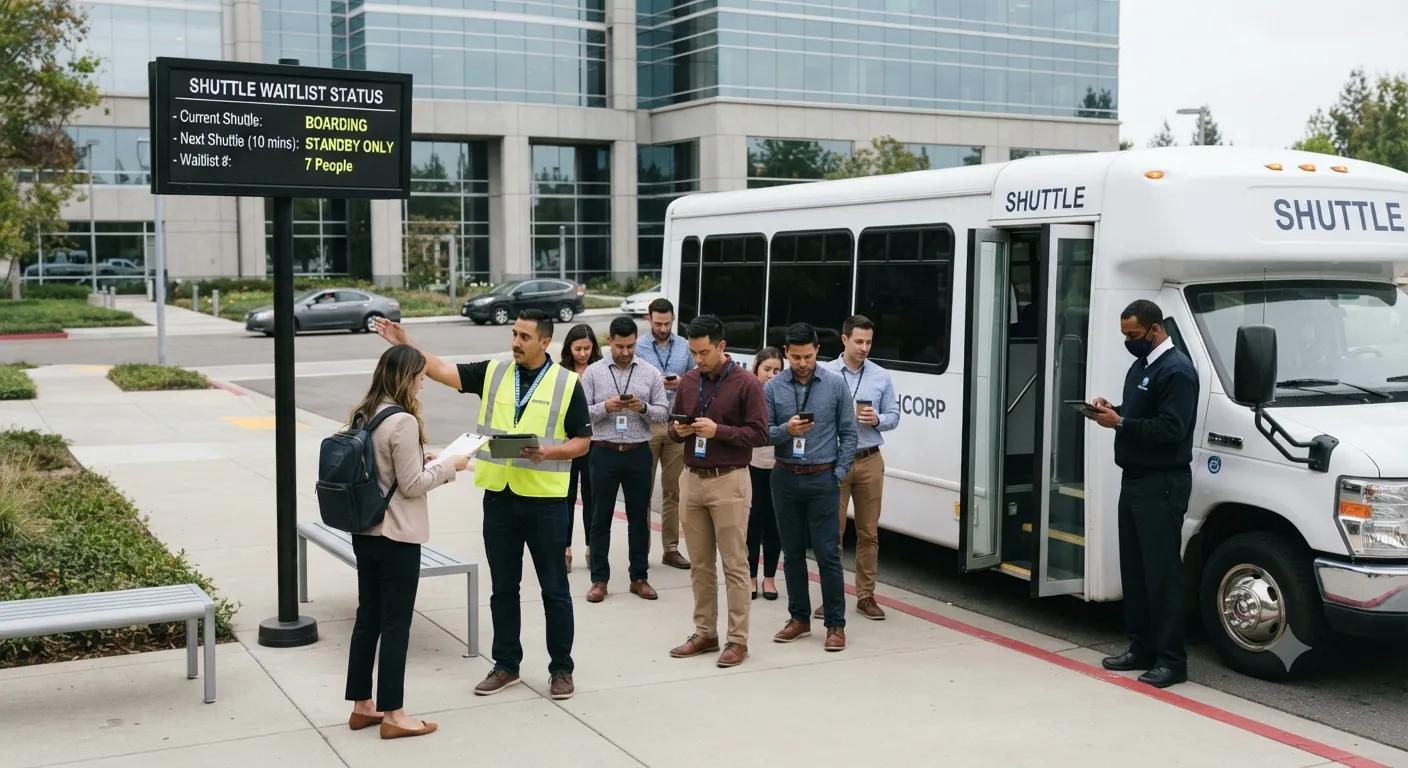
Reliable employee transportation can make daily commuting easier while helping businesses support attendance, reduce parking challenges, and provide employees with a dependable way to reach the workplace. As a company grows, however, its transportation needs can change quickly. More employees may begin using the shuttle, certain departures may become overcrowded, and waitlists may become part of the daily process. Effective employee shuttle planning can help businesses manage these challenges while keeping transportation efficient and organized.

Employee transportation planning is not simply about selecting a bus with enough seats. Businesses need to consider actual ridership, departure schedules, pickup locations, route duration, vehicle capacity, cancellations, and future workforce growth. When these factors are reviewed together, transportation managers can create a shuttle program that responds to employee demand without unnecessary capacity or recurring seating problems.
Why Employee Transportation Planning Matters
A shuttle program may work well when a company first introduces it, but employee transportation demand can change as the workforce grows. New hires, additional shifts, changes in office attendance, and expanded operations can all increase the number of employees who depend on shuttle services.
When demand increases without corresponding capacity planning, employees may regularly encounter full vehicles or long waitlists. This can make the commuting experience less predictable and create additional administrative work for transportation coordinators.
A structured transportation plan allows companies to monitor demand and make adjustments before capacity issues become widespread. Instead of reacting whenever a bus reaches its seating limit, businesses can use ridership information to anticipate where additional transportation resources may be needed.
Understand Actual Shuttle Capacity
Understanding capacity starts with knowing how many passengers each vehicle can accommodate. However, the total number of seats available across an entire shuttle program does not necessarily show whether the service has enough capacity.
A company may operate several departures throughout the morning. One trip might be completely full while another has plenty of available seats. Looking only at total daily ridership could make the program appear balanced even though one specific departure has a significant shortage.
Transportation managers should therefore review capacity by individual departure. This provides a clearer picture of when and where demand is highest and helps businesses make targeted scheduling decisions.
Track Employee Ridership Patterns
Accurate ridership information is one of the most useful tools for employee transportation planning. Businesses should compare registered passengers with actual riders to determine how consistently employees use the service.
Regular tracking can reveal patterns related to specific days, departure times, pickup locations, or employee shifts. For example, a morning trip immediately before a major shift change may consistently have more passengers than a later departure.
Understanding these patterns makes it easier to determine whether the best solution is a larger vehicle, another departure, a route adjustment, or a different pickup schedule.
Ridership data can also help businesses identify underused trips. If one departure regularly has many empty seats, there may be an opportunity to redistribute demand rather than automatically increasing overall transportation capacity.
Create a Clear Shuttle Waitlist Process
When demand exceeds available seating, a waitlist can provide an organized way to manage excess riders. However, the process should be clear and consistent.
Employees should know how to join the waitlist, how available seats are assigned, and how they will be notified when a seat becomes available. A simple first-come, first-served system may work well for some organizations, while others may establish different priorities based on their operational requirements.
The most important factor is consistency. Employees should understand the process before a capacity problem occurs, rather than learning the rules only after they have been placed on a waitlist.
A clear process can reduce confusion and make it easier for transportation coordinators to manage last-minute cancellations and open seats.
Connect Waitlists With Cancellation Management
Cancellations can significantly affect shuttle capacity. When an employee reserves a seat but does not travel, that space may remain unused even though another employee is waiting.
Businesses can reduce this problem by creating a simple cancellation policy. Employees should know how and when to cancel their reservations and what happens when a seat becomes available.
If a cancellation occurs early enough, the transportation coordinator can offer the seat to someone on the waitlist. This helps maximize vehicle utilization while giving additional employees an opportunity to use the shuttle.
Consistent cancellation tracking can also help businesses understand the difference between scheduled demand and actual transportation demand.
Choose the Right Vehicle Size
Vehicle selection plays an important role in managing shuttle capacity. A business may consider a shuttle bus, minibus, or full-size charter bus depending on passenger volume and route requirements.
Larger vehicles can provide more seats, but size should not be the only consideration. Pickup locations, road conditions, parking areas, accessibility needs, loading zones, and route length can all influence the most practical vehicle choice.
If only one departure experiences high demand, a larger vehicle may solve the problem. In other situations, operating another departure may provide more flexibility without requiring a much larger vehicle.
The right approach depends on the company's ridership patterns and transportation schedule.
Consider Additional Shuttle Departures
Adding another departure can be an effective solution when a specific trip regularly reaches capacity. Instead of trying to transport every employee during the same time window, businesses can distribute riders across multiple departures.
This approach requires careful scheduling. Transportation managers need to consider travel time, traffic conditions, boarding time, unloading, and the amount of time required for the vehicle to complete one trip before starting another.
Employee work schedules should also be considered. If employees have limited flexibility regarding arrival times, additional departures may need to be closely aligned with shift schedules.
Review Pickup Locations and Routes
Pickup locations can influence both capacity and efficiency. A route with several high-demand stops may fill quickly, while another route serving fewer employees may have significant unused capacity.
Reviewing boarding numbers by stop can help businesses identify these differences. Transportation managers may then consider adjusting pickup locations, changing departure times, or redistributing employees across routes.
Route changes should also consider convenience. A transportation solution should not improve capacity at the expense of making the commute unnecessarily difficult for employees.
Plan for Future Workforce Growth
Employee transportation planning should account for future changes rather than focusing only on today's ridership.
Companies expecting workforce growth should consider how additional employees could affect existing shuttle routes. New shifts, office expansions, seasonal hiring, and changes in workplace attendance can all influence transportation demand.
Using historical ridership and waitlist data can help businesses estimate future capacity requirements. Planning ahead can also provide more time to evaluate vehicles, routes, schedules, and transportation providers.
Communicate Changes Clearly
Even the best transportation plan can create problems if employees do not understand how it works. Companies should communicate shuttle schedules, pickup locations, reservation procedures, waitlist policies, and changes to service clearly.
When a departure is added or a vehicle changes, employees should receive the updated information in advance whenever possible. Clear communication helps prevent missed trips and reduces uncertainty for employees who depend on shuttle transportation.
Build a Flexible Transportation Strategy
Employee transportation needs are not static. A company may experience higher demand during certain periods and lower demand during others. Regularly reviewing ridership and capacity allows transportation managers to adapt accordingly.
A flexible strategy may involve changing vehicle sizes, adding departures, adjusting routes, or modifying waitlist procedures. The objective is to maintain a balance between employee convenience and efficient use of transportation resources.
Conclusion
Effective employee transportation planning helps businesses manage shuttle capacity while preparing for changing rider demand. By tracking actual ridership, monitoring waitlists, managing cancellations, reviewing routes, selecting suitable vehicles, and planning for workforce growth, companies can create a more dependable employee transportation program.
A waitlist should be viewed as useful planning information rather than simply a transportation problem. When businesses use that information to understand demand and make timely adjustments, they can improve shuttle reliability while creating a smoother commuting experience for employees.