

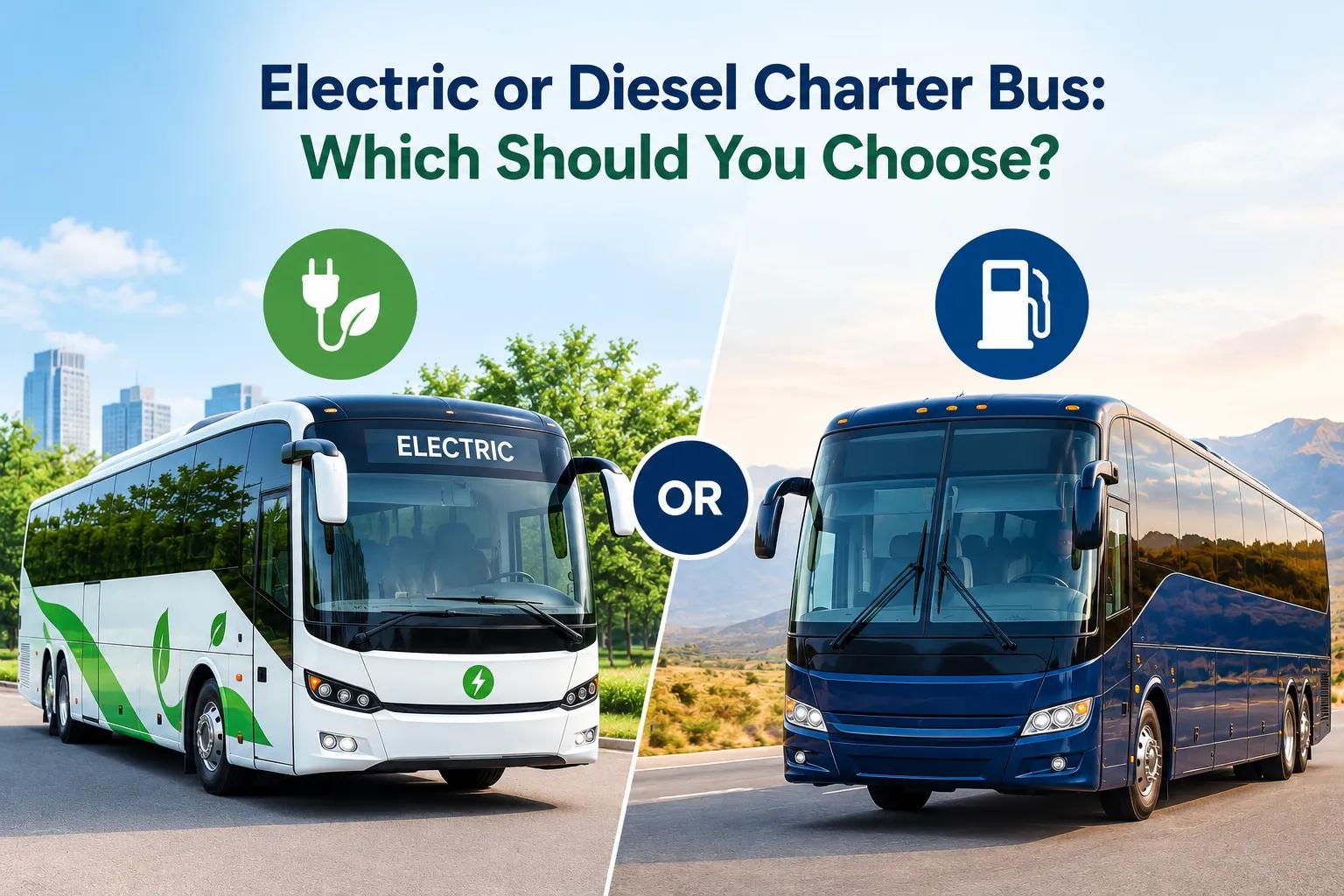
Electric or Diesel Charter Bus: Which Should You Choose?
Choosing the right charter bus can make group travel more comfortable, efficient, and convenient. With electric buses becoming more common, travelers now have another option besides traditional diesel-powered coaches. Each type has its own strengths when it comes to cost, range, charging, refueling, comfort, and environmental impact. If you are comparing electric and diesel charter bus options, understanding the differences can help you make a better decision for your trip.
The right choice depends on your destination, total mileage, travel schedule, group size, and available infrastructure. An electric bus may be ideal for a predictable local itinerary, while a diesel coach can offer greater flexibility for long-distance travel.

What Is an Electric Charter Bus?
An electric charter bus uses rechargeable batteries and electric motors instead of a conventional diesel engine. Because it does not produce tailpipe emissions while operating, it can be an attractive option for organizations and groups interested in cleaner transportation.
Electric buses are also generally quieter than diesel-powered coaches. This can create a more peaceful ride for passengers, particularly on city routes, hotel shuttles, corporate transportation, and short-distance group trips.
However, electric buses require planned access to charging infrastructure. The actual range can vary depending on the vehicle, passenger load, weather, terrain, battery capacity, and driving conditions.
What Is a Diesel Charter Bus?
Diesel charter buses have been a popular choice for group transportation for decades. They use diesel engines and are commonly used for everything from local events to interstate and multi-day trips.
One of their biggest advantages is refueling convenience. Diesel fuel stations are widely available, allowing buses to quickly refuel and continue traveling. This makes diesel coaches particularly useful for long routes and destinations where charging infrastructure may be limited.
Diesel buses can also provide substantial luggage capacity and are available with amenities such as reclining seats, climate control, Wi-Fi, power outlets, and onboard restrooms, depending on the vehicle.
Electric vs. Diesel Charter Bus: Cost Comparison
Cost is an important consideration, but comparing these buses requires looking beyond the initial price.
Electric buses generally have higher upfront vehicle costs, but their energy and maintenance expenses can potentially be lower over time. Electric drivetrains have fewer conventional moving components, which can reduce certain routine maintenance requirements.
Diesel buses typically have established operating systems and infrastructure. However, fuel prices can fluctuate, and diesel engines require regular servicing and maintenance.
For charter customers, rental prices depend on factors such as trip distance, rental duration, vehicle type, passenger capacity, travel dates, and availability. Therefore, you should request a complete quote instead of assuming that one powertrain will always cost less.
The broader economics of electric buses can also vary significantly according to route length and utilization. Studies of private intercity operations have found electric buses can have lower operating costs on suitable routes, particularly where charging infrastructure and predictable schedules are available.
Which Charter Bus Has Better Range?
Range is one of the biggest differences between electric and diesel buses.
Diesel coaches generally have an advantage for long-distance journeys because they can cover significant distances before needing fuel. Refueling can also be completed relatively quickly, reducing downtime during a busy itinerary.
Electric buses can work extremely well on routes where the daily mileage is predictable and charging can be scheduled. However, longer journeys require careful planning around charging locations and charging time.
For example, an electric coach may be suitable for transporting a corporate group between hotels, offices, and an event venue. A diesel coach may be more convenient for a group traveling across several states.
Charging vs. Refueling
Electric and diesel buses require very different approaches to keeping the vehicle on the road.
Electric buses need access to compatible charging equipment. Depending on the charging system and battery size, charging can take considerably longer than filling a diesel fuel tank. Route planners therefore need to consider when and where the bus can recharge.
Diesel buses can usually use the existing network of fuel stations. A quick fuel stop can allow the coach to continue its journey without significantly changing the itinerary.
This difference becomes particularly important when your group has a strict schedule. If you have multiple destinations and limited downtime, the availability of charging infrastructure should be considered before selecting an electric coach.
Which Is More Environmentally Friendly?
Electric buses have a clear advantage when it comes to tailpipe emissions because they produce none during operation. They can therefore be appealing for groups, companies, and organizations with sustainability goals.
Diesel buses produce exhaust emissions, although modern diesel vehicles incorporate emissions-control systems designed to reduce pollutants.
The overall environmental impact of an electric bus can also depend on how its electricity is generated. Nevertheless, electric transportation can play an important role in reducing local air pollution and noise, particularly in busy urban areas.
Passenger Comfort: Electric vs. Diesel
Both electric and diesel charter buses can provide a comfortable travel experience.
Electric buses are typically quieter and offer smooth acceleration, which can make the journey more relaxing. This can be especially valuable for city trips, airport transportation, corporate shuttles, and short group excursions.
Diesel motorcoaches, meanwhile, have a long-established reputation for long-distance passenger transportation. Many models offer spacious seating, climate control, large luggage compartments, restrooms, entertainment systems, and power outlets.
Ultimately, comfort depends more on the specific vehicle and its amenities than on whether the bus is electric or diesel.
Which Bus Is Better for Different Trips?
Corporate Travel
Electric buses can be a good fit for corporate events, employee shuttles, conferences, and hotel transportation when routes are relatively short and predictable.
Diesel coaches may be preferable when employees or clients need to travel long distances between cities.
School Trips
Electric buses can provide quiet transportation for local school outings and predictable routes. Diesel coaches may be more practical for long educational tours involving multiple destinations.
Weddings
Wedding groups often travel between hotels, ceremony venues, and reception locations. An electric bus can be suitable when these locations are close together and charging can be planned.
For weddings involving multiple cities or longer distances, diesel may provide greater flexibility.
Sports Events
Sports teams frequently travel with passengers, equipment, and luggage. For tournaments and interstate competitions, diesel buses can be particularly practical because of their range and quick refueling.
Long-Distance Tours
For multi-day tours and cross-country travel, diesel charter buses remain a practical choice because of their established fueling infrastructure and long-distance capability.
When Should You Choose an Electric Charter Bus?
An electric charter bus may be the right choice when your group has:
Short or predictable routes
Convenient charging access
Flexible charging opportunities
Sustainability goals
A preference for quiet transportation
Local or regional travel requirements
Electric buses can be particularly effective when the vehicle follows a consistent schedule that allows charging to be incorporated without disrupting the itinerary.
When Should You Choose a Diesel Charter Bus?
A diesel charter bus may be better when your trip involves:
Long-distance highway travel
Multiple states or destinations
Rural locations
Limited charging infrastructure
Tight travel schedules
Substantial luggage or equipment
Multi-day road trips
Diesel remains especially practical when flexibility is more important than having access to charging infrastructure.
How to Make the Right Choice
Before booking, consider your complete itinerary rather than simply choosing the newest technology.
Start by calculating your approximate mileage. Then consider where the bus will stop, whether charging is available, how much luggage your passengers will carry, and how much flexibility you have in your schedule.
You should also ask the charter company which vehicles are actually available for your travel dates. Not every operator offers electric coaches, and electric models can vary significantly in range and charging requirements.
Most importantly, explain your complete itinerary to the provider. A professional charter company can help determine whether an electric or diesel vehicle is more practical for the route.
Final Thoughts
There is no single answer to whether an electric or diesel charter bus is better. Electric buses can offer quiet operation, zero tailpipe emissions, and potentially lower operating costs on suitable routes. Diesel buses provide excellent long-distance flexibility, quick refueling, and access to a mature fueling network.
For short, predictable trips with charging available, an electric charter bus can be an excellent option. For long-distance, multi-day, or remote travel, a diesel charter bus may be the more convenient choice.
By comparing your route, mileage, schedule, budget, charging availability, passenger needs, and desired amenities, you can select the charter bus that best matches your group's travel plans.