

Efficient VIP, Staff, and Attendee Transportation Strategies
Planning transportation for a successful event requires more than booking enough buses for the expected number of guests. VIPs, staff members, speakers, sponsors, performers, and attendees often have different schedules and priorities. If everyone is placed on the same transportation plan, staff may arrive too late to prepare, VIPs may face unnecessary delays, and attendees may encounter crowded vehicles. A carefully designed event transportation strategy can provide the right level of separation while keeping every transportation stream connected.

Understand the Needs of Each Passenger Group
The first step toward efficient event transportation is identifying what each group actually needs. General attendees usually prioritize convenience, capacity, and predictable schedules. They may travel between hotels, parking areas, transportation hubs, and the event venue during busy arrival and departure periods.
Staff members have a different schedule. Registration employees, security teams, catering crews, volunteers, audiovisual technicians, and event coordinators may need to arrive well before attendees. Some staff members may also remain at the venue after the event ends.
VIPs require greater flexibility and privacy. Executives, keynote speakers, sponsors, performers, and special guests may have individual meetings, rehearsals, presentations, or security requirements. Their transportation should be based on their responsibilities rather than the general attendee schedule.
Understanding these differences allows planners to create an efficient system without separating groups more than necessary.
Determine the Right Level of Transportation Separation
Efficient transportation does not always require completely separate vehicles for every group. The appropriate level of separation depends on the event's size, schedule, venue, privacy requirements, passenger volume, and budget.
For smaller events, VIPs and staff may be able to use the same vehicles as attendees while receiving reserved seating or priority boarding. Larger events may benefit from separate departures using the same fleet.
For example, staff could have an early morning departure before attendee service begins, while VIPs could receive a dedicated vehicle for a specific presentation. High-profile events may require separate vehicles, routes, and loading areas.
The objective is to create enough separation to solve operational problems without adding unnecessary transportation costs.
Build Staff Transportation Around Call Times
Staff transportation should be based on when employees need to report rather than when attendees arrive. Organizers should collect call times from every department before finalizing the transportation schedule.
Registration teams may need to arrive hours before the doors open. Security personnel and production crews can have even earlier requirements, while catering teams may follow delivery and setup schedules.
An early staff shuttle can transport employees before attendee service begins. Long conferences and festivals may also require transportation between staff shifts.
The return journey should receive the same attention. Employees handling cleanup, security, equipment breakdown, or event management may remain at the venue after attendees have departed. A late staff run can ensure they have dependable transportation when their work is complete.
Create Flexible Transportation for VIPs
VIP transportation should emphasize precision, privacy, and flexibility. A keynote speaker may need to arrive at a private entrance before the event begins, while an executive could require transportation to an off-site meeting during the program.
Dedicated transportation can make these changes easier to manage. Rather than forcing VIPs to follow a fixed attendee shuttle schedule, planners can create individual pickup and drop-off arrangements.
Vehicle selection should reflect the size of the group. A small group of executives may be comfortable in a premium van, while a larger group of sponsors or special guests may require an executive coach.
A dedicated greeter can also improve the experience. The greeter can meet the vehicle, confirm the passenger has arrived, and escort the guest to the correct venue location.
Protect VIP Privacy and Information
Transportation planning can involve sensitive details such as hotel locations, phone numbers, arrival times, and private itineraries. This information should only be provided to people who need it to perform their responsibilities.
The transportation coordinator, assigned driver, greeter, event representative, and authorized security personnel may require detailed information. Broader transportation documents can instead use role-based identifiers such as “Speaker 1” or “Executive Group.”
Public vehicle signage should also remain discreet when privacy is important. This approach keeps the transportation system organized without unnecessarily exposing personal information.
Keep Attendee Transportation Simple
Attendee transportation should be the easiest part of the system for guests to understand. They should know where to board, when the vehicle departs, and where it will take them.
Large events may use continuous shuttle loops, scheduled departures, or a combination of both. The right approach depends on hotel locations, passenger volume, venue layout, and event timing.
Clear signage can help passengers identify vehicles quickly. Route numbers, destination names, and simple shuttle identifiers can reduce confusion when multiple buses are operating.
Staff members positioned at major pickup locations can also assist passengers and direct them toward the correct vehicle.
Coordinate Loading Zones With the Venue
Transportation efficiency depends heavily on where vehicles load and unload passengers. Event planners should work with venue management and security before the event to establish appropriate locations for each passenger group.
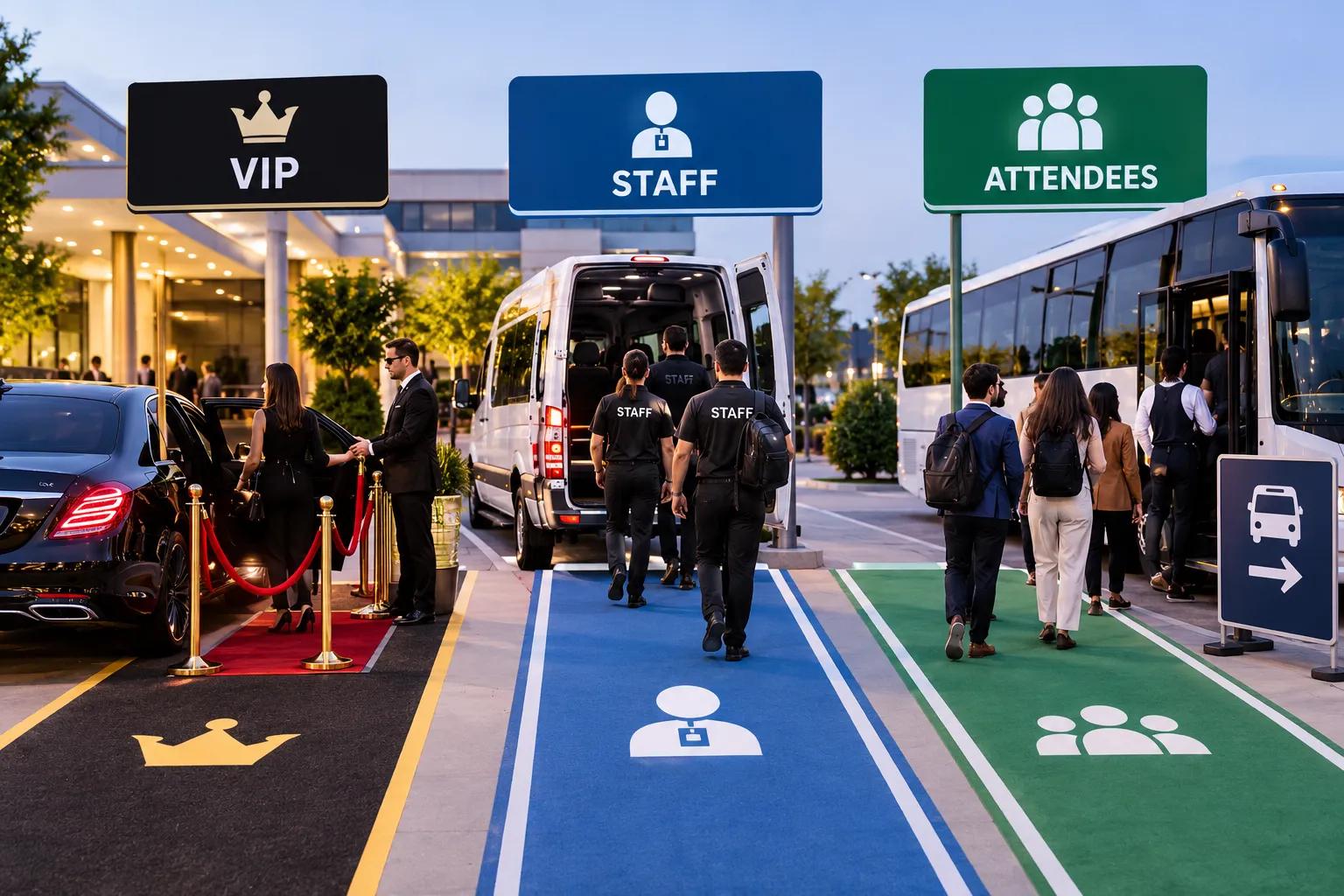
Attendee shuttles may use a main entrance or designated public transportation lane. Staff vehicles can use a service entrance or loading area, while VIP vehicles may use a private entrance or controlled driveway when permitted.
Drivers should receive detailed access instructions before event day. These instructions should explain where vehicles can enter, wait, load, unload, and exit.
Separating loading areas reduces congestion and prevents VIP, staff, and attendee transportation from competing for the same curb space.
Select Vehicles Based on Passenger Requirements
Choosing the correct vehicle size is another important efficiency strategy. Large attendee groups may require full-size charter buses or multiple shuttle vehicles during peak periods.
Staff groups can use full-size coaches, minibuses, or smaller vehicles depending on their size and equipment requirements. Production crews may need additional storage space for supplies, while registration teams may have fewer equipment needs.
VIP transportation generally focuses on comfort, privacy, and flexibility rather than maximum capacity. A premium vehicle can be more practical for a small executive group than a large coach.
Accessibility should also be included in vehicle selection. If a passenger requires an accessible vehicle, that requirement should be confirmed before transportation assignments are finalized.
Use One Central Transportation Coordinator
Separating transportation streams does not mean they should operate without communication. One transportation coordinator should maintain oversight of VIP, staff, and attendee services.
A master schedule can include vehicle assignments, drivers, departure times, pickup locations, and special instructions. Individual groups can receive only the information relevant to them while the transportation coordinator maintains the complete picture.
Centralized management is especially useful when unexpected situations occur. If a vehicle is delayed, a loading zone becomes unavailable, or a VIP schedule changes, the coordinator can make adjustments without disrupting the entire transportation system.
Prepare for Schedule Changes
Even well-organized events can experience unexpected changes. Presentations may run late, traffic can affect arrival times, and VIP schedules may change during the day.
Transportation plans should include reasonable time buffers and a clear process for communicating changes. When appropriate, VIP vehicles can remain available for a predetermined standby period.
Attendee transportation should also be monitored during peak periods. If one pickup location becomes crowded, transportation staff can determine whether additional vehicles or adjusted departure frequencies are necessary.
Preparing for these situations before the event reduces pressure on organizers when changes occur.
Manage Costs Without Reducing Service Quality
Efficient transportation planning can provide separate services without unnecessarily increasing the budget. Vehicles may be scheduled to serve different passenger groups at different times when driver schedules and operational requirements allow.
A coach used for an early staff departure could later become part of the attendee shuttle operation. Another vehicle could handle a late staff run after attendee service ends.
Right-sizing vehicles also helps control expenses. A small VIP group does not necessarily need a full-size coach, while a large staff team may justify a dedicated bus.
Using one transportation provider for multiple transportation streams can further simplify communication and fleet coordination.
Include Accessibility From the Beginning
Accessibility should be part of every transportation plan rather than an afterthought. VIPs, staff members, speakers, volunteers, and attendees may all have different mobility requirements.
Planners should evaluate the entire passenger journey, including the pickup point, vehicle boarding area, drop-off location, and route into the venue.
An accessible vehicle is only effective if the surrounding loading and venue areas are also accessible. Addressing these details during the planning stage helps prevent last-minute changes.
Review the Plan Before Event Day
A final transportation review should take place before vehicles begin operating. Organizers should confirm passenger counts, vehicle assignments, driver information, pickup locations, venue access, staff call times, VIP schedules, and emergency contacts.
A venue walkthrough can help identify potential issues with traffic flow, vehicle staging, pedestrian movement, and loading areas.
Drivers and transportation staff should also have a clear communication process for event-day changes. Everyone should know who has authority to modify schedules and how those changes will be communicated.
Conclusion
Efficient VIP, staff, and attendee transportation depends on recognizing that different passenger groups have different needs. Attendees generally need simple and high-capacity shuttle service, staff members need transportation based on their work schedules, and VIPs often require greater flexibility, privacy, and personalized service.
By selecting the appropriate level of separation, choosing properly sized vehicles, coordinating loading areas, protecting sensitive information, establishing centralized communication, and preparing for schedule changes, event planners can create a transportation system that operates smoothly.
Whether organizing a conference, convention, corporate gathering, gala, festival, or private event, an efficient transportation strategy can reduce delays, improve communication, and create a better experience for every passenger from the first pickup to the final departure.