

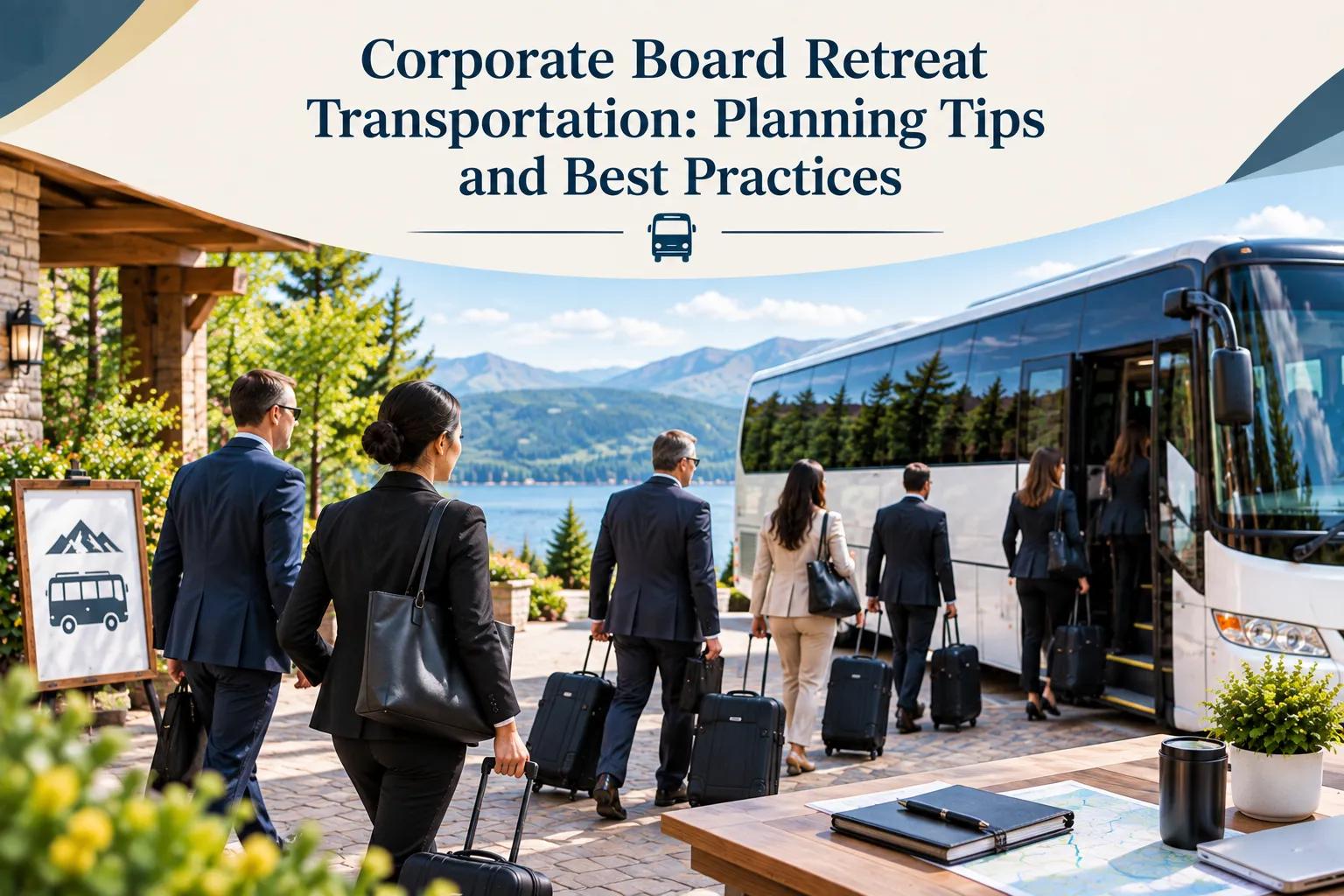
Corporate Board Retreat Transportation: Planning Tips
A corporate board retreat brings directors, executives, and senior leadership together for strategic discussions, planning sessions, and important organizational decisions. Since participants may travel from different cities and move between hotels, meeting facilities, restaurants, and activity venues, transportation should be planned as carefully as the retreat agenda. Effective corporate retreat transportation coordination can help create a smoother travel experience while keeping the group organized throughout the event.

Transportation planning should begin before the retreat schedule is finalized. When travel information, vehicle requirements, pickup locations, and communication responsibilities are considered early, organizers can reduce unnecessary delays and make it easier to respond when plans change.
Begin With the Corporate Retreat Schedule
The transportation plan should be built around the complete retreat itinerary. Review the schedule and identify every location that board members will need to visit during the event.
A corporate retreat may include airport transfers, hotel departures, boardroom meetings, off-site strategy sessions, private dinners, team activities, and evening events. Each movement should have a clear transportation arrangement connected to the expected start and end times.
It is also important to allow flexibility. Board discussions can sometimes continue beyond their scheduled ending time, while traffic and venue access can affect travel. Reasonable buffer time between activities can make the transportation schedule more adaptable.
Collect Participant Travel Information
Board members often arrive from different cities and may have varying flight schedules. Gathering travel information early gives organizers a better understanding of the group's transportation needs.
Airport arrival times can determine whether participants can share transfers or require separate vehicles. Similar planning should be used for departure transportation at the end of the retreat.
Hotel information should also be collected. If all participants are staying at one property, transportation can be centralized. When several hotels are involved, each location should have a confirmed pickup time and designated meeting area.
Assign a Dedicated Transportation Contact
One person should oversee transportation communication during the retreat. This could be an executive assistant, event planner, corporate travel manager, or another member of the organizing team.
The designated coordinator can communicate with the transportation provider, drivers, hotels, venues, and participants. Having a central point of contact reduces the chance of conflicting instructions and makes it easier to handle last-minute changes.
The coordinator should have access to the latest itinerary, transportation schedule, vehicle information, hotel details, and important contact information.
Select Vehicles Based on the Group
The appropriate vehicle depends on the number of participants, travel distance, luggage requirements, and overall schedule.
A small group of directors may need an executive-style vehicle or minibus, while a larger board retreat may require a full-size charter bus. If participants will spend considerable time traveling between locations, comfortable seating, climate control, Wi-Fi, and power outlets can provide additional convenience.
Airport transfers require special consideration because participants may have luggage. The selected vehicle should provide sufficient storage space while maintaining a comfortable passenger area.
Create a Detailed Transportation Timeline
A transportation timeline should account for every scheduled movement. Include hotel departures, airport pickups, meeting transfers, meals, off-site activities, evening transportation, and return trips.
The schedule should not depend on every activity ending exactly on time. Adding reasonable travel buffers gives the group more flexibility when meetings run longer or traffic creates delays.
The transportation timeline should also identify who is responsible for communicating changes. This prevents several people from contacting the driver or transportation provider with different instructions.
Confirm Pickup Locations With Hotels and Venues
Pickup locations should be confirmed before the retreat begins. Some hotels, conference centers, and private venues have designated loading areas or restrictions for larger vehicles.
The transportation coordinator should know exactly where the vehicle will arrive and where participants should wait. These details should be provided to board members before each scheduled departure.
Clear pickup instructions are particularly useful when participants are unfamiliar with the property. A simple and consistent meeting location can prevent unnecessary delays.
Plan Transportation Between Multiple Venues
Corporate board retreats often involve more than one meeting location. Participants may travel from the hotel to a conference center, corporate office, private restaurant, or another event venue.
Every movement should be included in the transportation schedule. The coordinator should also confirm whether the vehicle will wait at the destination or return later for pickup.
If the vehicle is expected to wait, the transportation provider should be informed about the anticipated duration. Clear communication helps the provider plan the service appropriately.
Maintain a Professional Transportation Experience
Transportation should match the professional nature of a corporate board retreat. Clean vehicles, courteous drivers, timely communication, and organized scheduling can contribute to a comfortable experience for directors and executives.
Privacy can also be important. Transportation providers generally need information such as pickup locations, schedules, and destinations, but they do not necessarily need access to confidential details about board discussions or corporate strategy sessions.
Establishing clear information-sharing procedures before the event can help maintain an appropriate level of privacy while ensuring the transportation team has what it needs to provide the service.
Prepare for Changes During the Retreat
A carefully prepared transportation plan should still allow for changes. A board meeting may run longer than expected, an activity may move to another location, or a participant may need a different transportation arrangement.
The transportation coordinator should have a direct communication channel with the transportation provider. This makes it easier to communicate changes without creating confusion among participants.
Before the retreat, establish which changes the coordinator can approve independently and which require authorization from an executive or event organizer. Having this process in place can make unexpected situations easier to manage.
Coordinate Meals and Evening Events
Meals are often an important part of corporate retreats. Participants may travel from a meeting facility to a private restaurant or another dining venue.
Transportation should include the departure location, restaurant arrival, vehicle waiting arrangements, and return transportation. If board members are staying at different hotels, the evening return schedule should account for each property.
A coordinated evening transportation plan can allow participants to focus on the event rather than arranging individual rides.
Plan Airport Departures in Advance
Departure transportation should be based on individual flight schedules. Board members may have different departure times, making a single group transfer impractical.
Review each flight and determine an appropriate hotel or retreat-location pickup time. Travel distance, expected traffic, airport requirements, and luggage should be considered when creating the schedule.
Participants with similar departure times may be able to share transportation, while significantly different schedules may require separate transfers.
Keep One Current Transportation Document
A centralized transportation document can help the coordinator manage the retreat more efficiently. It should contain current pickup times, destinations, vehicle assignments, hotel information, transportation contacts, and airport details.
Only the latest version should be used during the event. When a change occurs, the central schedule should be updated and the affected participants or staff members should be informed.
It is also useful to designate a backup transportation contact who can access the same information if the primary coordinator becomes unavailable.
Final Thoughts
Corporate board retreat transportation requires careful coordination because participants may travel from different locations and follow a demanding multi-venue schedule. Planning transportation alongside the retreat itinerary can make group travel more organized and predictable.
Collecting participant travel information, selecting appropriate vehicles, assigning a dedicated transportation contact, confirming pickup locations, building reasonable schedule flexibility, and maintaining clear communication can help create a smoother experience.
When transportation is treated as an essential part of corporate retreat planning, directors and executives can move between locations comfortably while the organizing team maintains greater control over the event's logistics.