

College Move-In Transportation: Managing Overflow Parking with Shuttle Services
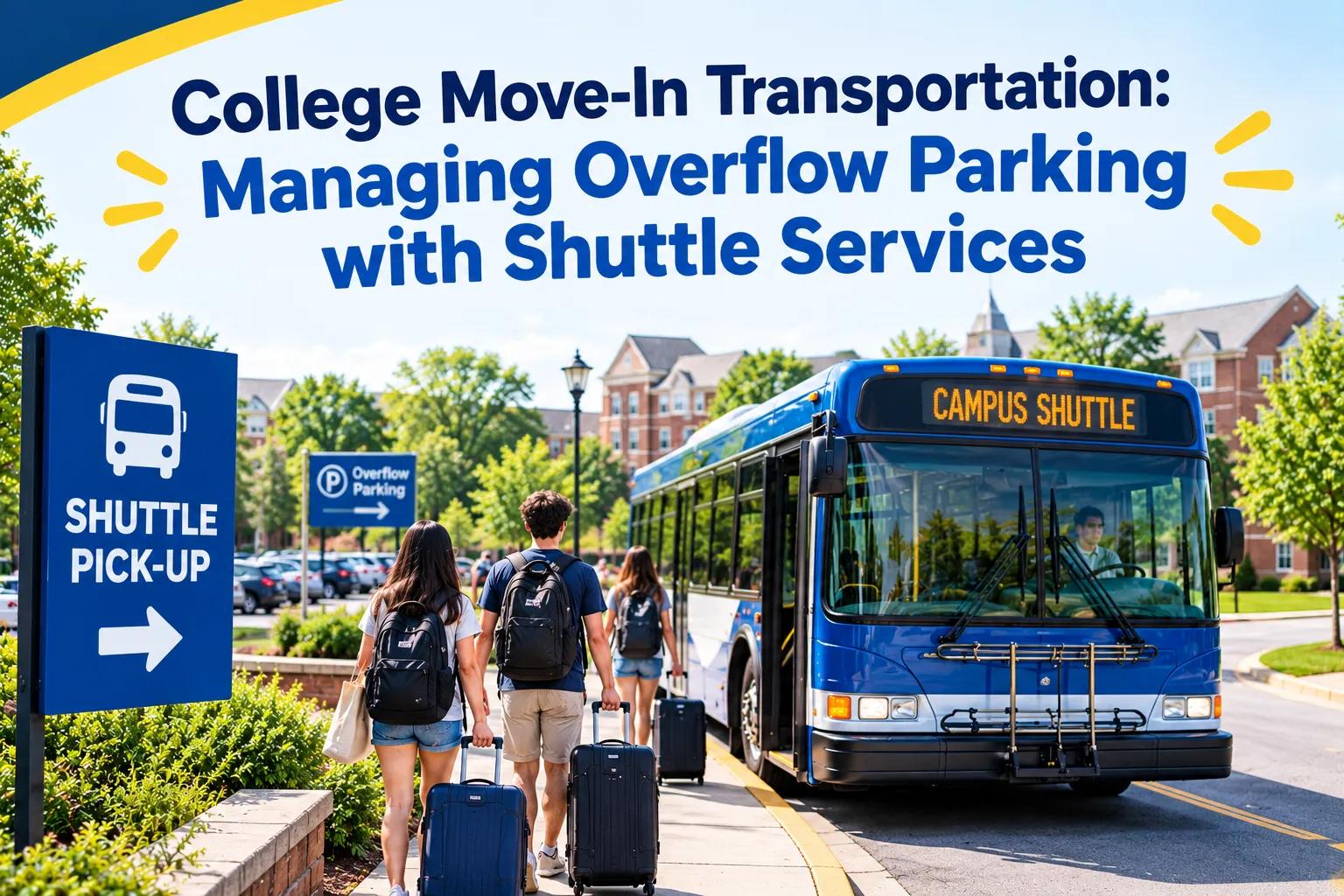
College Move-In Transportation: Managing Overflow Parking
College move-in weekend can transform an ordinary campus into a busy transportation hub. Students and families arrive with cars packed with dorm essentials, while residence halls have limited space for unloading. When too many vehicles remain near campus housing, traffic can quickly become difficult to manage. A carefully planned university move-in shuttle service can help colleges connect overflow parking areas with residence halls while keeping vehicles moving through high-traffic campus areas.

Why Move-In Weekend Requires Transportation Planning
Move-in weekend is different from typical campus transportation because a large number of vehicles arrive within relatively short time windows. Families may need to unload furniture, storage containers, clothing, electronics, and other supplies before moving their cars to longer-term parking.
Residence hall curbs are usually designed for short-term access rather than continuous parking. If vehicles remain in these areas after unloading, incoming families may have to wait before they can reach their assigned buildings. Traffic can then extend onto nearby campus roads, creating additional delays.
Overflow parking provides a practical solution by allowing colleges to move vehicles away from crowded residence hall areas. However, remote parking works best when families have a convenient way to return to campus after relocating their cars. Shuttle transportation creates that essential connection.
Creating a Simple Unload-and-Park System
A successful move-in transportation plan should be easy for families to understand. After arriving at the appropriate residence hall, a family can unload belongings while volunteers assist with carts or direct traffic. Once the unloading process is complete, the driver moves the vehicle to an assigned overflow parking area.
After parking, the driver can board a shuttle and return to the residence hall. This keeps the unloading zone available for the next arriving family while allowing the driver to continue helping the student settle into the room.
The return trip is just as important. At the end of the move-in process, drivers need transportation back to their vehicles. Colleges should therefore design shuttle operations to accommodate both trips rather than focusing only on the initial journey from parking lots to residence halls.
Selecting the Right Overflow Parking Areas
Choosing an overflow parking area requires more than finding an empty lot. Colleges should consider the lot's capacity, road access, distance from residence halls, lighting, pedestrian safety, and ability to accommodate shuttle buses.
Large commuter lots, stadium parking areas, remote garages, and athletic facilities may offer useful capacity. Some universities may also arrange temporary parking agreements with nearby properties when campus parking is limited.
The selected lot should have enough room for buses to enter, load passengers, and leave without interfering with parked cars. A clearly marked shuttle loading zone can prevent confusion and help passengers move through the area efficiently.
Distance also matters. A lot that is too far from campus may require longer shuttle trips, increasing passenger wait times and potentially requiring more vehicles. Colleges should look for locations that provide adequate parking while allowing shuttle routes to remain reasonably short.
Designing Efficient Shuttle Routes
Large campuses often have residence halls distributed across multiple areas. A single shuttle route serving every building may create unnecessary travel time and inconsistent service.
Instead, colleges can organize nearby residence halls into clusters. Each cluster can have a designated overflow parking area and shuttle route. This makes the transportation system easier to communicate and can help buses complete more trips during periods of heavy demand.
Route planning should account for campus roads, construction, pedestrian traffic, athletic events, and other activities that could affect travel time. When possible, shuttles should avoid the most congested move-in roads.
Testing each route before move-in weekend can help transportation teams identify tight turns, difficult intersections, unsuitable loading areas, or locations where buses could become delayed.
Choosing Appropriate Shuttle Vehicles
The size and type of shuttle vehicle should match the campus environment and expected passenger demand. Smaller shuttle buses can be useful on compact routes or roads where maneuverability is important. Larger charter buses may be appropriate for longer routes or overflow lots serving a large number of residence halls.
Passenger comfort should also be considered. Move-in weekend frequently takes place during late summer, when temperatures can be high. Air-conditioned transportation can make the trip more comfortable for parents, students, volunteers, and staff.
Accessibility should be incorporated into the transportation plan from the beginning. Colleges should ensure that passengers with mobility needs have access to appropriate vehicles and do not have to rely on complicated arrangements after arriving on campus.
Keeping Shuttle Stops Away From Unloading Zones
One common problem during move-in weekend occurs when shuttle buses compete with private vehicles for the same curb space. Residence halls may already have cars unloading, volunteers moving carts, and pedestrians crossing nearby.
For this reason, shuttle stops should generally be separated from the primary unloading areas. A nearby service road, side street, or designated transportation zone can give buses enough room to load passengers without interfering with move-in traffic.
Clear signs should identify every shuttle stop. Route colors, large signs, campus maps, and temporary flags can help families quickly identify the correct bus.
Managing Changing Transportation Demand
Shuttle demand can change significantly throughout move-in weekend. Morning arrivals may create high demand from overflow lots to residence halls, while afternoon and evening periods may see more passengers traveling back toward their vehicles.
Colleges should consider these different demand patterns when scheduling vehicles. During peak arrival periods, additional buses may be needed to keep waiting lines under control. Later, some vehicles can be reassigned to routes where return demand increases.
Maintaining one or more backup vehicles can provide additional flexibility. If a vehicle experiences a mechanical problem, traffic creates unexpected delays, or a parking lot fills earlier than anticipated, a standby bus can help maintain service.
Communicating Transportation Information Clearly
Families should receive transportation information before they arrive on campus. Move-in emails, housing portals, campus maps, mobile applications, and confirmation materials can explain where to unload, where to park afterward, and where to find the return shuttle.
Instructions should use straightforward language. Families are already managing a busy schedule, so complicated transportation directions can create unnecessary confusion.
Once families reach campus, temporary signs and staff members can reinforce the information. Parking attendants and volunteers can direct vehicles toward the correct overflow areas, while shuttle guides can help passengers identify the appropriate route.
Real-time updates can also be useful if parking capacity changes or traffic causes temporary delays.
Preparing for Weather and Extended Operations
Weather conditions can influence move-in transportation, particularly during hot summer days or sudden thunderstorms. Colleges should consider shaded waiting areas, water access, and contingency plans when preparing shuttle stops.
Transportation may also need to continue for many hours. Families do not all arrive or leave at the same time, so the shuttle schedule should extend beyond the busiest unloading period.
Transportation providers should receive the complete operating schedule in advance so appropriate vehicles and driver coverage can be arranged. A well-organized schedule can help avoid gaps in service when demand continues into the evening.
Making Move-In More Organized
Effective transportation planning can improve more than traffic flow. It can make the entire move-in experience easier for students, families, housing staff, volunteers, and campus transportation teams.
When cars are moved efficiently from residence hall unloading areas to overflow parking, campus roads can remain more accessible. Families can continue helping students without walking long distances back to their vehicles, while staff members can focus on welcoming students and handling other move-in responsibilities.
Colleges can also review transportation performance after the event. Tracking shuttle demand, waiting times, parking capacity, and traffic problems can provide useful information for improving the following year's move-in plan.
Conclusion
Managing overflow parking is an important part of successful college move-in transportation. Remote parking areas can provide valuable capacity, but they become much more useful when connected to residence halls through a well-planned shuttle system.
By selecting suitable parking locations, designing efficient routes, choosing appropriate vehicles, separating shuttle stops from unloading zones, and communicating instructions before arrival, colleges can create a smoother transportation process. Preparing for changing demand and weather conditions can further improve the experience.
A coordinated move-in shuttle system allows universities to make better use of available parking while helping families spend less time dealing with traffic and more time supporting students as they begin their college journey.