

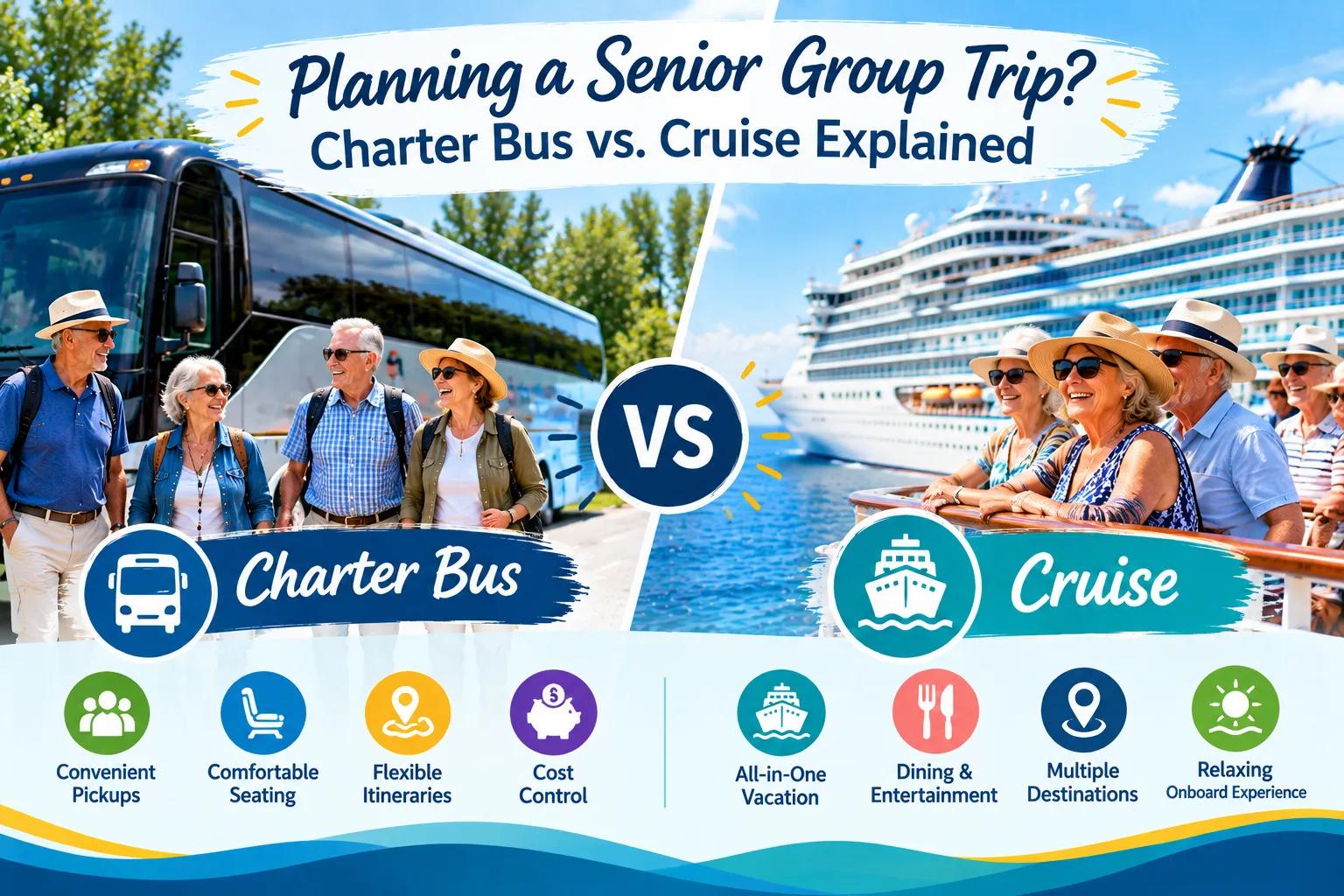
Charter Bus vs. Cruise: Which Is Best for Senior Travel
Planning a trip for a senior group requires careful consideration of comfort, accessibility, cost, convenience, and overall travel pace. Whether the group is planning a weekend getaway, a sightseeing tour, a family trip, or a longer vacation, transportation can significantly affect the experience. Choosing the right senior travel transportation can make group travel easier and more enjoyable from departure to arrival. This senior travel transportation guide compares charter buses and cruises to help senior groups determine which option best matches their needs.

Why Transportation Matters for Senior Groups
Senior travelers can have different needs from other group travelers. Some may prefer shorter travel days, more frequent rest breaks, convenient boarding locations, or easier access to restrooms. Others may use walkers, wheelchairs, or canes and need transportation that accommodates mobility equipment.
A cruise and a charter bus can both provide comfortable travel, but they operate very differently. A cruise is designed as a complete vacation experience, while a charter bus focuses on getting the group comfortably from one destination to another.
Understanding these differences can help organizers make a more informed decision.
Charter Bus Travel Offers More Itinerary Flexibility
One of the strongest advantages of a charter bus is flexibility.
Cruises generally operate on fixed schedules. Groups select a departure date, cruise length, cabin type, and itinerary. Once onboard, travelers follow the ship's established schedule.
A charter bus gives the group much greater control. Organizers can select the pickup location, destinations, attractions, meal stops, rest areas, and overall travel schedule.
A senior group could plan a one-day casino trip, a weekend visit to a nearby city, or a multi-day tour through several destinations.
This flexibility is especially helpful for groups that want to adjust the itinerary around their members' comfort levels.
Comparing Comfort During Travel
Comfort is an important consideration for longer trips.
A modern charter bus may include reclining seats, climate control, overhead storage, power outlets, Wi-Fi, and an onboard restroom, depending on the vehicle. Passengers can remain in the same seating area for the road portion of the journey rather than repeatedly moving between transportation points.
Cruises offer comfortable cabins, dining areas, entertainment venues, and many onboard amenities. However, large ships can require passengers to walk considerable distances between different areas.
For seniors who become tired after extended periods of walking, the compact environment of a motorcoach can be more convenient.
Accessibility for Seniors
Accessibility should be discussed before booking any group transportation.
Some senior travelers may use wheelchairs, walkers, scooters, or other mobility aids. Charter bus companies may offer accessible coaches with wheelchair lifts and securement systems when requested ahead of time.
Organizers should communicate the group's accessibility requirements before receiving a final quote. Not every vehicle has identical equipment, so confirming the features of the specific bus is important.
Cruise ships also offer accessibility accommodations, but passengers still need to navigate cruise terminals, boarding areas, elevators, corridors, and other ship facilities.
For groups with different mobility levels, minimizing unnecessary movement can make the journey more comfortable.
Charter Bus vs. Cruise: Which Is More Convenient?
Convenience is another major factor.
A cruise often requires the group to travel to a port before the vacation begins. Depending on the departure city, passengers may need flights, hotel accommodations, airport transfers, or long individual drives.
A charter bus can pick the group up from a convenient meeting point such as a senior center, church, retirement community, hotel, or community facility.
Instead of coordinating dozens of individual vehicles, everyone can arrive at one location and board the same coach.
This simplifies group logistics and allows the trip to begin as soon as passengers board.
Understanding the Cost Difference
The cost of a senior group trip depends on many factors, so comparing advertised prices alone can be misleading.
A cruise fare may include accommodations, selected meals, entertainment, and transportation between ports. Additional expenses can include gratuities, specialty dining, beverages, Wi-Fi, shore excursions, transportation to the port, and pre-cruise hotel stays.
A charter bus quote generally focuses on transportation and may be based on mileage, vehicle type, travel hours, route, and itinerary. Hotels, meals, attractions, and other activities can be planned separately.
This gives organizers greater control over how the group's travel budget is allocated.
The best approach is to calculate the complete cost of each option before deciding.
Keeping Senior Groups Together
Group connection is often one of the main reasons organizations plan trips in the first place.
On a cruise ship, passengers may stay in separate cabins, participate in different activities, choose different excursions, or dine at different times. With a large group, keeping everyone together throughout the day can be challenging.
A charter bus naturally creates a shared environment while traveling. Passengers can talk, socialize, share snacks, enjoy scenery, and spend time with friends.
The group leader can also communicate announcements to everyone at once.
For senior centers, community organizations, churches, and social clubs, this togetherness can add significant value to the trip.
Rest Breaks and Travel Pace
Long-distance travel should be planned around the comfort of the group.
A charter bus itinerary can include regular rest stops where passengers can stretch, use the restroom, purchase refreshments, or take a short break.
Organizers can discuss the preferred travel pace with the transportation provider before departure.
Cruises provide onboard facilities, but passengers cannot adjust the ship's route or schedule according to their own needs.
A road trip gives the group greater control over when to stop and how long to spend at different locations.
When a Cruise Is the Better Choice
A cruise may be the better option for senior groups that specifically want an ocean vacation.
Travelers who enjoy onboard entertainment, organized activities, resort-style accommodations, multiple ports, and ocean scenery may find a cruise highly appealing.
A cruise can also work well for active seniors who are comfortable spending several consecutive days away from home and want the vacation experience to be centered around the ship.
For groups interested in destinations such as the Caribbean, Alaska, or other cruise regions, the ship itself may be a major part of the attraction.
When a Charter Bus Is the Better Choice
A charter bus can be a stronger option for senior groups planning domestic travel.
Popular possibilities include national park tours, historic-site visits, casino trips, shopping excursions, sporting events, festivals, cultural attractions, family reunions, and multi-city sightseeing tours.
Charter buses also allow organizers to create trips of different lengths. A group can schedule a single-day excursion without committing to a multi-night vacation.
This makes charter buses useful for organizations that want to plan several smaller trips throughout the year.
Questions to Ask Before Booking
Before choosing between a cruise and charter bus, group leaders should consider several questions.
How mobile are the travelers? Does anyone require wheelchair accessibility? How long does the group want to be away from home? Does the group prefer a fixed schedule or a customized itinerary?
Organizers should also compare the total cost of each option and determine whether additional expenses could significantly change the initial price.
For charter bus trips, ask about seating, restroom availability, climate control, luggage space, accessibility equipment, and the driver's experience with longer group journeys.
Tips for Planning a Senior Charter Bus Trip
Once the group chooses a charter bus, early planning can improve the overall experience.
Start by confirming the number of passengers, destination, travel dates, and preferred pickup location. Build a realistic itinerary that includes adequate rest stops and avoids unnecessarily long travel days.
Make sure accessibility requirements are communicated in advance. It is also useful to provide passengers with the itinerary, pickup information, expected travel time, and planned breaks before departure.
Finally, compare quotes from reputable providers and make sure the quote clearly explains what is included.
Final Verdict: Charter Bus or Cruise?
There is no single answer for every senior travel group.
A cruise may be ideal for travelers who want a complete ocean vacation with onboard entertainment, dining, accommodations, and multiple ports. A charter bus may be better for groups that prioritize flexibility, accessibility, convenient pickup locations, predictable transportation, and staying together.
For domestic day trips, weekend getaways, and multi-day tours, charter buses give senior groups the freedom to create an itinerary around their own interests and comfort levels.
By comparing transportation costs, accessibility, travel pace, convenience, and group preferences, organizers can select the option that delivers the best experience for their travelers.