

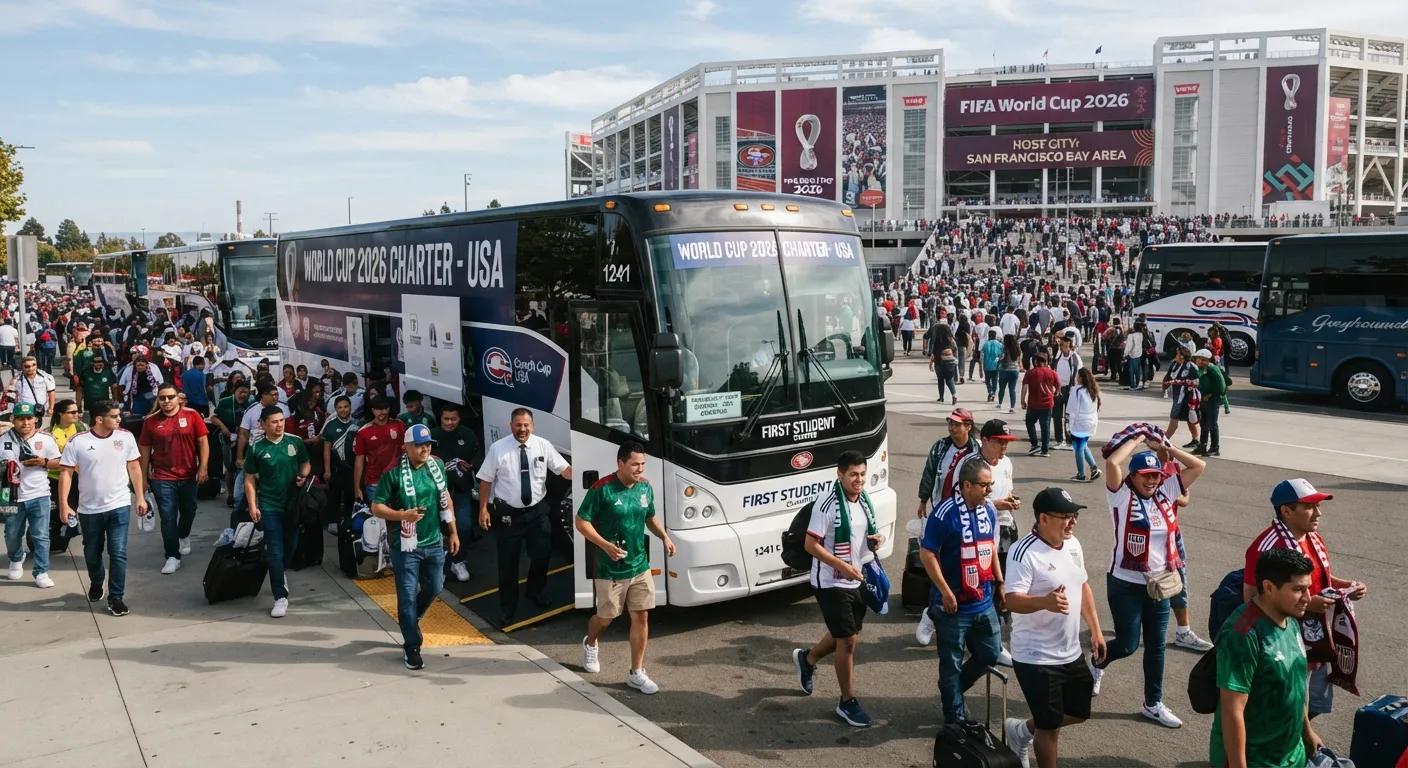
Charter Bus Travel for FIFA World Cup 2026: What Fans
The FIFA World Cup 2026 brought an enormous wave of soccer fans to cities across the United States, Canada, and Mexico. With 48 teams competing across 104 matches and 16 host cities, the tournament created transportation demands on a scale rarely seen before. For fans traveling in groups, getting between airports, hotels, stadiums, restaurants, and fan events required careful planning. As more supporters looked for convenient ways to travel together, FIFA World Cup group travel became an important consideration for families, supporter clubs, soccer organizations, businesses, and other groups attending the tournament.

Understanding the Scale of World Cup Travel
The 2026 FIFA World Cup was the largest edition of the tournament, featuring 48 teams and 104 matches across three countries. In the United States, 11 cities served as official host cities, including Atlanta, Boston, Dallas, Houston, Kansas City, Los Angeles, Miami, New York/New Jersey, Philadelphia, the San Francisco Bay Area, and Seattle.
For fans, this created an opportunity to build an entire trip around the tournament. Some visitors attended a single match, while others planned longer vacations around multiple games, sightseeing, dining, and fan activities.
That variety made transportation an important part of the overall World Cup experience. Traveling in a large group can be difficult when everyone relies on separate cars, rental vehicles, or rideshare services. Coordinating multiple vehicles can create unnecessary complications, particularly when thousands of other visitors are traveling through the same area.
Why Fans Considered Charter Bus Travel
Charter buses offered groups a way to organize transportation around a shared schedule. Instead of having each passenger make individual travel arrangements, everyone could meet at a designated pickup location and travel together.
This approach can be particularly useful on match days. A group may need to leave a hotel several hours before kickoff, arrive near the stadium, attend pre-match activities, and return after the game. Having one vehicle and a coordinated itinerary can make this process easier to manage.
For families and friends, group travel also means more time together. For soccer clubs and supporter organizations, it can help keep players, staff, and fans organized throughout the day.
Getting Around Busy Host Cities
Major sporting events can place significant pressure on local transportation systems. Roads surrounding stadiums may experience increased congestion, while parking facilities and rideshare pickup areas can become crowded.
The scale of the World Cup led U.S. transportation authorities to make dedicated preparations. The Federal Transit Administration announced $100.3 million in funding to support public transportation systems in World Cup host cities and help communities handle increased demand around matches and other public events.
Charter buses can complement these transportation efforts by giving organized groups another option. Rather than requiring every traveler to find an individual route to the stadium, a group can arrange transportation around its specific itinerary.
This does not eliminate traffic, but it can make the overall travel plan more organized and predictable.
Traveling to Stadiums and Fan Festivals
The World Cup experience extended beyond stadiums. FIFA announced 13 official FIFA Fan Festival sites across host cities, featuring match screenings, entertainment, food, cultural activities, and other fan experiences. Additional host-city events were also planned in locations including Los Angeles, New York/New Jersey, and Philadelphia.
For many visitors, these activities became an important part of their trip. A group might start the day at a hotel, travel to a fan festival, continue to a match, and then visit a restaurant or entertainment venue afterward.
A charter bus can be arranged around a group's complete schedule, making multi-stop travel easier than arranging separate rides throughout the day.
A Comfortable Option for Longer Trips
World Cup travel was not limited to short trips within individual cities. Fans attending multiple matches could potentially travel between host cities during their stay.
For longer journeys, comfort becomes an important consideration. Depending on the vehicle selected, charter buses can provide amenities such as reclining seats, climate control, luggage storage, power outlets, and Wi-Fi.
Instead of focusing on driving directions, parking, or changing road conditions, passengers can relax during the journey. Groups can also use travel time to discuss upcoming matches, share experiences, or simply enjoy the trip together.
This makes charter buses particularly attractive for soccer clubs, supporter groups, corporate organizations, and families planning extended World Cup trips.
Keeping Large Groups Organized
One of the biggest challenges of event travel is keeping everyone on the same schedule. When a group travels in several cars, passengers may arrive at different times or park in different locations.
After a match, finding everyone can become even more difficult because thousands of people may be leaving the venue simultaneously.
A charter bus creates a central meeting point. Passengers know where they need to return after the event, while the group organizer can communicate one transportation plan instead of managing several independent vehicles.
For schools, churches, sports organizations, and community groups, this can be especially valuable when traveling with a larger number of passengers.
Supporting Corporate World Cup Travel
Businesses also had reasons to organize transportation around the tournament. Companies could host employees, clients, partners, or guests at matches, hospitality events, and fan experiences.
Corporate transportation requires attention to timing and professionalism. A coordinated charter bus can help businesses manage group movements between hotels, venues, restaurants, and event locations.
Instead of asking employees or guests to arrange their own transportation, companies can provide a shared travel solution that keeps the group together and supports the day's itinerary.
Planning Ahead for Major Sporting Events
The World Cup demonstrated why transportation should be considered early when planning travel around major sporting events. Vehicle availability, traffic conditions, stadium access, hotel locations, and event schedules can all influence how a group should travel.
Advance planning gives organizers more time to determine the appropriate vehicle size and establish practical pickup and drop-off locations. It can also help groups build realistic schedules around anticipated traffic and event restrictions.
These planning principles apply well beyond soccer. Concerts, festivals, college football games, professional sporting events, conventions, and other major gatherings can create similar transportation challenges.
Making the Most of the World Cup Experience
Transportation should support the overall travel experience rather than become a source of stress. When a group has a clear transportation plan, passengers can focus more on the event itself.
For soccer fans, that means spending more time enjoying the atmosphere, meeting fellow supporters, watching matches, and experiencing the host city. A coordinated travel plan can also make it easier to include additional activities before and after a game.
For organizers, having one transportation arrangement can simplify communication and reduce the number of individual travel details that need to be managed.
The Future of Group Travel After FIFA World Cup 2026
The transportation needs surrounding FIFA World Cup 2026 demonstrated how major international events can influence group travel throughout the United States. The tournament's size, geographic reach, and extensive fan programming created transportation requirements extending well beyond stadium entrances.
Charter buses offered groups a flexible way to travel together between key destinations. Whether the journey involved a short hotel-to-stadium transfer or a longer trip between cities, organized transportation could help make the experience more comfortable and manageable.
The lessons from the World Cup are likely to remain relevant for future sporting events and large-scale gatherings. As more people travel for major events, group transportation will continue to play an important role in helping visitors move efficiently and comfortably.
Final Thoughts
For soccer fans, attending the FIFA World Cup 2026 was about much more than watching a match. It was an opportunity to experience new cities, connect with other supporters, attend fan festivals, and create memorable travel experiences.
With matches and fan events spread across numerous destinations, transportation became a major part of the planning process. Charter buses provided an organized option for groups that wanted to remain together while traveling between hotels, stadiums, airports, fan events, and other destinations.
Whether traveling with family, friends, a soccer club, a supporter organization, or a business group, arranging dependable transportation can make a major sporting event easier to navigate and more enjoyable from beginning to end.