

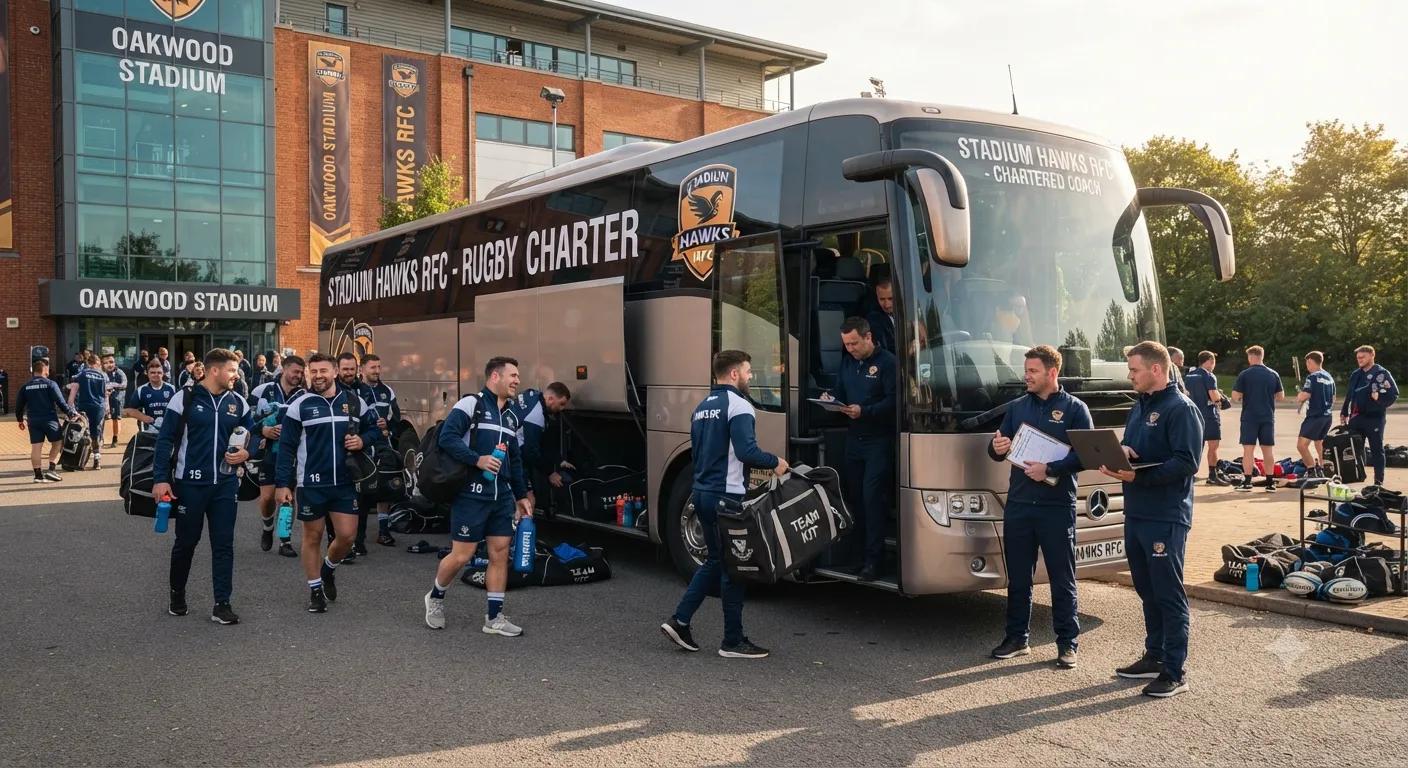
Charter Bus Transportation for Rugby Teams Traveling
Traveling to an away rugby match requires careful coordination, especially when players, coaches, staff, equipment, and substitutes all need to reach the same venue on schedule. Unlike ordinary group travel, a rugby trip often involves bulky kit bags, match equipment, early arrival requirements, and a possible post-match social. Reliable rugby away game bus transportation can help teams keep these details organized while allowing players to travel together in a comfortable environment.

Why Rugby Teams Benefit From Charter Bus Travel
Rugby teams often have more travelers than the number of players who take the field. Coaches, substitutes, trainers, medical personnel, managers, and approved supporters may all be part of an away-day group. Coordinating individual cars can quickly become complicated, particularly when the destination is several hours away.
A charter bus gives the team one central transportation solution. Everyone can depart from the same location, arrive at the venue together, and follow the same return schedule. This reduces the risk of players getting lost, arriving late, or struggling to find parking near an unfamiliar rugby ground.
Traveling together can also create valuable team time. Players can rest, talk with teammates, review match preparations, or simply relax instead of concentrating on driving.
Determine the Right Vehicle for the Team
Choosing the right vehicle begins with an accurate estimate of the travel group. A single rugby squad may fit comfortably in a smaller coach, while two squads traveling together may require a full-size charter bus.
Passenger capacity is only part of the decision. Rugby equipment can take up considerable storage space. Players may bring boots, uniforms, protective equipment, towels, personal bags, and training gear, while the team may also carry match balls, water containers, medical supplies, and spare equipment.
Teams should communicate both passenger numbers and equipment requirements when requesting a transportation quote. This helps the provider recommend a vehicle with enough seating and appropriate storage capacity.
For longer away matches, comfort can become particularly important. Features such as climate control, comfortable seating, overhead storage, power outlets, and restroom availability may make a significant difference during an extended journey.
Build the Transportation Schedule Around the Match
The kickoff time should be the starting point for the travel schedule. Rugby teams typically need time after arrival to change, inspect the playing area, attend team meetings, tape injuries, organize equipment, and warm up.
Arriving approximately 75 to 90 minutes before kickoff may provide a useful preparation window, although each club can adjust this according to its own routine. Once the desired arrival time is established, transportation coordinators can work backward to determine the departure time.
Traffic, road construction, weather, and unexpected delays should also be considered. A realistic buffer can help prevent the team from arriving at the field rushed or distracted.
For longer journeys, planned rest or meal stops should be included in the itinerary. Providing the transportation company with the complete schedule helps the driver understand how the vehicle will be used throughout the day.
Confirm the Rugby Venue Before Departure
Rugby matches can be held at parks, schools, colleges, athletic complexes, and dedicated club grounds. The address listed on a competition schedule may not always identify the entrance that works best for a large bus.
Before departure, the team manager should confirm where the charter bus should enter, unload passengers, park during the match, and meet the team afterward. If the post-match gathering takes place at a different location, that destination should also be included in the transportation plan.
Confirming these details in advance can reduce confusion when the team arrives at an unfamiliar venue.
Organize Rugby Equipment Efficiently
Equipment management should be part of the transportation plan from the beginning. Every player may have a personal kit bag, while the team may carry additional balls, medical supplies, water, spare uniforms, and training equipment.
Assigning an equipment manager can make loading and unloading easier. Team equipment should be organized so that essential items are accessible when the bus reaches the venue.
The return journey requires additional preparation because rugby equipment can become muddy or wet. Players should use separate bags for dirty boots and clothing to prevent mud and moisture from spreading throughout the vehicle or luggage compartment.
Teams should also discuss storage capacity and any cleaning expectations with the transportation provider before the trip.
Make Player Comfort a Priority
Long journeys can affect how players feel when they reach the field. Having athletes drive themselves may leave them tired before the match, while shared transportation allows them to relax during the journey.
Coaches can use travel time for team discussions or tactical preparation when appropriate. Players can also use the journey to rest and mentally prepare for competition.
Food planning deserves attention as well. If the trip requires a meal stop, the team should select a location capable of serving the entire group efficiently. A delayed meal can quickly affect the pre-match schedule, so larger groups should consider arranging food in advance.
Prepare for Injuries and Unexpected Situations
Rugby is a physically demanding sport, which means transportation planning should include an emergency procedure. A player who suffers an injury during the match may need medical treatment and may not be able to return on the team bus.
Before traveling, the team should establish who will accompany an injured player if necessary, who will communicate with family members or emergency contacts, and how that player will eventually return home.
For youth teams, responsible coaches or staff should have access to appropriate emergency and medical information. Having a procedure established before the match helps reduce confusion when unexpected circumstances arise.
Weather can also affect the itinerary. Heavy rain, snow, storms, or other conditions can cause delays or changes to the match schedule. Keeping communication open with the transportation provider allows the team to adjust its plans when needed.
Plan for the Post-Match Social
The rugby social is often an important part of an away fixture. Home and visiting clubs may share a meal or spend time together after the match. If the team plans to travel to a clubhouse, restaurant, or another location after the game, the transportation provider should know about the additional stop.
The departure time should be communicated to everyone before the match ends. This gives players a clear understanding of when they need to return to the bus.
Adult teams should also confirm the transportation company's rules regarding alcohol before booking. Youth and school teams should follow their applicable club, school, and safeguarding policies.
Planning the post-match portion of the day in advance makes it easier for the team to enjoy the social without creating transportation delays.
Keep Track of Every Passenger
A designated bus captain or team manager can simplify transportation coordination. This person can maintain the passenger list, communicate with the driver, and keep players informed about schedule changes.
A head count should be completed before leaving for the match and again before beginning the return journey. This becomes especially important if some players leave the venue separately or if the team travels to another location after the match.
Youth teams should also have supervised drop-off procedures. Players should remain with responsible adults until they are collected by an approved parent or guardian.
Book Rugby Transportation Early
Booking transportation ahead of the match gives rugby teams more flexibility when selecting a vehicle and preferred schedule. Early planning is particularly useful for tournaments, rivalry fixtures, long-distance matches, and busy sports weekends.
When contacting a transportation provider, teams should provide the full itinerary rather than only the match address. Passenger numbers, equipment requirements, pickup locations, kickoff time, expected waiting period, post-match plans, and return arrangements can all affect the transportation setup.
Providing accurate information early can help the provider recommend an appropriate vehicle and create a transportation plan that fits the team's requirements.
Conclusion
Charter bus transportation can make away rugby matches easier to organize by keeping players, coaches, staff, and equipment together throughout the journey. Careful planning should cover everything from vehicle selection and venue access to equipment storage, player comfort, injury procedures, and post-match activities.
With dependable rugby team bus transportation, teams can reduce the stress associated with coordinating multiple vehicles and give players a more organized travel experience. By treating transportation as an important part of matchday planning, rugby clubs can arrive prepared, stay focused on competition, and make the journey home just as smooth as the trip to the game.