

Charter Bus Transportation for JROTC, Scout, and Student Groups Visiting West Point
Charter Bus Transportation for JROTC, Scout, and Student
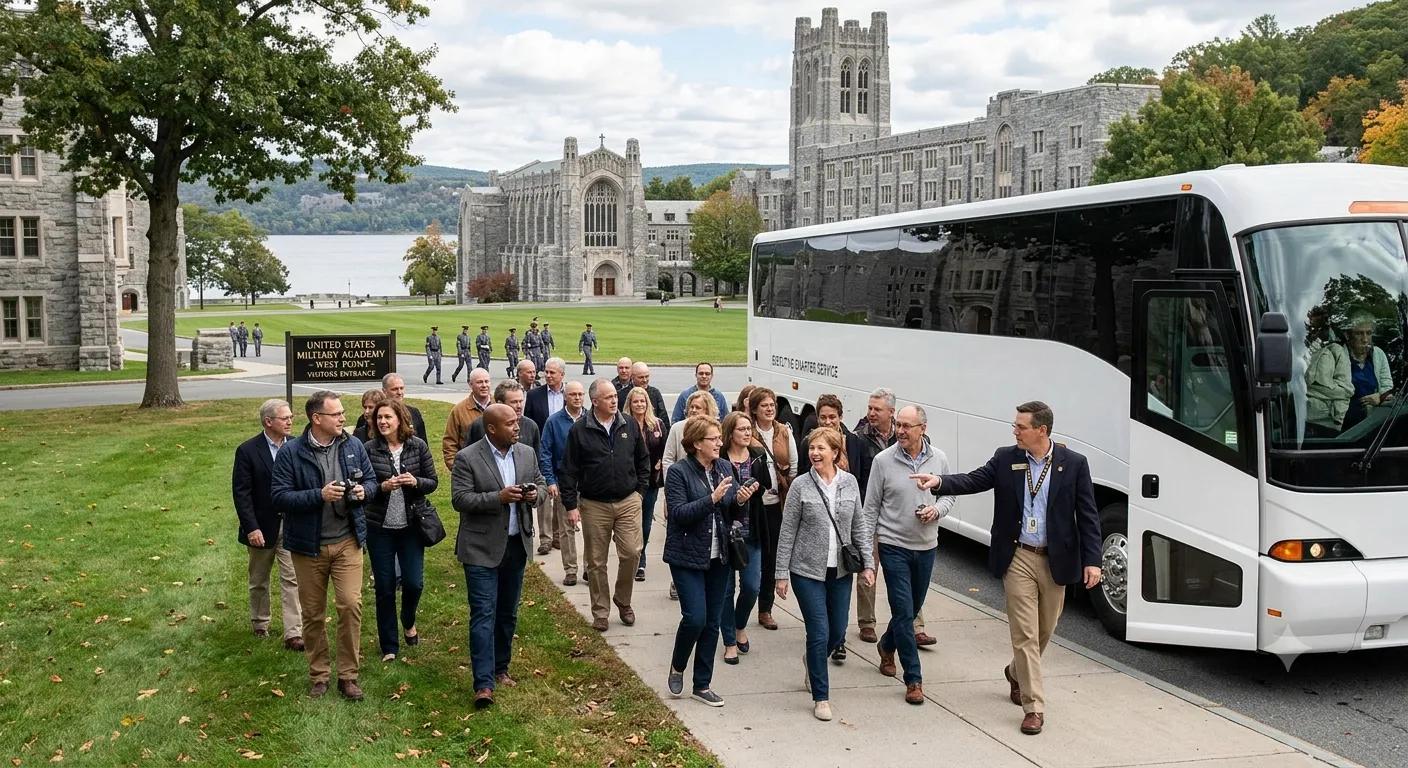
Organizing an educational trip to West Point, New York, gives students and youth organizations a valuable opportunity to learn about American military history, leadership, discipline, and public service. Whether you are coordinating a JROTC excursion, a Scout troop outing, or a school history trip, dependable West Point educational group transportation can make the journey easier to manage. Traveling together helps organizers coordinate arrival times, supervise participants, and create a more structured experience from departure to return.

West Point is home to the United States Military Academy and is an active military installation. This means that educational visits require additional preparation, including confirming tour availability, following visitor access procedures, and arranging suitable transportation. By planning these details in advance, schools and youth organizations can focus on the educational value of the trip rather than last-minute logistics.
Why West Point Is a Valuable Educational Destination
West Point has a significant place in American history and military education. Its traditions and leadership-focused mission make it a meaningful destination for students who want to understand the relationship between service, responsibility, and national history.
For JROTC groups, a visit can complement classroom lessons about military traditions, teamwork, leadership, and citizenship. Scout troops can use the experience to encourage responsibility, cooperation, and an appreciation of public service. School groups studying American history can connect their lessons with the academy's historical significance.
Before arranging activities, organizers should determine which tour best suits their group. West Point Admissions tours are designed for prospective candidates, while general guided tours are available through West Point Tours. Confirm the appropriate option before announcing the final itinerary.
Choose Transportation That Fits Your Group
The right vehicle can make a substantial difference to the comfort and organization of an educational trip. A small Scout troop may need a minibus, while a larger school class or JROTC unit may require a full-size charter bus.
Start by confirming the number of students, teachers, chaperones, and other participants. Ask transportation providers about seating capacity, climate control, storage space, accessibility, and any amenities needed for the journey.
For groups using a private bus during a guided West Point tour, check the tour provider's specific seating requirements. West Point Tours requires both seats in the row directly behind the driver to remain available for its step-on guide. The organizer must account for this when determining how many passengers the vehicle can accommodate.
Request a quote based on the actual passenger count, pickup location, distance, and expected service duration. Comparing suitable options early helps schools and youth organizations make an informed transportation decision.
Confirm Tour Reservations and Security Procedures
Because West Point is an active military installation, visitors must follow current security requirements. Organizers should confirm tour availability and understand the applicable identification rules before finalizing travel plans.
The official West Point visitor information page explains the current access procedures. Visitors aged 18 and older generally need an acceptable original photo ID, and additional requirements may apply depending on the visitor's status and documentation. Foreign visitors must follow separate passport and escort requirements.
West Point Tours also requires group manifests for its reserved tours. The required form includes passenger information such as names, dates of birth, gender, and identification type. Follow the tour provider's current submission instructions and deadlines carefully.
For student groups, teachers should communicate identification requirements to parents and guardians well before departure. Confirm the documentation needed for minors directly with the tour provider rather than assuming that school identification will be sufficient for every participant.
A bus reservation alone does not guarantee access to the installation. The tour, manifest, vehicle arrangements, and required credentials must all comply with current procedures.
Coordinate Teachers, Chaperones, and Group Leaders
Good supervision is essential when transporting students and younger participants. Before the trip, assign clear responsibilities to teachers, Scout leaders, JROTC instructors, and other chaperones.
Establish a passenger list and organize students into smaller groups when appropriate. Each supervising adult should know which participants are assigned to them and understand how attendance will be checked before departure, after stops, and at the end of the visit.
Share the pickup address, boarding time, tour meeting point, emergency contact information, and return schedule with all group leaders. For school trips, provide parents with the itinerary and explain any special documentation requirements.
A designated trip coordinator can communicate with the transportation provider and tour office, allowing teachers and chaperones to focus on participant supervision. Clear responsibilities help prevent confusion when the group arrives at a busy meeting point or needs to respond to a schedule change.
Create an Educational Itinerary
An effective itinerary should balance the scheduled tour with travel time, arrival procedures, meals, and rest breaks. Begin by confirming the tour's start time and meeting location, then calculate when the group needs to leave its pickup point.
Allow extra time for traffic and installation access procedures. Avoid scheduling activities too closely together, because visitor checks or unexpected delays may affect the day's timetable.
Teachers and instructors can prepare students before departure by introducing West Point's history and discussing leadership, citizenship, and service. This preparation gives students context for the experience and encourages them to participate thoughtfully.
After the tour, educators may organize a classroom discussion, written reflection, or group presentation about what participants learned. These follow-up activities help connect the visit with academic goals and youth development programs.
If you plan to add another attraction or meal stop, coordinate it with the bus provider beforehand. Confirm that the complete itinerary fits within the agreed service period and that all stops are practical for your vehicle.
Manage Costs for Schools and Youth Organizations
Transportation costs can be an important consideration for schools, Scout troops, and JROTC programs working with limited budgets. Charter bus prices vary according to vehicle type, travel distance, booking date, and service duration.
Request an itemized quote and ask whether mileage, driver time, waiting periods, and additional stops are included. Clarify cancellation terms, deposit requirements, and the potential cost of extending the trip.
Schools can estimate the transportation expense per student by dividing the anticipated total by the number of participants. Scout troops and youth organizations may also consider fundraising, approved activity budgets, or contributions arranged according to their organization's policies.
When comparing providers, look beyond the initial price. Consider the vehicle's condition, passenger capacity, insurance coverage, driver qualifications, and the provider's ability to accommodate your itinerary. A suitable and dependable transportation arrangement can help avoid costly complications.
Prepare Students for a Safe and Respectful Visit
Before departure, explain the expectations for behavior, supervision, and security. Students should understand the importance of following their guide's instructions, remaining with their assigned group, and respecting any restricted areas or photography rules.
Ask the transportation provider about vehicle safety procedures, seat belts, accessibility needs, and emergency arrangements. Chaperones should have access to the relevant contact information and know how to communicate with the trip coordinator.
Weather and traffic conditions can also affect the journey, so check the forecast and allow flexibility in the schedule. Make sure students know when meals and restroom breaks are planned, and encourage them to bring only the personal items permitted for the visit.
Preparation helps students feel more confident and allows educators to concentrate on the purpose of the excursion.
Conclusion
Charter bus transportation can make West Point visits easier to organize for JROTC units, Scout troops, and school groups. Traveling together simplifies scheduling, supports group supervision, and helps participants arrive according to a coordinated plan.
By selecting an appropriate vehicle, confirming tour reservations, preparing required documentation, and communicating responsibilities clearly, organizers can reduce common transportation challenges. A realistic itinerary and advanced safety planning also help ensure that students and youth participants have a comfortable and meaningful experience.
With dependable transportation and careful preparation, a West Point visit can become a valuable educational opportunity that encourages students to learn about American history, leadership, teamwork, and public service.