

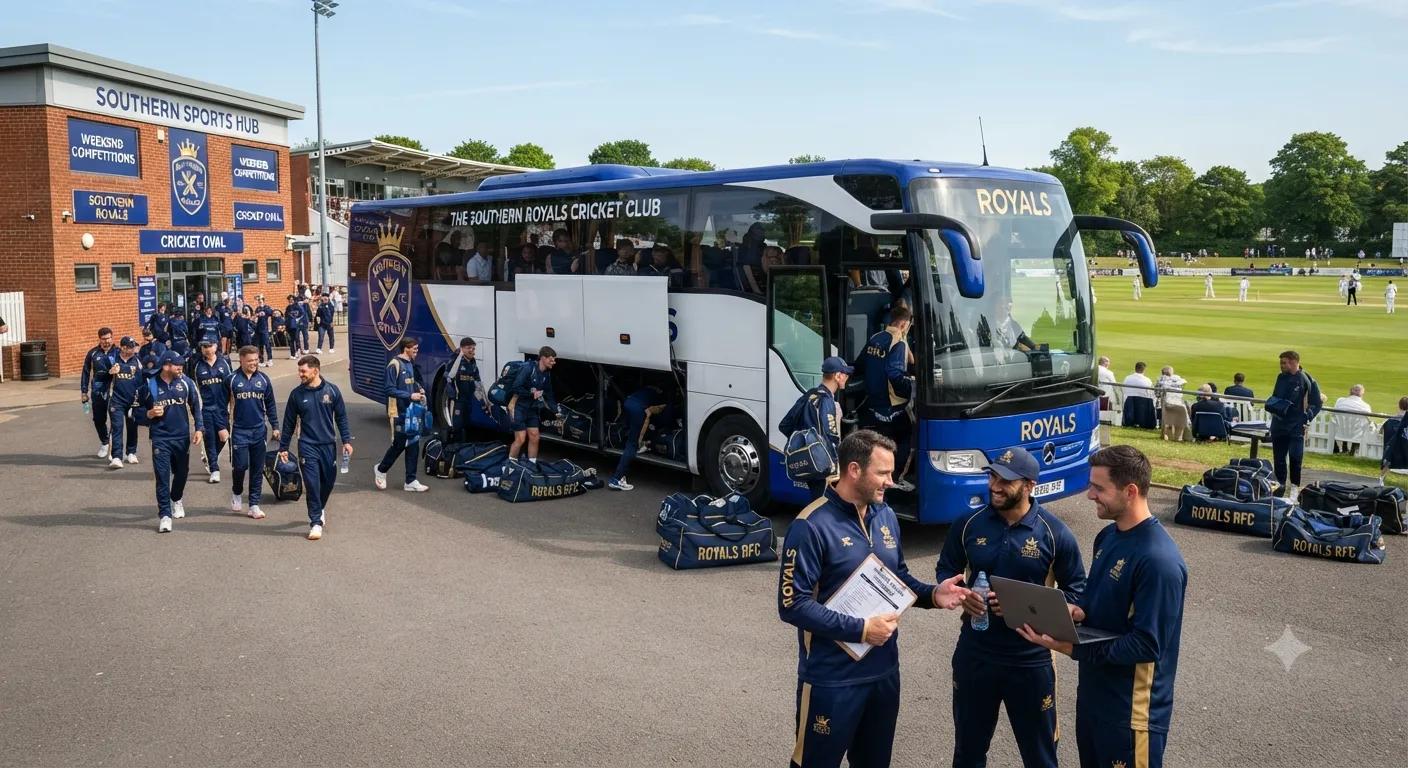
Charter Bus Transportation for Cricket Teams
Weekend cricket matches can involve long-distance travel, early morning departures, large equipment bags, and schedules that change as the competition progresses. For teams traveling to away grounds or regional tournaments, coordinating several cars can make an already busy match day more complicated. Arranging cricket match transportation gives players, coaches, and staff a convenient way to travel together while keeping the team's schedule organized from departure to return.

Why Cricket Teams Need Organized Transportation
Cricket is different from many other team sports because a match can occupy a significant portion of the day. Depending on the format, teams may spend several hours at the venue, and weekend tournaments can require multiple games across Saturday and Sunday.
When players travel separately, everyone must manage their own route, parking, fuel, and arrival time. A traffic delay affecting one player can create problems for the entire squad if that player is responsible for an important position or equipment.
Charter bus transportation creates a single travel plan. Players can meet at one location, load their equipment, and travel to the cricket ground together. Coaches and team managers can also communicate schedule updates to the entire group without having to contact multiple drivers.
Select a Bus Based on the Complete Travel Group
A cricket team's transportation needs are not determined only by the number of players taking the field. The travel group can include reserve players, coaches, managers, scorers, officials, and supporters.
Before selecting a vehicle, organizers should establish an accurate passenger count. A smaller squad may be comfortable in a minibus, while larger teams or clubs traveling with supporters may need a full-size charter bus.
Equipment should also influence the decision. Cricket kit bags can be considerably larger than ordinary sports bags, so passenger seating should never be the only consideration when choosing a vehicle.
Providing the transportation company with the expected number of passengers and the approximate amount of equipment can help ensure that the selected vehicle is suitable for the entire group.
Plan for Large Cricket Kit Bags
Every cricket player may have a personal kit bag containing bats, helmets, pads, gloves, protective equipment, footwear, and uniforms. A team may also carry shared equipment such as balls, stumps, bails, scorekeeping materials, coolers, first-aid supplies, and shade equipment.
Because of this, teams should discuss luggage capacity before finalizing their transportation. A vehicle with enough seats may still be unsuitable if there is insufficient storage for the team's equipment.
Organizers can make loading easier by asking players to identify their bags clearly and by assigning one person to oversee team equipment. A simple equipment check before departure and after the match can also reduce the chance of leaving valuable gear behind.
Establish a Practical Pickup Plan
The transportation experience begins with the pickup. Teams should select a central meeting location that is convenient for the majority of players and provides enough space for the bus to arrive and load equipment.
A cricket club, school, sports complex, or designated parking area can often work well. Players should be given the pickup address and reporting time several days before the competition.
The reporting time should be earlier than the scheduled departure. This allows players to load kit bags, confirm attendance, and settle into their seats without delaying the group.
Early departures require even more attention. If the team needs to travel several hours before an important match, organizers should communicate the schedule clearly and encourage everyone to arrive prepared.
Account for Match Length and Schedule Changes
Transportation should be planned around the entire competition rather than just the first scheduled match. T20 games, short-format tournaments, and longer matches can have very different time requirements.
Weekend tournaments can also include multiple matches. If a team advances to a later round, the return journey may need to be postponed. Weather can create additional uncertainty, particularly when rain interrupts play.
For this reason, organizers should discuss a realistic return window with the transportation provider instead of relying on an exact return time. Flexibility gives the team enough time to finish its match, collect equipment, complete post-game activities, and depart without unnecessary pressure.
Confirm Cricket Ground Access
Cricket grounds are not always located at conventional sports stadiums. Some are inside public parks, school properties, recreational complexes, or large multi-use fields.
A general venue address may not indicate the best location for a charter bus to enter or drop off passengers. Before the trip, organizers should confirm the appropriate entrance, bus access, passenger drop-off point, and parking arrangements.
This information should be shared with the driver or transportation provider before departure. Knowing the exact location in advance can prevent the bus from having to navigate narrow roads or search for the correct entrance after arriving.
Make Long Trips Comfortable
Traveling several hours before a cricket match can be tiring. Players need to arrive ready to warm up and compete, rather than feeling exhausted from driving.
A dedicated charter bus allows players to relax during the journey. They can rest, hydrate, communicate with teammates, or mentally prepare for the competition without concentrating on traffic.
For longer journeys, organizers should consider suitable rest stops and meal breaks. Teams may also want to bring water and food for the trip, depending on the transportation provider's policies.
After a demanding match, the same benefit applies to the return journey. Players can relax on the way home instead of having to drive after spending several hours on the field.
Plan Transportation for Multi-Day Tournaments
Some cricket competitions require overnight stays. When a tournament extends across multiple days, transportation planning should cover more than the journey between home and the cricket ground.
Teams may need transportation between hotels, venues, restaurants, practice facilities, and additional grounds. Providing the transportation company with the complete weekend itinerary can make these movements easier to coordinate.
If the bus remains with the team overnight, organizers should also discuss hotel parking and driver accommodation requirements in advance. Handling these details before the tournament prevents unnecessary complications during the trip.
Keep the Team Together
One of the biggest advantages of group transportation is that players remain together throughout the journey. Coaches can communicate important information, managers can conduct head counts, and players are less likely to become separated from the group.
This can be especially useful for youth cricket teams. Parents may not always be available to drive children to distant competitions, so organized team transportation can provide a more convenient option when appropriate supervision arrangements are in place.
Keeping everyone together also makes changes easier to communicate. If a match is delayed or a tournament schedule changes, the team has a central location where updated information can be shared.
Create a Dedicated Transportation Coordinator
Having one person responsible for transportation can make the trip considerably easier to manage. The transportation coordinator can communicate with the provider, confirm passenger numbers, distribute pickup information, and relay schedule changes.
Meanwhile, the team captain can focus on cricket-related responsibilities, while another person can oversee equipment and a treasurer can manage transportation payments.
Dividing these responsibilities prevents one individual from having to handle every part of the trip on match day.
Conclusion
Charter bus transportation can make weekend cricket travel more organized, comfortable, and predictable. From large kit bags and passenger counts to match schedules, venue access, overnight stays, and changing tournament results, careful planning helps teams avoid unnecessary transportation problems.
By selecting a vehicle that accommodates both passengers and equipment, establishing a convenient pickup location, confirming ground access, and allowing flexibility in the return schedule, cricket clubs can create a smoother experience for players, coaches, and supporters.
Whether a team is traveling to a nearby weekend match or spending several days at a regional tournament, dependable group transportation allows everyone to stay together and focus on preparation, teamwork, and performance rather than the challenges of coordinating multiple vehicles.