

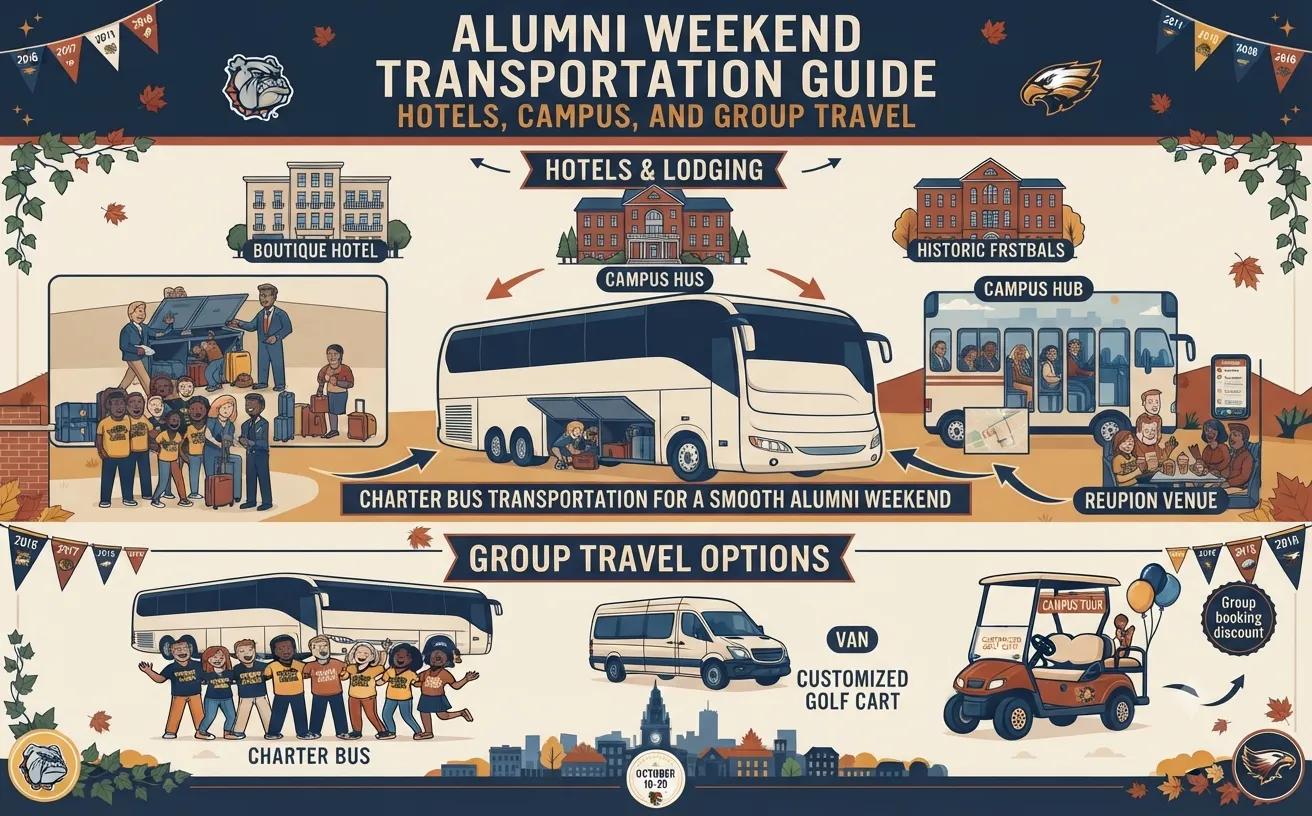
Charter Bus Transportation for a Smooth Alumni Weekend
Alumni Weekend is a time for graduates to return to campus, reconnect with former classmates, attend reunions, and participate in university events. With alumni arriving from different cities and staying at several hotels, transportation can quickly become one of the biggest logistical challenges. A reliable charter bus plan can connect hotels, campus venues, restaurants, athletic facilities, and other destinations while helping guests avoid parking and navigation concerns. Universities can use the same organized approach applied to student campus transportation when coordinating passenger schedules, pickup locations, and group travel needs.

Why Charter Bus Transportation Works for Alumni Weekend
Alumni Weekend often brings together hundreds of people who need transportation at similar times. Morning activities may require hotel-to-campus service, while afternoon programs can require movement between different campus buildings. Evening receptions, class dinners, and social events may create another wave of transportation demand.
Using individual cars can make these movements more complicated. Guests may have difficulty finding parking, unfamiliar drivers may struggle with campus roads, and rideshare availability can vary during busy periods. Charter buses provide a scheduled transportation option that keeps groups together.
A university can also create different transportation services based on the event schedule. A hotel shuttle can connect accommodations with campus, while dedicated charter buses can transport reunion classes to off-campus dinners or special activities.
Begin With the Alumni Weekend Schedule
Before choosing buses, organizers should review the complete event itinerary. Transportation requirements should be based on when and where guests actually need to travel.
Friday may include registration, hotel arrivals, and a welcome reception. Saturday could involve reunion breakfasts, campus tours, lectures, athletic events, and class dinners. Sunday may include brunch, memorial services, and departures.
Looking at the entire weekend makes it easier to identify peak transportation periods. Instead of operating the same number of buses all day, organizers can increase service when demand is highest and reduce service during quieter periods.
This approach is also consistent with broader university transportation planning, where routes are built around specific program locations, event times, and passenger volumes.
Connect Hotels With Campus
One of the most important services during Alumni Weekend is transportation between hotels and campus. Alumni may be staying at several properties throughout the area, particularly when popular hotels sell out.
Organizers can collect hotel information through the registration process and identify which properties have the highest number of guests. Nearby hotels can potentially be grouped into efficient routes, while hotels located farther away may require dedicated service.
Pickup locations should be confirmed with each hotel before the event. Some properties may have designated areas for large buses rather than allowing coaches to use the main entrance. Sharing exact pickup instructions with alumni can prevent confusion on the day of the event.
A clear hotel shuttle system can also help guests who are unfamiliar with the area. Instead of searching for campus parking or arranging individual rides, they can follow a published transportation schedule.
Select the Right Charter Bus
The appropriate vehicle depends on passenger numbers, route length, and the type of event being served. Smaller groups may be comfortable in a minibus, while larger reunion classes may require a full-size charter bus.
Organizers should consider peak passenger demand rather than simply dividing the total number of registered alumni by vehicle capacity. For example, several hundred people may attend an Alumni Weekend, but only a portion may need transportation during a particular hour.
A transportation provider can help evaluate expected ridership and determine how many vehicles are needed for each route. This can help prevent both overcrowding and unnecessary capacity.
Create a Campus Transportation Hub
A central campus transportation hub can make the entire system easier to understand. Instead of sending buses to numerous locations without a clear structure, organizers can designate one recognizable area as the primary transportation point.
From this location, alumni can access hotel shuttles, campus circulators, and dedicated event transportation. The hub can also have university volunteers available during peak periods to answer questions and direct guests toward the appropriate bus.
A covered waiting area can be useful in case of rain or extreme temperatures. Clear signs showing route names, hotel stops, and departure times can make boarding more efficient.
Plan Transportation for Reunion Classes
Not every alumni group will follow the same itinerary. Milestone reunion classes may organize private dinners, tours, winery visits, or other off-campus activities.
Dedicated charter buses can provide transportation specifically for these groups. A class can travel together rather than arranging multiple cars, making it easier to keep everyone on the same schedule.
Class-specific transportation can also make sense when an event is located far from campus or when the group wants to leave and return at predetermined times. Organizers should coordinate these trips with the main Alumni Weekend transportation plan so that buses and drivers are available when required.
Coordinate Transportation With Athletic Events
Alumni Weekend sometimes overlaps with football games or other major university athletic events. When that happens, transportation planning becomes particularly important because campus traffic and parking demand can increase significantly.
Charter bus routes should account for possible road restrictions, event traffic, and designated loading zones. Organizers can coordinate with campus parking and security departments before the weekend to identify approved bus routes and staging areas.
Keeping alumni on group transportation can also reduce the number of individual vehicles traveling toward busy athletic facilities. This can simplify parking management while giving guests a predictable way to reach the event.
Provide Evening and Late-Night Service
Evening events often require a different transportation strategy than daytime programs. Alumni may attend dinners, receptions, parties, and off-campus gatherings that finish at different times.
Organizers can establish several return windows rather than requiring everyone to leave simultaneously. A scheduled evening shuttle can bring guests back to hotels after major events, while a later service can accommodate those attending longer-running social activities.
Clear communication is essential. Guests should know where the bus will depart, what time it leaves, and whether additional departures are scheduled.
Consider Accessibility From the Beginning
Alumni Weekend brings together guests of different ages and mobility needs. Transportation planning should therefore include accessibility before vehicles are booked.
Registration forms can provide an opportunity for attendees to communicate mobility requirements. This information allows organizers to coordinate appropriate vehicles and accessible pickup locations.
Accessible transportation should also be considered when selecting campus stops. A convenient route is not enough if passengers have to navigate difficult terrain or long distances to reach an event venue.
Make Transportation Easy to Understand
A complicated transportation system can create unnecessary confusion, even when the buses themselves are reliable. Alumni should receive clear transportation information before arriving.
Event materials can explain hotel pickup locations, departure times, campus stops, return schedules, and transportation contact information. The same information can be posted on the Alumni Weekend website and displayed in hotel lobbies.
Organizers can also provide a transportation map showing the main hotel routes and campus hub. This gives guests a visual reference and makes it easier to plan their day.
Prepare for Changes and Delays
Unexpected changes can occur during any large event. Traffic, weather, event delays, road closures, or changes in attendance may affect transportation schedules.
Organizers should build reasonable time buffers into the itinerary and establish a communication system with the transportation provider. A designated transportation coordinator can quickly communicate changes to drivers, university staff, hotels, and volunteers.
Having a backup plan is particularly important during the busiest transportation periods. If a vehicle experiences an unexpected issue, organizers should know how replacement service or route adjustments will be handled.
Work With an Experienced Transportation Provider
A professional charter bus provider can assist with vehicle selection, route planning, scheduling, and transportation coordination. Organizers should provide detailed information about hotel locations, passenger estimates, event venues, accessibility needs, and preferred departure times.
The provider can then evaluate the transportation requirements and help create a practical operating plan. Sharing the full weekend itinerary is especially useful because transportation demand can change significantly between Friday, Saturday, and Sunday.
University transportation programs commonly involve multiple service types, including hotel connections, campus shuttles, airport transfers, and dedicated event transportation.
Make the Journey Part of the Alumni Experience
Transportation can be more than a logistical necessity. It can become part of the Alumni Weekend experience itself.
Classmates traveling together have an opportunity to catch up between events, while university representatives or student volunteers can welcome returning graduates. Simple touches such as university signage, welcome messages, or class-specific transportation can make guests feel connected from the moment they board.
A comfortable ride also gives alumni a chance to relax between busy activities rather than dealing with traffic or parking.
Evaluate the Transportation Plan After the Event
After Alumni Weekend, organizers should review how the transportation program performed. Passenger counts, peak wait times, route efficiency, and attendee feedback can provide useful information for future events.
If one hotel route consistently reaches capacity while another has low ridership, the following year's transportation plan can be adjusted accordingly. Feedback from alumni can also reveal whether pickup locations were easy to find and whether schedules matched their needs.
Maintaining these records can make future planning more efficient and help university teams make transportation decisions based on actual event experience.
Conclusion
Charter bus transportation can make Alumni Weekend easier to coordinate by connecting hotels, campus venues, athletic facilities, restaurants, and other event locations through an organized group travel system. By reviewing the event schedule, identifying hotel clusters, selecting suitable vehicles, establishing clear pickup points, and planning return transportation, organizers can create a smoother experience for alumni.
Accessibility, communication, traffic conditions, and contingency planning should also be considered before the weekend begins. With a well-structured transportation plan and dependable charter bus service, alumni can spend less time worrying about driving and parking and more time reconnecting with classmates, enjoying campus activities, and celebrating their connection to the university.