

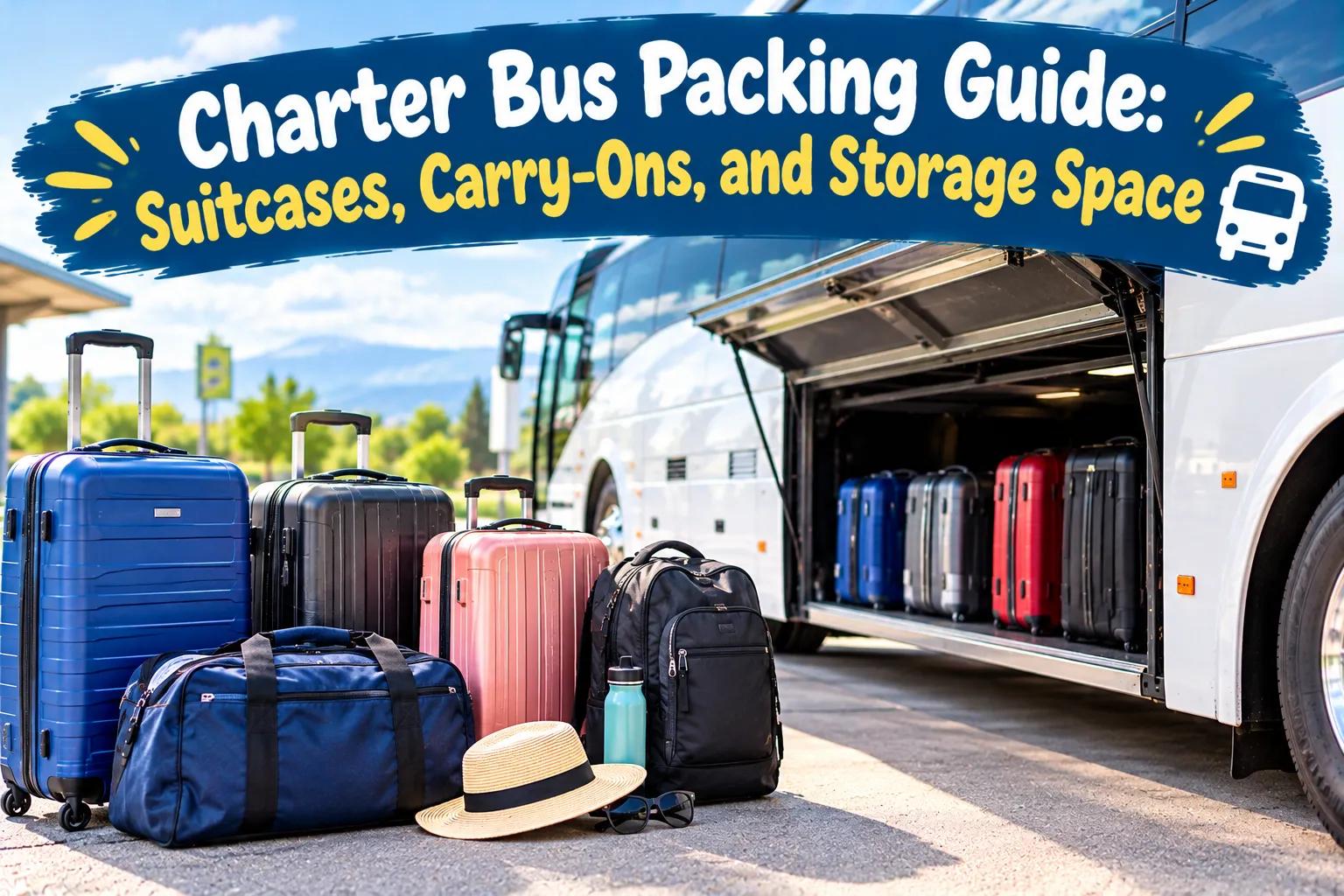
Charter Bus Packing Guide: Suitcases, Carry-Ons
Packing for a group journey requires more than choosing clothes and placing them in a suitcase. Travelers must also consider available storage space, baggage size, and the number of belongings everyone plans to bring. Whether you are organizing a family vacation, corporate retreat, school excursion, wedding, or sports tournament, understanding how to pack efficiently can make departure day much easier.
Before preparing your bags, review this guide to charter bus baggage space and packing capacity to understand how luggage storage varies by vehicle type and what you should consider when planning group transportation.

Understanding Charter Bus Storage Options
Most full-size charter buses offer dedicated undercarriage compartments for larger luggage. These storage bays are designed to hold suitcases, duffel bags, garment carriers, and some types of equipment. Keeping large bags beneath the passenger cabin helps maintain a comfortable seating area and provides more room for travelers.
Smaller personal belongings may be stored in overhead racks or other designated cabin storage areas, depending on the vehicle configuration. Backpacks, handbags, and laptop bags are usually easier to accommodate in these spaces than large suitcases.
Minibuses and shuttle buses may have limited storage capacity, so passengers should not assume that every vehicle offers the same facilities. Confirming the available storage before booking helps ensure that both passengers and their belongings can be accommodated.
How to Pack Suitcases for a Charter Bus Trip
Choosing the right suitcase is an important part of efficient packing. The size of your bag should reflect the length of your journey, the activities planned, and the amount of clothing you actually need.
For a day trip, a backpack or compact bag may be sufficient. Weekend travel may require a medium suitcase, while longer vacations often involve additional clothing and personal supplies. Bringing an unnecessarily large suitcase can consume valuable cargo space, particularly when traveling with a large group.
Soft-sided suitcases and duffel bags may fit into irregular spaces more easily than rigid luggage. However, their flexibility does not guarantee that every bag will fit. The available storage compartment and the dimensions of the luggage remain the deciding factors.
Packing cubes can help organize clothing and reduce wasted space inside a suitcase. Rolling casual clothing, placing small items together, and avoiding unnecessary duplicates can also make packing more efficient.
What Should Go in Your Carry-On Bag?
A personal carry-on bag should contain items you may need during the journey. Identification, travel documents, medication, chargers, headphones, and valuables are best kept accessible rather than stored in an undercarriage compartment.
A small bag can also hold a light jacket, tissues, hand sanitizer, reading material, and other personal essentials. If you plan to bring snacks or a reusable water bottle, check the transportation company's policies and follow any instructions provided by the driver.
Keep your carry-on compact enough to fit in the designated storage area without interfering with another passenger's space. Bags should never block aisles or emergency exits, and loose belongings should be secured appropriately.
How Much Luggage Can a Charter Bus Accommodate?
Luggage capacity depends on the size and model of the bus, the number of passengers, and the dimensions of their belongings. Full-size motorcoaches often provide more storage than minibuses and smaller shuttle vehicles.
As a general planning guideline, some full-size charter buses can accommodate approximately one large suitcase and one smaller bag per passenger when the vehicle's storage configuration permits. This is not a guaranteed allowance, however, because oversized luggage and additional equipment can reduce available space.
For example, a group of 40 travelers bringing one standard suitcase each has different storage requirements from a group of 40 passengers carrying multiple suitcases, sports equipment, and large coolers.
When booking, provide the charter company with an accurate passenger count and estimated baggage quantity. Ask the provider to confirm whether the selected vehicle has sufficient storage for everything your group intends to bring.
Packing Tips for Different Types of Trips
The best packing strategy depends on the purpose of your journey. Airport transfers often involve checked-size suitcases and smaller carry-on bags, so organizers should estimate baggage requirements before selecting a vehicle.
Corporate trips may require professional clothing, laptops, briefcases, and presentation materials. Keep essential work documents and electronics accessible, while packing other belongings securely in your main suitcase.
Wedding parties may need garment bags, shoes, accessories, gifts, and decorations. Keeping these items organized and clearly labeled helps prevent confusion when passengers arrive at the venue.
Sports teams often travel with uniforms, footwear, protective equipment, and personal luggage. Since equipment bags can take up substantial space, team organizers should share these requirements with the transportation provider well in advance.
For school excursions and family vacations, encourage passengers to pack according to the itinerary. A clear packing plan reduces unnecessary bags and makes loading more efficient.
How to Maximize Available Storage Space
Efficient packing begins before the luggage reaches the bus. Travelers should choose appropriately sized bags, combine small items when practical, and avoid packing belongings they are unlikely to use.
Soft-sided bags may help make use of certain gaps in luggage compartments, while neatly packed suitcases can be easier to organize than loosely filled bags. However, luggage should never be forced into a compartment that cannot safely accommodate it.
Labeling every suitcase with a name and suitable contact information helps passengers identify their belongings at the destination. For large groups, colored tags or simple labels can help organize luggage by family, team, or passenger.
It is also useful to separate essential personal belongings from larger suitcases. This prevents travelers from needing to retrieve items from the cargo compartment during the journey.
Planning for Oversized Items and Special Equipment
Some trips require belongings that do not fit neatly into ordinary luggage categories. Musical instruments, golf clubs, hockey equipment, bicycles, large coolers, and event supplies may require additional storage space.
Notify the charter bus company about these items before confirming your reservation. Provide approximate dimensions and quantities so the provider can assess whether the selected vehicle is appropriate.
Depending on the amount of equipment and the available storage, the company may recommend a larger coach or an additional vehicle. Some operators also have specific policies for fragile, unusually heavy, or restricted items.
Planning for these requirements early helps prevent last-minute surprises and ensures that the group has a suitable transportation arrangement.
Common Charter Bus Packing Mistakes to Avoid
One common mistake is assuming that a bus with enough seats will automatically have enough luggage space. Passenger capacity and baggage capacity are different considerations, and both should be evaluated before booking.
Another mistake is bringing too many oversized bags without informing the transportation provider. Large suitcases and equipment cases can occupy significantly more room than standard luggage, potentially reducing the available space for other passengers.
Travelers should also avoid packing valuables or essential medication in luggage that will remain inaccessible during the journey. Keeping these items in a personal bag makes them easier to reach when needed.
Finally, do not leave packing until the last minute. Preparing early gives passengers time to organize their belongings, identify oversized items, and confirm any special arrangements with the charter company.
Conclusion
A successful charter bus trip starts with smart packing and realistic expectations about storage space. Choosing appropriately sized suitcases, separating carry-on essentials, labeling belongings, and accounting for special equipment can make group travel more organized and comfortable.
Before departure, confirm the vehicle's luggage capacity with your transportation provider and share an accurate estimate of the group's baggage requirements. Since storage varies by bus model and passenger count, advance planning is the most reliable way to avoid unnecessary complications.
Whether you are arranging airport transportation, a school trip, a corporate event, or a family vacation, thoughtful packing helps ensure that your group and its belongings travel together smoothly.